

DATA SCIENCE CERTIFICATION COURSE IN NOIDA
Best Data Science Course in Delhi NCR with placements and an industry-backed certificate!
6-8 Months
546 Hours

*TIH Partnerships via Edzor CAITE

Course Fees

(Program fees starts from)
INR 70,800/-*
(Program fees starts from)
INR 53,100/-*
Courses Included



Artificial Intelligence Engineering
₹ 20000/-
Artificial Intelligence Engineering
₹ 20000/-
Artificial Intelligence Engineering
₹ 20000/-
₹ 65000/-
₹ 48000*/-
Optional Course
Data Science using R
₹ 20,000
₹ 4000/-
16 Oct
Noida (Weekdays)
25 Sept
Gurgaon (Weekends)
09 Nov
Bangalore (Weekdays)
Learning Modes

Classroom Sessions
INR 87,320/-*
(Pay in Easy Installments)
INR 68,440/-*
(Pay in Easy Installments)

Interactive Live Online
INR 80,240/-*
(Pay in Easy Installments)
INR 59,000/-*
(Pay in Easy Installments)
Blended eLearning
INR 70,800/-*
(Pay in Easy Installments)
INR 53,100/-*
(Pay in Easy Installments)
Overview Of Data Science Course In Noida

No of classes X Hours
65 x 3 = 195 hours
+ 20 hours e-learning

Self Study Hours
422 (8-10 hours/ week)
38 hours of Assessment

Placement Readiness Program: 8 Weeks
(Post Certification)
This Data Science Certification Course offers an updated curriculum, professionally structured projects, and a blended flexible learning environment. Whether you are a novice or an experienced professional, our course does not require any prior knowledge or experience. Looking to start from scratch? AnalytixLabs is your best stop.
Why Learn Data Science?
More than 80% of India’s global capability centersfocus mostly on AI, machine learning, and data analytics. Infact, a recent survey shows that it surpassed the emphasis GCC puts on traditional tech capabilities at 78%.
India’s data science market is growing exponentially, with all major industries steadily adopting data science and analytics capabilities. This consequently has generated a huge demand for skilled data professionals, again influencing India’s data education market. Research shows that India’s data science market will reach a valuation of $1.39 billion by 2028, which isn’t a far-off future.
As India embraces data-driven decision-making across diverse industries, enrolling in a comprehensive data science certification course is the right move for a steady career in this field.
India’s data market is helmed by tier 1 cities like Noida. Noida’s strategic location and influx of tech and innovation have made this location a potential hub for data science. The proximity of Noida to Delhi makes it an attractive place for professionals to work. It offers a strategic advantage for collaboration, resource access, and networking opportunities.
In addition, the Indian government’s initiatives to encourage Noida’s IT and data sectors have offered a favorable learning environment for data science certification courses in Noida. The growth of multiple small, mid-size, and large companies and frequent data meetups, events, and collaborations have made Noida a prime location to learn data science.
Earn a Dual Certification with AnalytixLabs in Collaboration with Future Skills Prime (FSP) a joint initiative of the Ministry of Electronics and Information Technology (MeitY), Government of India, and NASSCOM.
Includes Placement Readiness Program (PRP): A 2-month post-certification, industry-focused module designed to enhance technical skills, communication, and problem-solving, featuring interview prep, practice tests, and simulated placement days for real-world experience and readiness.
Learn more about our Job Guarantee Program: https://www.
Data Science Certification Course Syllabus in Noida
Our data scientist course in Noida is ideal for individuals with a programming background who want to gain practical, job-oriented skills on a prominent open-source data science platform.
The data science course curriculum introduces the fundamental building blocks of Data Science. This section covers essential concepts, foundations of data science, and basic programming elements. The course then delves into Data Visualization and Analytics, exploring data extraction, manipulation, analysis, reporting, and creating intuitive business dashboards using Excel, SQL, and PowerBi tools.
While taking our data science training in Noida, you will engage in interactive exercises throughout the course. Using real-world business case studies, you will learn how to utilize R for Data Science, including working with databases, data import/export, analysis, and visualization.
Data Visualization & Analytics
Building Blocks
- Introduction to Bridge Course & Analytics Software’s
- Basic Excel
- RDBMS & SQL (Basics)
- Introduction to Analytics & Data Science
- Basic Programming Elements
- Introduction to Basic Statistics
- Introduction to Mathematical Foundations
Data Analytics with Excel
- Quick Recap of Basics of Excel
- Data manipulation using functions
- Data analysis and reporting
- Data Visualization in Excel
- Overview of Dashboards
- Create dashboards in Excel – Using Pivot controls
- Business Dashboard Creation
Data Analytics with SQL
- Quick Recap of RDBMS & Basic SQL
- Data based objects creation (DDL Commands)
- Data manipulation (DML Commands)
- Accessing data from Multiple Tables using SELECT
- Advanced SQL
- Apply learning’s on Business Case study
Data Visualization and Analytics with Tableau
- Getting Started
- Data handling & summaries
- Building Advanced Reports/ Maps
- Calculated Fields
- Table calculations
- Parameters
- Building Interactive Dashboards
- Building Stories
- Working with Data
- Sharing work with others
Data Analytics with VBA (e-learning)
- Introducing VBA
- How VBA Works with Excel
- Key Components of Programming language
- A look at some commonly used code snippets
- Programming constructs in VBA
- Functions & Procedures in VBA – Modularizing your programs
- Objects & Memory Management in VBA
- Error Handling
- Controlling accessibility of your code – Access specifiers
- Code Reusability – Adding references and components to your code
- Communicating with Your Users
Data Science
Python for Data Science
- Python Essentials (Core)
- Operations with NumPy (Numerical Python)
- Overview of Pandas
- Cleansing Data with Python
- Data Analysis using Python
- Data Visualization with Python
- Basic Visualization Tools
- Statistical Methods & Hypothesis Testing
R for Data Science (Optional e-learning)
- Data Importing/Exporting
- Data Manipulation
- Data Analysis
- Using R with databases
- Data Visualization with R
- Introduction to Statistics
- Introduction to Predictive Modeling
- Supervised Learning: Regression problems using OLS Regression
- Supervised Learning: Classification problems using Logistic Regression
- Introduction to Machine Learning
- Supervised Learning: Regression problems
- Supervised Learning: Classification problems
- Unsupervised Learning – Segmentation
- Time Series Forecasting
Machine Learning & Text Mining
Predictive Modeling & Machine Learning
- Introduction to Predictive Modeling
- Introduction to Machine Learning
- Supervised Learning: Regression problems
- Supervised Learning: Classification problems
- Unsupervised Learning
- Recommender Systems
- Time Series Forecasting
- Evaluate risk of deploying algorithmic models
- Evaluate business performance of algorithmic models
Text Mining using NLP
- Introduction to Text Mining
- Text Processing with modules like NLTK, sklearn
- Initial data processing and simple statistical tools
- Advanced data processing and visualization
- Text Mining – Predictive Modeling
AI & ML Ops
Introduction to AI, Deep Learning & Cloud Computing
- Introduction to Artificial Intelligence (AI)
- Introduction to Deep Learning
- Artificial Neural Network
- Introduction to Google Colab/Kaggle workbooks
- Introduction to Cloud Computing
Introduction to ML-Ops & Model Deployment
- Introduction to ML Ops
- Deployment of ML Model in the Cloud
Industry & Functional Sessions (Domain Understanding)
- Business Problem Understanding
- Introduction to Industry & Functional Sessions
- Marketing Analytics
- Risk Analytics
- Operations Analytics
- Digital Analytics (Web Analytics)
Request a Call back
Orientation & Fundamentals of Analytics
Introduction to Analytics & Life Cycle of Data Analytics Projects
- What is Analytics, Data Science, and AI? – Definition
- Difference between Business Analytics, Data Analytics, Data Science vs. AI
- Types of data (Structured vs. Unstructured vs. Semi-structured)
- Understand the impact and use of data analysis based on the real-world examples
- Stages of Analytics (Introduction to types of data analysis – Descriptive vs. Diagnostic vs. Predictive vs. Prescriptive vs. Cognitive)
- Analytics Methodology & problem-solving framework (Steps to solve a Data Analysis problem.) – Life Cycle of Analytics Project
- What is AI, GenAI, Agentic AI?
- The role of AI in Data analytics
- The applications of AI in day-to-day work?
- How is AI changing the roles over time?
- Expectations from the Employers
Data Analytics with SQL(MySQL)
RDBMS - SQL
- Basic RDBMS Concepts (ERD, Data Modeling, Schema, Normalization, ETL, etc..)
- Introduction to MySQL Server
- Overview of SQL Commands (Overview of DDL, DML, DCL, DQL), SQL Syntax basics, Operators, Order of execution etc.
- Data-based objects creation (DDL Commands – Data Gathering – CRUD Operations)
- Data manipulation (DML Commands) & DQL (Data Query), Data Preparation & Analysis (Data Aggregations & Summarizations)
- Accessing data from Single & Multiple Tables using SELECT statement & Clauses, inbuilt functions
- Advanced SQL (Advanced Joins, Subqueries, Window Functions, Views, CTEs, Stored Procedures etc.)
- Integrating SQL for Analytics (Databases & Schema, Python integration)
- AI-Powered SQL & Optimization (AI-Assisted Querying and Optimization)
Visual Analytics & Dashboarding using Power BI
PowerBI
- Introduction to Data Visualization concepts, BI, Power BI
- Data Preparation and Modelling (Power Query) – Extracting data from various sources, Load Data Model – Manage Relationships
- Data Analysis Expressions (DAX)
- Reports Development (Basic & Advanced Visuals in Power BI) – Types of visuals, mapping charts with analysis, and chart formatting
- Data-Driven Story Reports
- Creation of Dashboards – Wire Frames, Slicers, Filters, Tooltips, buttons – KPI-Based Dashboarding – E-commerce Case
- Advanced / Other Power BI Concepts (Parameters, Dynamic measures, Insights presentation etc.)
- Power BI Analytics
- Publishing workbooks and Workspace
- Overview of Power BI Service
- AI-Enhanced Presentations or design of dashboard with ChatGPT/Claude
Foundations of Programming Logic
(Python Core Programming)
- Introduction to Python for Data Science
- Essentials of Python Programming (Environment, IDE’s, syntax rules, objects, indentation, comments, assignment rules, file handling, etc.)
- Data Types (numeric, string, date time, etc.) & Operators-Operands, Expressions
- Data Structures (Lists, tuples, dictionaries, sets) – Accessing Data (Indexing & Slicing)
- In-Built Functions & Methods, Packages
- Conditional, iterative, or Control Flow Statements (if, ifelse, loops, comprehensions, etc.)
- User-Defined Functions (args, kwargs), Lambda functions, Classes
- Error & Exception Handling
- File Handling
- AI-Enhanced Coding Fundamentals – AI-Assisted Coding: Pair Programming with ChatGPT
Python for Data Science
(EDA + Visualization)
- Python Packages for Data Analytics & Data Science
- Operations with NumPy (Numerical Python) – Operations
- Mastering data with Pandas
- Reading (handling diverse data formats), Auditing, Cleansing, Preparing Data with Python & packages (numpy, pandas, datetime, regex, etc.), core techniques in data wrangling (basic & advanced)
- Python-SQL integration to extract data – performing SQL codes in Python
- Data Analysis (EDA (Descriptive, Diagnostic) – statistical analysis) using Python & packages (numpy, pandas, datetime, regex, etc.)
- Data Visualization using Python & packages (matplotlib, seaborn, etc.)
- AI-assisted coding – AI-Powered Data Wrangling with PandasAI
Applied Statistics
Statistics
- Statistics Fundamentals
- Descriptive and Inferential Statistics (Measures of Central tendency, variance, deviation, frequency, symmetry, peakedness, ranking, etc…)
- Understanding data distributions (Discrete, continuous) & relationships
- Sampling & Statistical Inference
- Concept of standard error and the central limit theorem
- Concept of Confidence Intervals
- Hypothesis Testing
- Statistical Methods – Z/t-tests (One sample, independent, paired), ANOVA, Correlation, and Chi-square – Applications – Implementation in Python (scipy-stats module)
Predictive Modeling, Machine Learning & Deep Learning
Predictive Modeling & Machine Learning (Supervised & Unsupervised), Introduction to Deep Learning
- Predictive Modeling, Types of Business Problems, Getting Started with Machine Learning & Foundations of ML
- Different Phases of ML Models, Data Preparation for ML, Feature Engineering
- Concept of Supervised Learning
- Supervised Learning – Regression and Its Applications – Model Building & Validation
- Supervised Learning – Classification and Its Applications – Model Building & Validation
- ML Algorithms (Linear, Logistic Regression, Decision Trees & Ensemble Learning (Random Forest, XGboost, etc)), Tuning the parameters
- Unsupervised Learning (K-Means Clustering)
- Introduction to Deep Learning
- Introduction to Artificial Neural Networks
- Deep Learning Frameworks (Keras, Tensorflow)
- AI for ML model building
Generative AI & Nocode Agentic AI
AI Foundations
- AI vs. Automation vs. Analytics
- AI, Machine Learning (ML), Deep Learning (DL) – differences & connections
- Narrow AI vs. General AI vs. Super AI
- Core AI applications (NLP, CV, Robotics, Predictive Analytics)
Generative AI Basics
- Traditional AI vs. Gen AI
- Every day, GenAI applications
- How does GenAI work?
- Key models (GPT, Claude, Gemini, LLaMA)
- Text generation & completion techniques
- Prompt Engineering basics: role, task, context
- Core Prompting Tasks (Text generation & completion, Summarization (short & detailed), Rewriting in different tones/styles)
- Prompt Structures (instructional, role-based)
- Prompting Techniques (Zero-shot prompting, Few-shot prompting, Chain of Thought (CoT) prompting
- Role Prompting, Multi-turn interactions (context retention), etc..
- Limitations of prompting
- Evaluating GenAI output quality
Large Language Models (LLMs): How They Work
- Introduction to transformers
- LLMs vs. SLMs
- Popular LLMs (GPT, Claude, Gemini, LLaMA) – Overview – Strengths & Limitations
- Introduction to Embeddings
Introduction to Agentic AI
- No-code AI overview
- Intro to workflow automation tools
- Introduction to Zapier basics (triggers & actions), n8n workflow design, Make.com integrations
- AI-powered productivity with Notion AI for task automation & summarization, Airtable for data storage & automation, Glide for mobile app prototyping, etc.
- Design & Storytelling Tools
- Integrating AI into everyday workflows – Linking AI workflows with business processes
- Prototyping with no-code/low-code tools
What is an AI Agent? How it differs from chatbots
- Agentic AI vs. AI Agents
- Key components of Agentic AI: memory, planning, tool use, autonomy
- AI Orchestration with no-code tools
- Agent frameworks (LangChain, AutoGen, CrewAI – overview)
AI challenges: Bias, hallucination, privacy & security issues
- Responsible AI principles: Fairness, Accountability, Transparency, Explainability
- Global AI Ethics Frameworks
- Safe & Responsible usage
- Responsible AI: Guardrails
*The programme also includes additional modules designed to enhance your learning experience.
Download the brochure to view the complete course curriculum and module details.
Data Science Course Eligibility in Noida
Our data science course in Noida, which has certification and placement, has no specific requirements. It is designed to accommodate students with diverse educational and professional backgrounds. The only MUST-HAVE is an eagerness to explore the vast possibilities of data science.
It is an added bonus if you have:
Bachelor’s Degree: (Preferred in relevant fields like statistics, computer science, or mathematics) While not obligatory, having a bachelor’s degree in quantitative fields is a bonus, particularly for data science courses in Noida university-level programs.
Additional requirements that can be an advantage for you while learning this course –
Basic Understanding of Statistics and Mathematics: A foundational understanding of statistics and mathematics is beneficial because most data science and analytics courses involve working with data.
Programming Skills: Basic proficiency in programming languages like Python or R is advantageous, as many data science tasks may require such skills.
Note: Our data science course in Noida covers the basics of foundational programming, problem-solving, and data management for a lucrative data science career. If you have no prior knowledge or experience in the data field, you can learn the basics in our first set of learning sessions.
Data Science Job Roles You Can Explore Upon Course Completion
A Data Science career is highly promising for talented individuals. Pursuing a data science career is both financially rewarding and intellectually fulfilling.
- Data Scientist
- Data Analyst
- Data Architect
- Data Architect
- Business Intelligence Analyst
- GenAI Associate / AI Analyst
- Prompt Engineer
- No-Code Automation Specialist
- AI Consultant
- AI Workflow Consultant
- Workflow Automation Analyst
Data Science Skills and Tools You Will Learn
Our data science certification course does not require any prior knowledge to enroll. However, if you have basic know-how of programming languages like Python, R, and SQL, you will find it easier to proceed with the course materials.
Our curriculum is continuously updated to meet industry demands and market needs. Currently, the Data Science Certification Course will help you master the following skills and tools:
Python
Python is a versatile programming language widely adopted for various applications, including web development, data analysis, and machine learning. Its simplicity, extensive libraries, and readability make it popular among developers and data scientists.
NumPy
NumPy, or Numerical Python, is a versatile array processing package that utilizes the powerful features of N-dimensional arrays. It is a fundamental library in Python that fosters an efficient execution of a wide range of scientific computations. NumPy supports high-level logical and mathematical functions, linear algebra operations, advanced random number generation, Fourier transform capabilities, and manipulation of array shapes. Additionally, it seamlessly integrates with low-level languages such as C, C++, and Fortran.
Pandas
Pandas, a Python library for data analysis, specializes in tasks such as data munging, cleaning, manipulation, and analysis. It empowers data scientists working with Big Data by providing efficient and adaptable data structures in tabular and multidimensional formats.
Pandas accelerate data manipulation tasks by streamlining data wrangling processes and offering high-level abstractions. A wide range of features are available, with a user-friendly syntax designed to handle missing data effectively. One notable advantage of Pandas is its capability to create customized functions that can be applied to different data series.
SciPy
SciPy, also known as Scientific Python, builds upon the functionality of NumPy and is extensively used in Big Data projects, particularly in scientific and technical computing.
It provides a comprehensive set of pre-built commands and functions that facilitate various tasks such as handling differential equations, manipulating data, and visualizing results.
Matpolib
Matplotlib, a Python library in Big Data, offers impressive visualization capabilities with 2D plotting graphics. It is a powerful tool for data scientists, enabling them to create various visualizations, such as bar charts, scatter plots, histograms, error charts, power spectra, and more.
One of the key features of Matplotlib is its object-oriented API, which makes it easy to embed plots in applications. It utilizes GUIs like Tkinter and wxPython for this purpose. Matplotlib is known for its low memory consumption and efficient runtime, ensuring smooth performance.
Another significant advantage of Matplotlib is that it is free to use, making it a viable alternative to MATdevwp. It is also compatible with various operating systems and output types, offering users flexibility.
SkLearn
Sklearn, or Scikit-learn, is an extensive Python library with a comprehensive set of machine-learning tools. It provides a complete package for constructing and assessing various machine-learning algorithms.
This feature-rich library is a powerful resource for all aspects of machine learning solutions. It encompasses many functionalities, including data preprocessing and transformation and statistical modeling, which includes regression, classification, clustering, and dimensionality reduction.
Sklearn also offers tools for testing and validating data using cross-validation techniques and metrics to evaluate the performance of the trained models.
Seaborn
Seaborn, a Python library, is a powerful tool for creating statistical visualizations built on Matplotlib. It seamlessly integrates NumPy and Pandas, making it convenient to work with data structures commonly used in statistical analysis with SciPy and statsmodels.
With Seaborn, users can effortlessly generate visually appealing charts by leveraging its predefined styles and color palettes, requiring only a few lines of code. It is important to note that Seaborn is designed to complement Matplotlib rather than replace it, meaning familiarity with Matplotlib is necessary for fine-tuning Seaborn’s default plots. It is compatible with Python 3.7+ but no longer supports Python 2.
Statsmodel
Statsmodels is a Python library specifically designed for data analysis, data science, and statistical modeling. It is a component of the Python scientific stack and relies on the powerful numerical libraries NumPy and SciPy.
Statsmodels seamlessly integrates with Pandas, a popular library for data manipulation, and utilizes Patsy, which provides a formula interface similar to R, for convenient modeling.
Keras
It is an open-source deep learning framework that aims to streamline the process of building deep learning models and provide a platform for quick experimentation with deep neural networks.
Keras is advantageous and user-friendly, making it ideal for individuals new to deep learning. Due to its simplicity, intuitive syntax, and ease of use, it is widely regarded as the top framework for beginners.
The framework’s syntax is designed for readability and straightforward application. The major users are CERN, Google, Netflix, and Uber.
R (Optional eLearning)
Data analysis and visualization are frequently done using the statistical computer language R. With its extensive number of packages and functions, R provides a full environment for statistical modeling, machine learning, and graphical representations, making it a favorite tool for researchers and data scientists.
SQL
SQL (Structured Query Language) is ideal for manipulating and managing relational databases. It helps store, retrieve, update, and delete data efficiently, making it an essential skill for working with databases and performing data-related tasks in various industries.
Data Visualization Tools:
Tableau (Optional eLearning)
The potent data visualization tool Tableau allows users to build dynamic dashboards and reports that are pleasing to the eye. Its easy drag-and-drop interface and rich functionality simplify exploring, analyzing, and communicating data insights, enabling businesses to make more successful data-driven decisions.
Excel
Excel is widely used to organize and analyze data effectively. It offers useful features such as formulas, charts, and pivot tables..
PowerBI
Microsoft’s PowerBI is a robust and user-friendly tool designed to facilitate efficient data analysis. Rather than functioning as a conventional programming language, PowerBI operates as an application tool similar to Excel.
Soft Skills:
Be comfortable with pattern identification. You must acquire the skills to detect anomalies in a data set and the know-how to analyze it.
Learn about machine learning and its related algorithms.
Master basic computing skills to use numerical analysis, database systems, and data management principles.
Be proficient in implementing statistical models and algorithms that facilitate artificial intelligence and several other business processes.
Master programming languages such as Python, SQL, R, or Java to code and create a program framework for data analysis.
As a data scientist, you must know how to tell the story behind the data and graphically represent it to stakeholders.
Master analytical or critical thinking to provide data-backed insights and solutions to several business problems.
Projects and Assignments Included
The Data Science Certification course explores applying data science and analysis techniques to solve complex business challenges and drive informed decision-making in various industries and functional areas. Projects and assignments span across:
- Business problem-related data handling, creation of dynamic dashboards, and performing ad-hoc analysis using Excel, SQL and PowerBI
- Exploratory Data Analysis - Marketing Insights for Leading E-Commerce Company
- Building a Predictive Model (Probability of Default Model) for Leading Bank using Regression
- Marketing Insights for E-Commerce Company
- Woman Clothing E-Commerce Platform- Customer Review Analysis
- Deployment of ML model and create Flask application
Projects and Assignments Included
The Data Science Certification course explores applying data science and analysis techniques to solve complex business challenges and drive informed decision-making in various industries and functional areas. Projects and assignments span across:
- Business Problem Understanding
- Introduction to Industry & Functional Sessions
- Marketing Analytics
- Risk Analytics
- Operations Analytics
- Digital Analytics (Web Analytics)
- Generative AI
- Prompt engineering
- Statistical Analysis
- Data Visualization
- Data wrangling
- Predictive modeling
- Data blending & manipulation
- Machine Learning
- MIS reporting analytics
- Deep learning and NLP
- Analytical thinking
- Problem-solving approach
- Communication
- Business acumen
- Critical thinking
- Product understanding
- No code Agentic AI
Online Data Science Course in Noida with Immersive Learning
These are the three main learning modes. In addition to these, we also have the option to merge online and offline training modes. In our efforts to offer an immersive learning experience, we offer our students a hybrid learning mode where they can mix primary learning methodologies to meet their needs.
Classroom & Bootcamp
An immersive, in-person learning experience designed to accelerate skill development through intensive, hands-on training and expert mentorship. It bridges the gap between theory and real-world application, equipping learners with the expertise and skills needed to succeed in today’s dynamic professional landscape.
Interactive Live Online
Blend classroom dynamics with engaging, real-time interactive Online sessions tailored to busy schedules. This innovative approach combines traditional and digital learning, ensuring effective knowledge retention. Experience deeper understanding through flexible, responsive instruction designed for modern learners.
INR 80,240/–
INR 59,000/–
Blended eLearning
Fuse the rich atmosphere of classroom instruction with the flexibility and accessibility of eLearning modules, meticulously integrated to accommodate learning preferences. This unique blend ensures an optimal learning experience, empowering participants to delve into subjects deeply.
Data Science Certification Course Fees in Noida
The Data Science Course in Noida adheres to industry standards. This course lasts approx 10 months or 675 learning hours, and the costs vary according to your chosen learning mode.
Classroom Sessions
₹ 68,440/- including taxes
EMI starts @ 8,260
EMI Options
*Pay in easy EMIs starting at INR ₹6387 per month.
- Fees payable in up to 3 installments
- 0% Interest EMI – Pay in Easy Installments (though education financing partners)
- Cost-effective courses with high ROI, making it worth every penny you invest.
Interactive Live Online
₹ 59,000/- including taxes
EMI starts @ 8,260
EMI Options
*Pay in easy EMIs starting at INR ₹6387 per month.
- Fees payable in up to 3 installments
- 0% Interest EMI – Pay in Easy Installments (though education financing partners)
- Cost-effective courses with high ROI, making it worth every penny you invest.
Blended eLearning
₹ 53,100/- including taxes
EMI starts @ 8,260
EMI Options
*Pay in easy EMIs starting at INR ₹6387 per month.
- Fees payable in up to 3 installments
- 0% Interest EMI – Pay in Easy Installments (though education financing partners)
- Cost-effective courses with high ROI, making it worth every penny you invest.
Flexible Payment Options Across All Plans
Pay in up to 3 instalments · 0% Interest EMI via education financing partners · High-ROI programmes designed to deliver measurable career outcomes
Data Science Certification in Noida
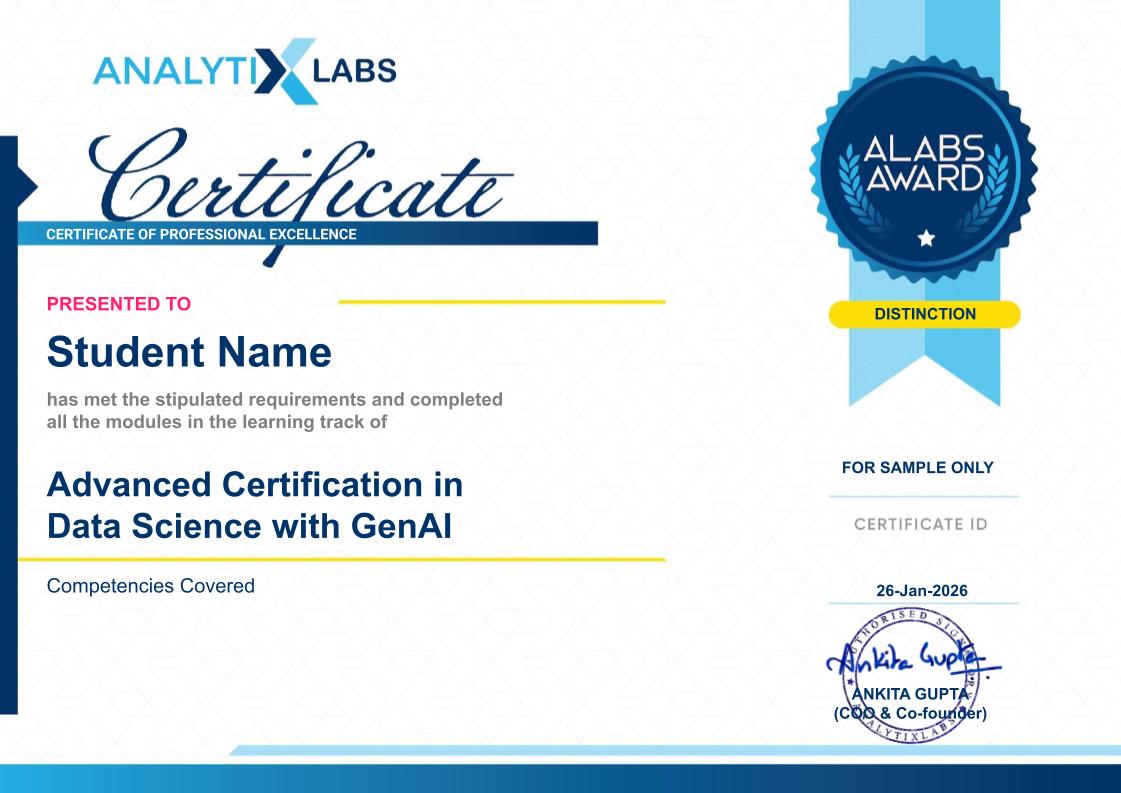
AnalytixLabs certifications are highly valued across the industry, backed by a rigorous assessment process including case studies, MCQs, and viva evaluations. Certification is awarded on successful completion of all requirements within the defined timelines. Candidates get two attempts per assessment, and certification must be completed within one year of enrolment.
You also earn credentials from our esteemed academic and industry partners:
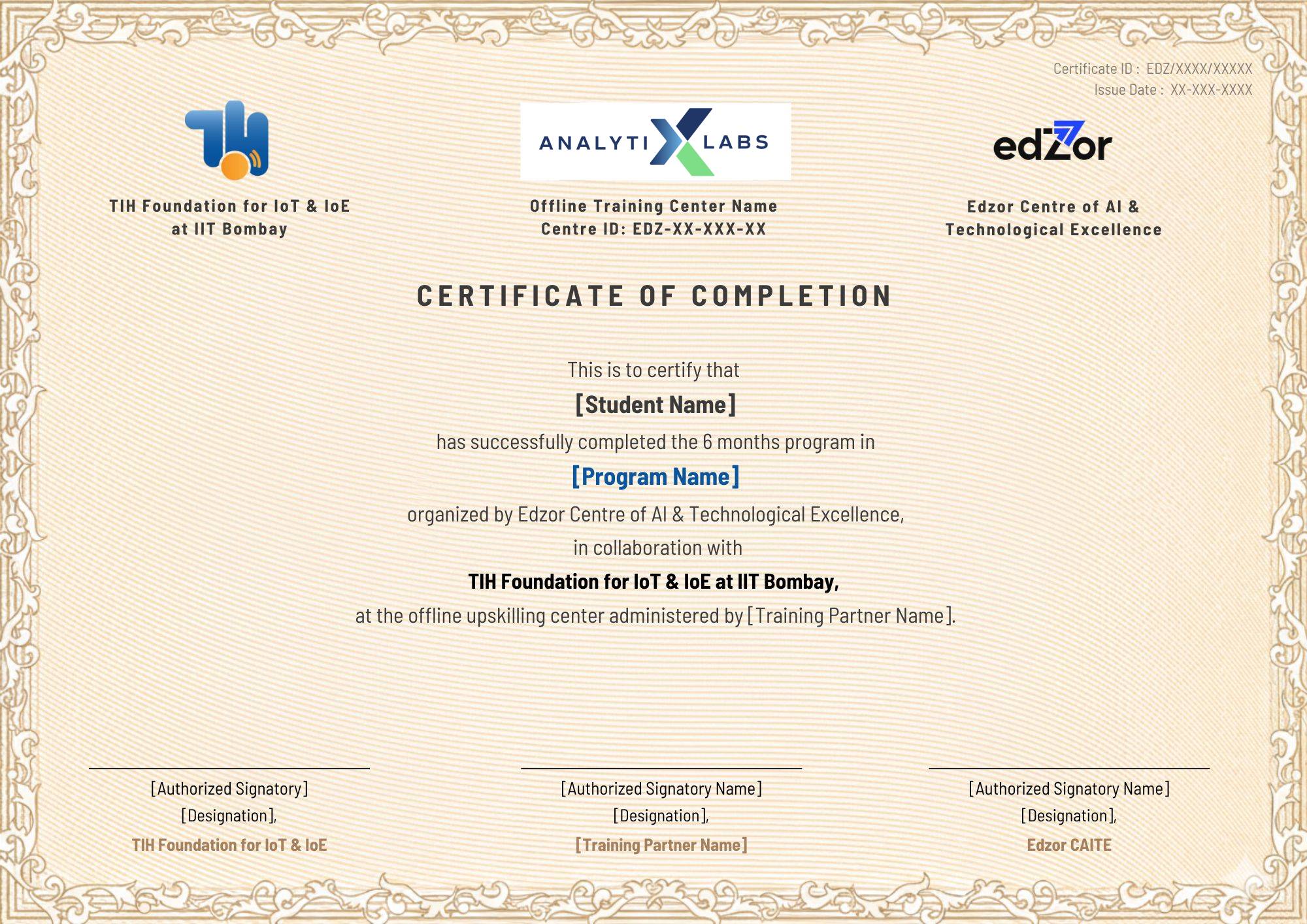
1. TIH Knowledge Partner Certification (Choose One at Enrolment)
(a) TIH at IIT Bombay
Certification under the TIH Foundation for IoT & IoE at IIT Bombay knowledge partner programme.
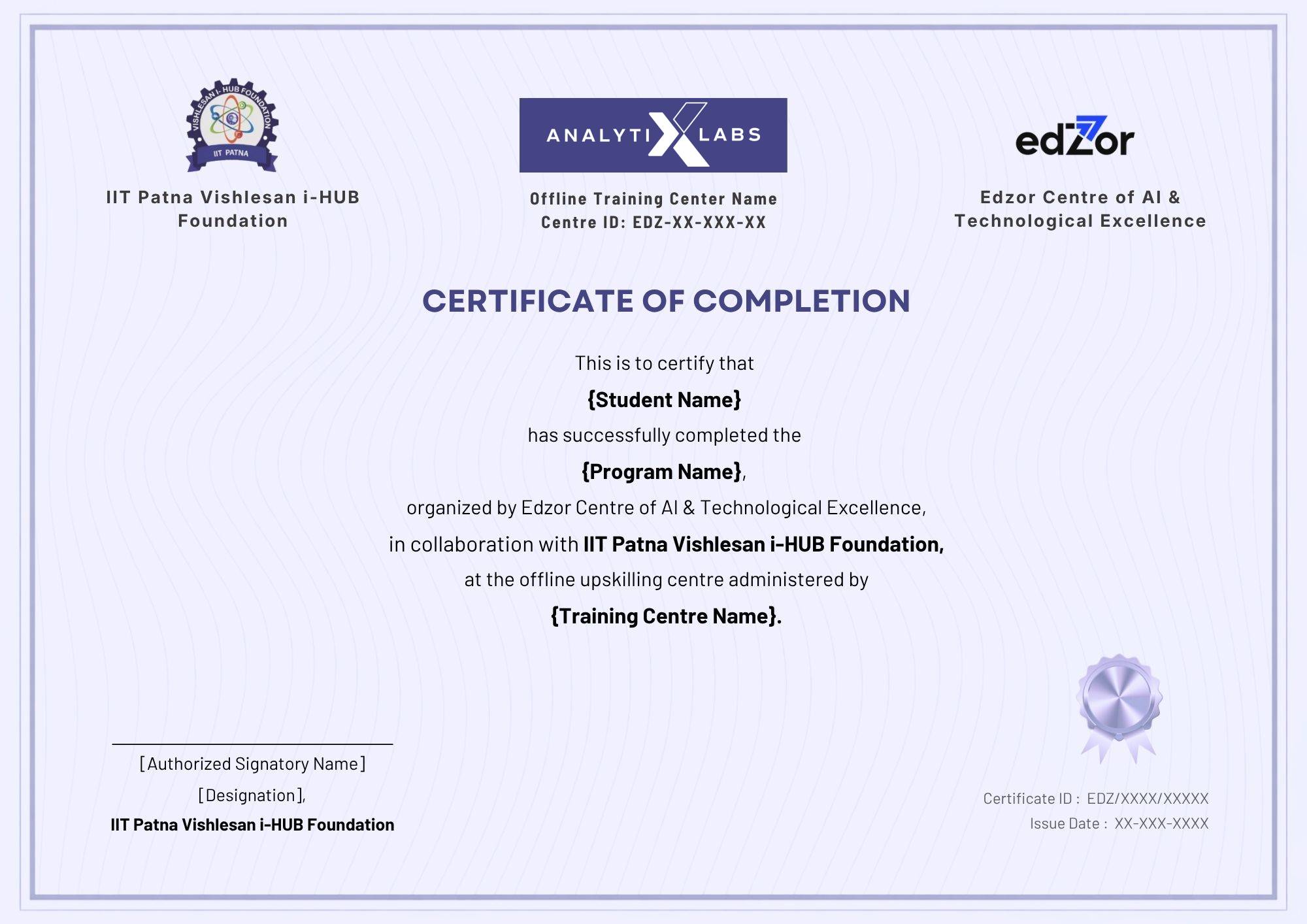
(b) TIH at IIT Patna
Certification under the IIT Patna Vishlesan I-HUB Foundation knowledge partner programme.
This includes virtual guest lecture sessions by TIH-associated experts, supplementary to the regular curriculum.
2. NASSCOM-FutureSkills Prime (FSP)
NASSCOM-approved certification, supported by MeitY, Government of India, and aligned to India’s Trillion Dollar Digital Economy mission, covering Analytics and Data Science.


Data Science Training & Placement
A course is only as good as the career outcomes it delivers. That’s why career support isn’t an add-on at AnalytixLabs. It’s built into the program from the start.
At AnalytixLabs, we’re committed to helping you build successful careers in AI, Data Science, and Analytics. With comprehensive placement assistance integrated into our certification programs, our dedicated team of industry professionals offers personalized support based on your educational background and work experience. The placement process is designed to equip you with both opportunity and readiness—helping you transition seamlessly into the data-driven workforce.
Accelerate your career with our Job Guarantee Program: https://www.

Placement Readiness Program
The Placement Readiness Program is a 6–8 week, industry-aligned module designed to give you a competitive edge after certification.
It goes beyond technical skills, offering expert guidance on resume building, interview coaching, and real-world simulations. With strong industry referrals, strategic job search planning, and personalized feedback, the program ensures you're not just prepared for the job market—you’re ready to stand out in it.

Diverse Job Opportunities
• Access to job opportunities through direct collaborations with organizations, reputed recruiters, and the extensive AnalytixLabs Alumni network.
• Many students receive multiple interview calls and see a significant boost in career prospects.
• Success, however, depends on a combination of the candidate’s dedication and the institute’s support. Active participation and timely course completion are essential for maximizing placement outcomes.

Continued Career Support
Your journey with AnalytixLabs doesn’t end after completing the Placement Readiness Program. We offer ongoing placement support to ensure you stay on track until you achieve your career goals.
Our dedicated team continues to assist with job opportunities, interview preparation, and personalized guidance as long as you need it. Many of our students benefit from multiple interview calls and long-term career growth, thanks to the strong foundation and in-demand skills built during the course.
How To Apply
select your course, complete the registration form, and make payment.

Submit your application
Submit your application by filling out the form, providing necessary details, and clicking submit to complete the process.

Give a selection test
Take the selection test to demonstrate your skills and knowledge. This will help us assess your readiness for the course.

Reserve your seat
Reserve your seat today to secure your spot in the course. Act fast, as spaces are limited and fill quickly!

Payment
Complete your payment to finalize your enrollment in the course. Choose your preferred payment method and follow the prompts to proceed.
What Students Say About Us?
True Stories, Transformative Career Experience
Piyush Ganar, Class of 2012 IIM Ahmedabad
(Director of Operations, Kenty.AI)
The course material is very easy to understand and the case studies were based on real time business problems. What I love the most about Sumeet and his team is that they never operated the institute like a typical commercial enterprise but more like a temple for learning. The gates of Alabs are always open for students for any kind of help and guidance. I would recommend ALabs to all.
Raajeev Kumar Sahu
(Senior Manager – Data Science, FinTech Startup)
I am from Advance Big Data Science course of Nov 2016 batch. The course was very structured and got real world problems to practice during the final case studies. It has also boosted my skills to start participating in the hackathons. Chandra sir was really helped me in preparing my resume right from very beginning of the course. Also, the placement team was very well organized and connected to industry leaders so that people get the right opportunity right after completing the course. I really recommend this institute, who are interested to transition into analytics field.
Sumit Asthana
(Assistant Manager, Senior Data Scientist)
The rapid pace at which the institutes are mushrooming all over India and Facebook newsfeed being inundated with thousands of options for analytics training, there are only handful of training institutes or rather say only couple of places where they prepare you to foray into rapidly growing analytics vertical. I have been working into legacy systems for past 5 years and was quite apprehensive if I will ever break into data science successfully.
Surbhi Sultania
(Analytics Manager, Mastercard Data & Services)
I took three months Big Data training from Analytix labs. Before joining this course, I had so many questions and doubts that will this course be worthy enough but later I found myself lucky to join this program. All trainers are amazing and always ready to help. Live examples and Case Studies are given which helps in understanding the concept and hands on practice.Not only they help in quality in depth knowledge transfer but also tend to give right direction to your career.
Vibhu Gautam
(Professor of Practice – Computer Science, UPES)
I had been associated with AnalytixLabs since 2012. This has been possible because of the mentor ship and support you get from faculty there specially from Sumeet and Chandra.I did a Business Analytic course with a focus on Marketing Analytic. The course deliver had been great and most importantly you never feel like you are part of formal classroom teaching. You are mentored there at every step, from Code Errors to Understanding Statistics behind it.
Upcoming Batches
Sign up for a Free Demo Class
Benefits of Demo Account
- Get access to trial sessions to choose the most suitable course.
- SAVE UP TO 40% on specialization learning tracks.
- JOB ORIENTED COURSES crafter and delivered by industry experts.
- INDUSTRY RELEVANT programs with latest curriculum.
Want to see how it works?
Frequently Asked Questions
What are the different stages of Data Science?
Data science is all about analyzing structured and unstructured data, detecting unseen patterns, and creating predictive models to solve business problems. A data scientist will use statistical analysis and machine learning algorithms to create these models that enable a business to make meaningful decisions. These data can come from various sources and in multiple formats.
However, when we talk of the life cycle, data science goes about five distinct stages.
Stage 1: Capturing the data
The first step is always gathering unstructured raw data, and this is done either by a manual data entry process or automated campaigns to capture data. Data extraction, signal reception, and data acquisition form the crux of this stage.
Stage 2: Data preparation and management
After gathering raw data, this data is converted in a form where it can be used i.e., further analyzed—processes like data cleaning, data staging, and data staging help in doing this.
Stage 3: Data Exploration
The next step is to mine the data and analyze the patterns and ranges. Data scientists see if the data in hand will be useful for business predictions—processes like data classification. Data modeling and data mining are part of this stage.
Stage 4: Analyzing and Modelling the data
This is the real exciting stage. Once a data scientist is confident that the data can be useful, analytic processes like text mining, qualitative analysis, and predictive analysis begin. Various forms of analyses are performed on the data.
Stage 5: Data reporting
Data visualization, reporting, and decision-making are all part of this final stage. Once data is analyzed, a data scientist has ready materials to communicate with business stakeholders. Through data visualization, reporting, and analytic models, a data scientist communicates the insights they have gathered and what they could mean for the business.
Moving on to the next step – what does a data scientist do, and what is it like having a career in data science.
What is the role of a Data Scientist?
A data scientist looks into all these stages and ensures that the right insights are made. However, this is only a broad explanation of what a data scientist does, and it is easier said than done.
A data scientist’s job description depends on the project they are working on, but the basic requirements of being a data scientist remain the same. Go to any data science certification course in Noida, and you will find it covers the following skill sets:
- To identify data sources and automate data extractions or collection.
- To know how to process data and learn to sort structured and unstructured data.
- To analyze data for patterns and trends.
- To build predictive business models based on these analyses.
- To communicate data findings and learn to represent data visually.
- To clean data and remove all noise.
Please take a look at what a data scientist does and what skills are required in our blog on the Role of a Data Scientist.
A data scientist knows how to handle business problems and provide solutions for abstract problems, which is one of the primary reasons this is a lucrative choice for a career.
What is the future of data science jobs?
The jobs are evolving as businesses face new challenges every day. Customer market or consumer demands change at the drop of a hat. Thus, companies have no option but to look at data every day to identify trends and patterns that will help them stay updated and afloat. They need data scientists to do all the analyzing and predicting to do this.
Research by Forbes and Glassdoor shows that by 2026, there will be a 28% increase in the demand for data science professionals. Another survey saw data scientist as the second-best job in America in 2021, with an average base salary of USD 127,500.
So, if you want to start with a data science certification course in Noida or any city, there is no better time than now.
How do we make the best career option Data Science Certification course in Noida?
It is very often for data science aspirants to talk about the best data science certification course in Noida. You may enroll in one of the best data science courses in Noida, but if you are hoping to master data science, you must first learn to identify the different areas of data science. While it is essential to have basic knowledge about all the areas, you must have one specialization, to say the least. Once you are hired, you will be required to make a focus area where you can be unbeatable.
Focus area does not mean you do just one thing, and it simply means you are best at doing that one thing along with several other things.
So, when you choose to become a data scientist, here are the areas where you can make a mark for yourself. Mind you, you must know it all, but depending on your background and experience (and interest), one of these becomes your core skill.
(1) Database management
You learn how to design and deploy databases and be adept in maintaining databases containing complex data. If this is your core skill, you can opt for data analyst and data administrator job roles.
(2) ML Engineer
This area is about data designing and implementing enterprise-level infrastructure for machine learning solutions. You are responsible for analyzing the system requirements before deploying integrated AI ML models, and business uses. Ideal job roles are AI and ML engineers.
(3) Data mining
You become a pro in application statistics, meaning you know how to mine data and create predictive models based on your analysis. You look at consistent patterns or trends that can help businesses gain insights into their consumer market and make informed business decisions. You are in charge of finding insights and representing the findings in layman’s terms so that everyone understands the message. Your ideal job role can be a data scientist or a business analyst.
(4) Business intelligence
This area of data science deals with back-end data source improvements. This is done to improve and increase accuracy in data and build better business solutions. A business intelligence specialist does everything from managing dashboards to identifying business opportunities and reporting to stakeholders. Roles you can consider are BI engineer, data strategist, BI analyst.
(5) Cognitive development
This area is more popularly tagged with building a robot. You deal with more complex data on a larger scale. Here you learn to gather maximum data input to feed your model and build data pipelines. You learn to A/B test your data sources and build an actual algorithm. This focus area is more adept for people who believe in research and are pro with statistical techniques. If you are able to master this area, then roles like ML engineer and cognitive developer are an ideal match for you.
(6) Data visualization
This is an exciting area where you learn how to represent your data better visually. Each analysis can have specific business needs and use cases. Learning to express your data according to the use case is undoubtedly a skill. You are responsible for creating business solutions and representing them to the stakeholders and your team for clarity and implementation. Ideal roles are Data visual developer and software developer.
(7) Sector-based data analytics
Learning how to handle data is one part of the story. You can train yourself to become a pro for a particular industry as well. Here are some go-to ideas:
- Operations analytics: if you are not that technical but still love to solve problems, then this is where you belong. Here, you learn to leverage available tools, work on data provided by a data team, and find opportunities for the business. It can be logistics, finance, human resource, or technology.
- Marketing analytics: You focus on data related to customer and sales and track customer behavior to create predictive models on how businesses can connect with target consumers better.
- Healthcare and finance analytics: if you are from any of these backgrounds, then you can simply opt to take up a role where you look into business expectations and enable the business to find the right kind of solution.
What is the Data Science Course Fees in Noida?
→ Classroom Sessions: INR 68,440/- (including Taxes)
→ Interactive Live Online Sessions: INR 59,000/- (including Taxes)
→ Blended eLearning: INR 53,100/- (including Taxes)
You can also avail of the optional eLearning course of Data Science with R at an additional cost of only INR 4,000 now (instead of INR 20,000).
What you get:
- Can pay the fees in 3 installments or opt for no-cost EMI options
- 500 hours of intensive learning
- In-mail, online, in-person support
- Flexibility to complete the course in 1 year (6 months for dual certificate)
- Additionally, you have the opportunity to earn prestigious certification through our esteemed academic and industry partner: NASSCOM – FutureSkills Prime (FSP). Offered through FutureSkills Prime, a flagship initiative under India’s Trillion Dollar Digital Economy mission, this certification is NASSCOM-approved and industry-aligned. It provides in-depth training in Analytics & Data Science, equipping learners for the dynamic digital landscape.
Payment modes: All digital modes of payment are accepted here. You can pay via UPI ID or use your credit/debit card to process the payment. You can also make on-spot payments via cheque payment. Career and placement support offered by AnalytixLabs
AnalytixLabs offers career and placement support for all students enrolled in data science courses.
Does Data Science 360 Course come with placement support?
AnalytixLabs offers career and placement support for all students enrolled in data science courses.
There is a dedicated team of industry experts who help in:
- Building professional resumes and online profiles for maximum exposure
- Train and enable students to be confident for upcoming interviews
- Offer job referrals across various organizations through AnalytixLabs rich alumni who are associated with some of the big names in the tech industry
- On-going support for all students as long as needed
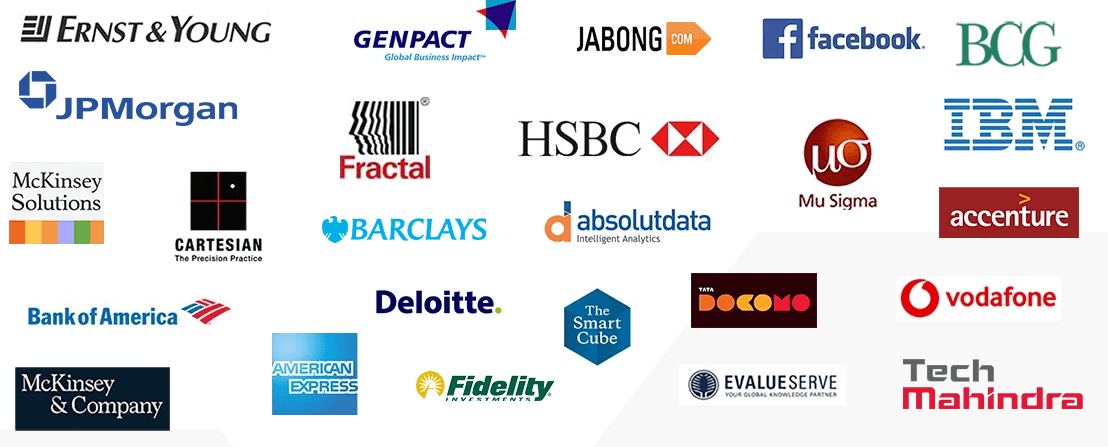
AnalytixLabs is a proud house to students who have paved their way into some of the biggest tech names like JP Morgan, IBM, Facebook, Deloitte, Bank of America, Tech Mahindra, McKinsey & Company, and more.
Industry experts offer mock interviews, career guidance, and performance feedback to train you for the professional world. So, if you are looking for a data science course with placement in Noida, it has to be AnalytixLabs Data Science 360 course.
Data Science 360 Course reviews in Noida
There is no denying that AnalytixLabs has carved a name for itself as one of the leading data science training institutes in Noida. And it’s not just us saying – check out the reviews from learners who experienced it first-hand.
- G2 Rating: 4.7/5
- Glassdoor: 4.4/5
- Sitejabber: 4.85/5
- Trustpilot: 4.1/5
What are our students saying?
I have completed Data Science with python from AnalytixLabs. I have never regretted my choice since the day I joined AnalytixLabs. And trust me whosoever is planning to learn must choose AnalytixLabs. The kind of support and guidance I receive from the course mentors is really amazing. They never feel irritated or bored while explaining. Enjoyed my learning time with AnalytixLabs.
~ Neha P. on G2 platform.
Understanding predictive modeling and the application in real-world with hands-on projects and assignments
- The course content, assignments, and projects
- The faculty- The way Chandra Sir taught data science combining the concepts with business acumen, helped me to gain an idea about the way data science is used in real life apart from the mathematical concepts behind each algorithm
~ Gaurav K. on G2 platform.
I have enrolled with AnalytixLabs, Noida for the Data Science course in Python, R, and also Big Data using Spark, Hadoop. So far I have done the Python course. The lecturer Mr. Chandra Mouli is very knowledgeable and experienced in the subject. In fact, all the faculty members are very much in sync with current industry trends in the field of Machine learning. The lectures are conveniently timed on the weekends so can be attended by working professionals like myself.
Even if we miss a call or two the videos are available in the LMS so the candidate can self-train as well. I liked that Analytixlabs focuses on delivering hands-on training via practicals, exercises, and projects.
~ Saurabh’s review on Glassdoor.
In Analytixlabs, you can directly reach trainers whenever required. They are very friendly and supportive. They will guide you for the right opportunities.
~ Nina H. on Sitejabber platform.
Check out more testimonials from our students (connected to genuine LinkedIn profiles) on our Testimonial page.
What are the pros of having a master's program at AnalytixLabs?
AnalytixLabs offers a master’s degree in data science, artificial intelligence, and business analytics. These courses are for advanced learners and are equivalent to any post-graduate course in the same discipline. As an added bonus, you get in-depth knowledge, real-time on-hand experience, industry exposure, and advanced project work.
What will my career transition look like after I complete the data science course at AnalytixLabs?
We can confidently assure you that you will not be disappointed at the way your career will pick up post completing the course. We have real-time examples of how students have made transitions in their careers. For instance, Dhruv Agarwal, one of our data science students, moved from the manufacturing sector into data science after completing his training with AnalytixLabs. Since he was a non-programmer, knowing that he moved ahead with data science gives us the confidence to say that it won’t be tough for you.
There are many stories like these. We urge you to focus on learning all the concepts carefully.
I am not a programmer. Can I enroll in the Data Science 360 course?
Yes. Our courses are designed to train you with all the basics. If you are not a programmer, fret not – our course modules include training in programming languages. Add to this, there are various sections of data science that do not require you to know programming languages. If you are an analytical thinker and know how to solve random and abstract business problems by simply looking at data, you are all set.
Who can avail of the demo classes?
Every course has a demo class that anyone interested can take to get an overview of what the course is about, how the trainer is, and the quality of the certification course. These demo classes are free and can be taken before enrolling in a paid course.
How is the faculty at AnalytixLabs?
AnalytixLabs is for data scientists and business analyst experts by data science and BI enthusiasts. The faculty comprises IIT and IIM alumni members who have in-depth industry knowledge.
The faculty members are selected from the best talent pool in the industry and who are not just passionate about Data Science but also about coaching.
What are the other important things to know to pursue a Data Science coaching in Noida?
We are close to understanding the nitty-gritty of being a data scientist and where to start from. Before we wrap up this discussion, here are a few more blogs are sources you may refer to learn Data Science.
You can start with our Free Resources that are downloadable and offer lifetime access to you. Some blogs that are worth reading:
1. What is the difference between data science and business analytics?
2. Is PG in data science worth it?
3. What is the Data Science process?
4. Beginners guide to mastering Python for data science
5. Top 25 books to learn Data Science
Some other data science blogs worth following are:
- The IBM Data and AI blog: IBM is a leader when it comes to data science and AI. Make sure to follow this blog and get the latest insights on how to disrupt the data science industry and develop innovative ways to improve market ROI.
- Dataversity: This is more like an online magazine clustered with videos, infographics, whitepapers, and more to help students prepare for the future. Looking for a learning plan? Dataversity offers one, and a pretty good one.
- FiveThirtyEight: The editor-in-chief, Nate Silver, is a statistician. So, expect a lot of insights on the practical use of data. Add to this, there are two podcasts that cover data points in sports and politics. Worth reading (And listening).
- Data Science 101: This blog is run by an award-winning team and is the OG of data science blogs. From explaining the founder’s journey from software engineer into data science, to running an ongoing series on cloud data science – this blog is a gamut of information for all data science enthusiasts.
That’s it. Looking to start with data science? Now’s the time. If you are an existing professional and looking to hone your skills, enroll yourself and go over the concepts once again along with acquiring advanced knowledge. Your data science career starts from here. Hurry, seats are filling in fast.
We hope all this information clears any doubts that you may have regarding the data science classes in Noida, especially at AnalytixLabs. If you still have a question we did not address, feel free to connect with us, either via our social pages or via the connect with us page.
Excited?
Talk to Expert
Counselor
to gain insights into your profile and
strategize your next career move!
