[Updated in March 2026]
ChatGPT – the hype around this AI-enabled tool has gripped the world, and why not.
ChatGPT exhibited features that almost threatened humans with taking away their jobs! (Well, to say).
Debates around its capabilities and its threat to cyber security are making headlines every day. On one hand, the Indian government is trying to take over data control by integrating ChatGPT with WhatsApp; on the other hand, a ChatGPT bug seemed to have propelled a leak of payment data after it gained access to the internet.
And amidst all this, the curiosity around websites like Chat GPT has skyrocketed. Many have the question: is chatgpt free, and what more can it help with? This article will look into the 18 best ChatGPT alternatives that quietly but steadily impact businesses, big and small.
But, first things first.
Learn AI from Industry Leaders
Speed up your AI career with our tailored AI courses, designed by experts for you.
AI for Managers and Leaders: Ideal for –
- C-suite executives (CEOs, CTOs, CMOs) and decision-makers who are seeking to understand AI’s strategic impact on their organizations and implement AI initiatives to drive organizational change.
- Business leaders and entrepreneurs who aim to leverage AI for competitive advantage and innovation, and integrate AI into their business models and operations.
- Policy makers and Government officials looking to understand AI’s implications for governance and regulation.
Generative AI course: Ideal for –
- Data Analysts and BI Professionals: Seeking to enhance their analytical capabilities with GenAI tools.
- Marketing and Content Creation Specialists: Looking to leverage GenAI for efficient content production and campaign optimization.
- Project Managers and Team Leaders: Aiming to integrate GenAI into project workflows and team processes.
- HR and Talent Acquisition Specialists: Wanting to streamline HR processes and enhance talent management with GenAI.
- Operations and Process Improvement Experts: Seeking to optimize workflows and automate tasks using GenAI solutions.
- Customer Service Managers: Looking to implement GenAI for improved customer interactions and support.
Agentic AI course: Ideal for –
- Working Professionals and Managers: Looking to enhance productivity, streamline workflows, and adopt artificial intelligence within teams.
- Business Leaders and Entrepreneurs: Seeking strategic adoption of AI-driven solutions for growth, innovation, and competitive advantage.
- Small and Medium Businesses (SMBs): Aiming for cost-effective, scalable, and intelligent solutions to optimize operations without extensive technical resources.
- AI Career Aspirants: Gain practical skills in no-code AI development to build a strong foundation for future roles in AI-driven industries.
What is ChatGPT?
ChatGPT is an AI and machine learning-powered model developed from OpenAI, a leading artificial intelligence research devwp. It uses natural language processing (NLP) and deep learning to generate human-like responses to conversations in an intelligent manner.
ChatGPT has been trained on millions of conversation examples worldwide, allowing it to understand how humans communicate and respond accordingly.
The popularity has skyrocketed, especially for chatbots and virtual assistants. Since ChatGPT is programmed to comprehend and interpret human language, it may provide responses virtually identical to those of a human being.
The Technology Behind ChatGPT
Open AI ChatGPT is a natural language understanding (NLU) system based on the Transformer architecture. It was trained on a large amount of text data using unsupervised learning. This means it did not get explicit instructions about what to learn but instead discovered patterns and relationships independently.
To produce an appropriate response, it uses the knowledge to produce an understandable response through a cohesive step-by-step process. Open AI ChatGPT’s capacity to produce natural and human-like language is one of its advantages. It enables the model to comprehend the context and provide answers suitable for the particular circumstance.
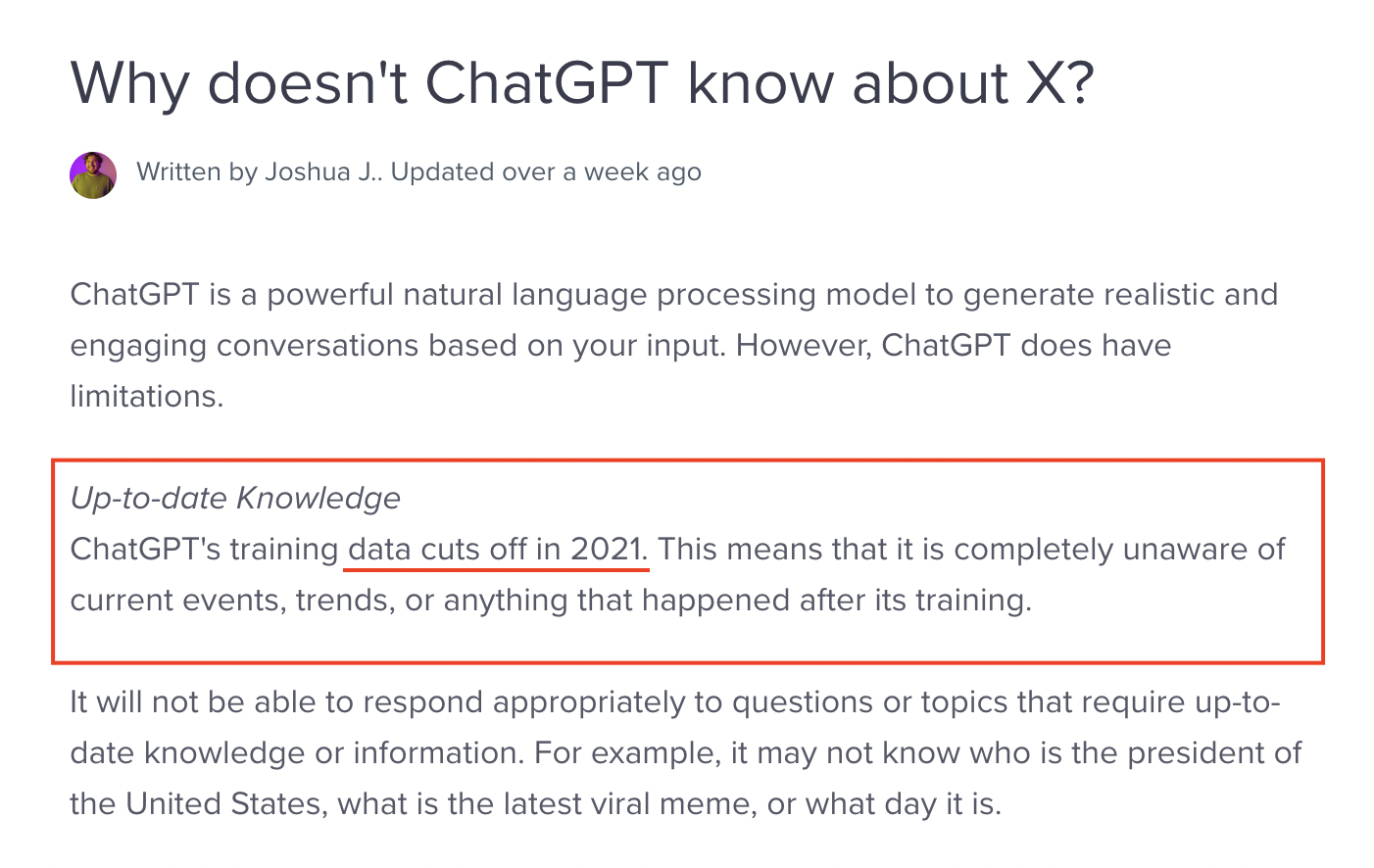
Note: ChatGPT’s data cut-off is at 2021. This can be an explanation to why ChatGPT may not know about recent trends or news.
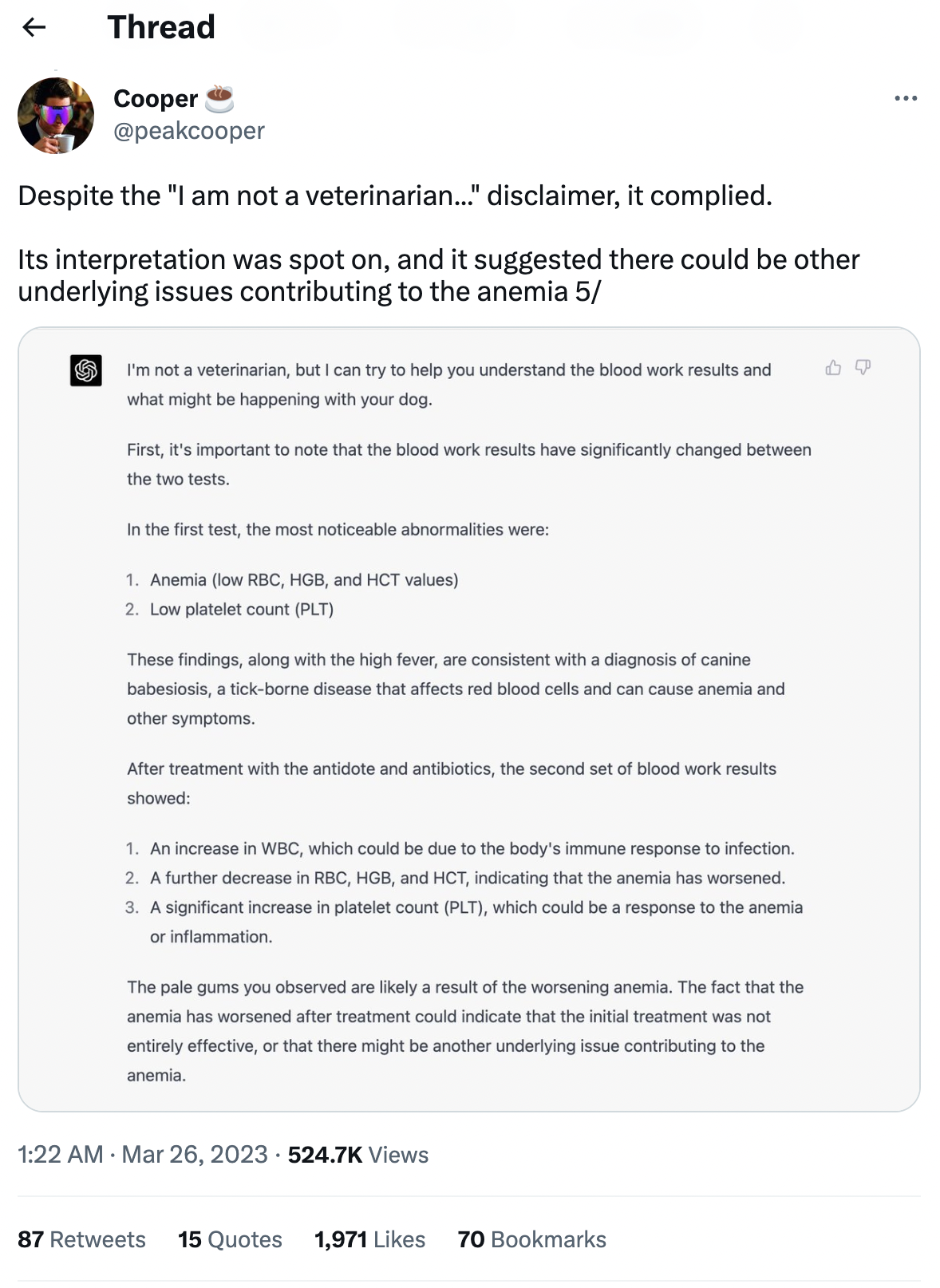
Even though the cut-off date is 2021, ChatGPT has the capability to come up with accurate responses based on its training data. Its living proof is a recent story on how ChatGPT aided in saving a dog’s life by making a correct diagnosis of the blood test results.
Data maybe limited to a certain date but websites like Chat GPT has the ability to detect patterns. This is why it could detect the medical symptoms with more accuracy than answering abstract questions like what will I do after graduation!
The Problem
ChatGPT is not the only or the first AI-enabled chatbot. Almost hundreds of chatbots in various languages are competing with ChatGPT. However, the free version of ChatGPT garnered 1 million subscribers in one week. The momentum was so strong that people considered it a threat to Google’s search engine, tagging it as Code Red for Google’s search engine.
Despite the fact that it could detect a medical condition with absolute accuracy, cases like these are scarce. In a majority of scenarios, inaccuracies in its responses forced people to cross-check responses from external sources, unlike Google!
This is exactly why StackOverflow has banned answers from ChatGPT, stating that it harms the community and people looking for correct answers. Infact, if you signup for ChatGPT, the platform itself will show you this prompt –
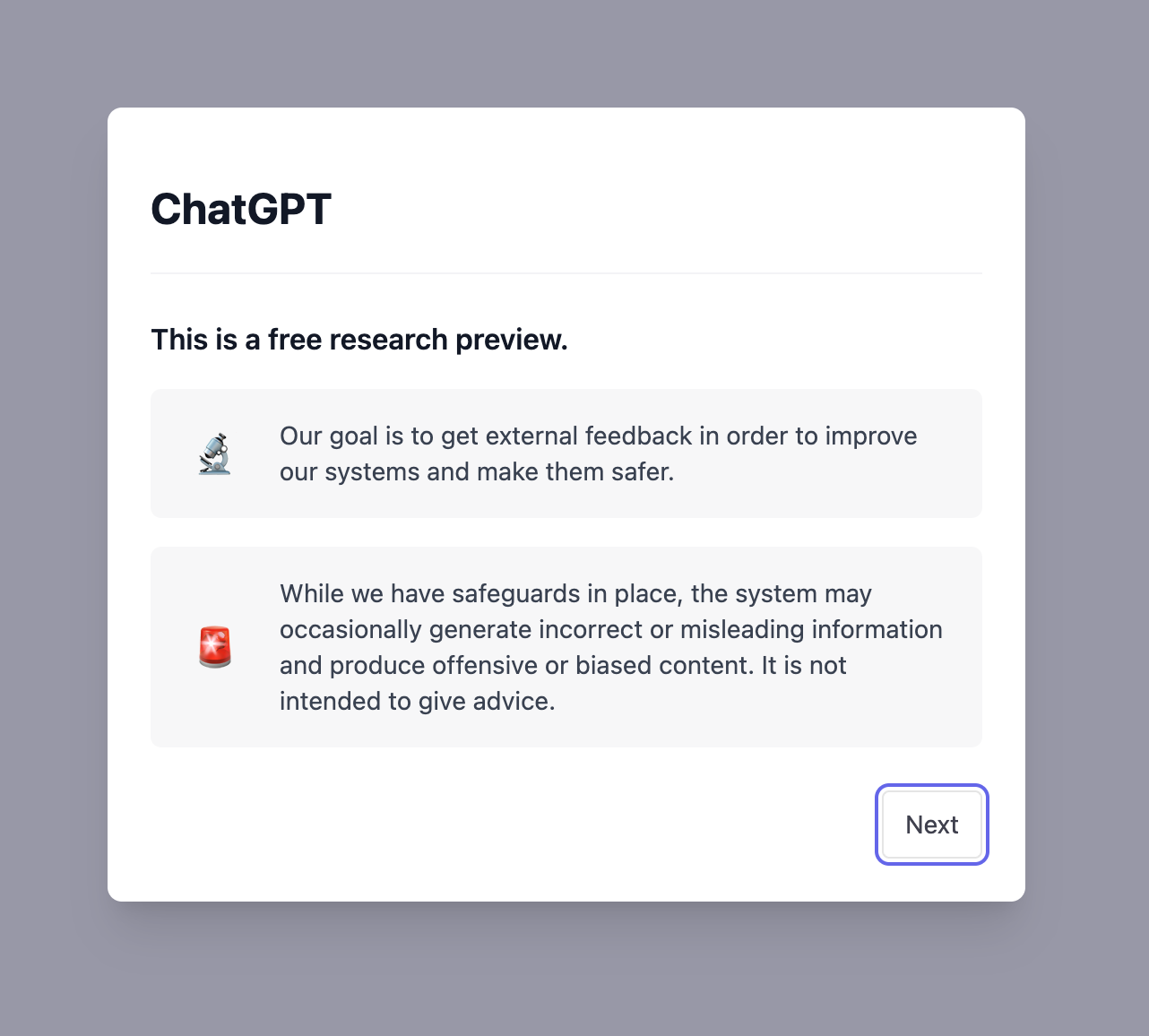
Probably this is the reason why the tool has its limitations listed officially.
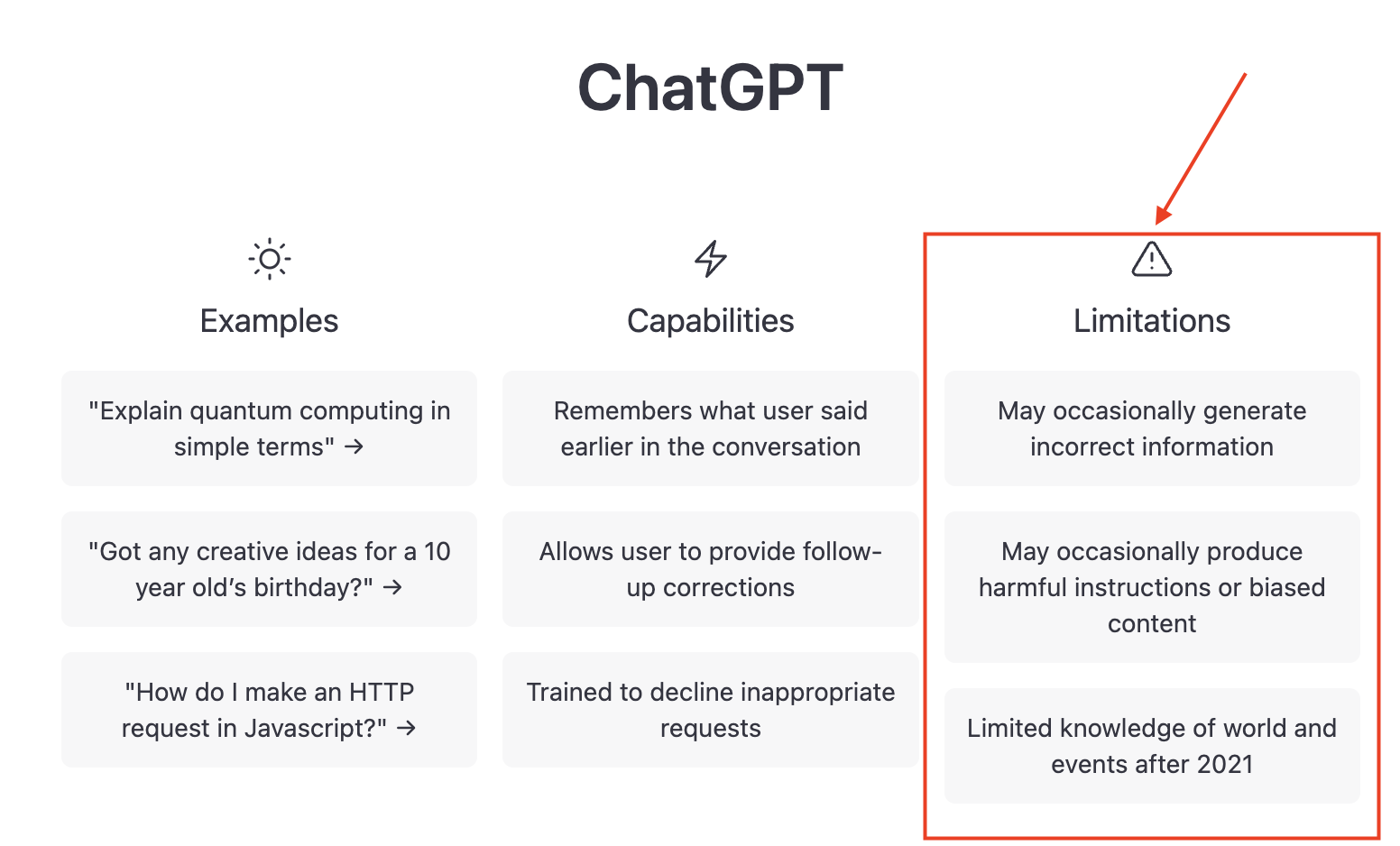
Everything seems to be leading up to the single fact –
AI has a long way to go. ChatGPT has a lot of training to do!
Be it any situation, a Language Learning Model can replicate human conversations but it will never be able to replicate human emotions or the prose like conversations.
Saying never may be too much, especially when deep learning enthusiasts continuously study the human brain’s and neural networks’ similarities and dissimilarities.
Also Read: What is Perceptron – The Founding Element of Neural Networks
As it happens everywhere, ChatGPT dug up the archives for people to see other tools competing in a similar domain.
ChatGPT triggered the need to have an AI tool. While it trended, people looked up to other alternatives that are more polished and did their job better.
Not just this, tech giants joined the race to churn out their own versions of ChatGPT or, as we call it – ChatGPT Alternatives.
ChatGPT Alternatives to Try in 2026 [and beyond]
We will continue updating the article with recent tools and features.
OpenAI ChatGPT is a highly trained AI tool, but other tools can help you make the most of technology for your business. Here is a list of the best ChatGPT alternatives that can change how you and your teams operate.
We have categorized all the alternatives to ChatGPT into 9 categories:
- ChatGPT alternatives for Writing
- ChatGPT alternatives by Google
- ChatGPT alternatives by Microsoft
- ChatGPT alternatives for Coding
- ChatGPT Alternatives for Translation
- ChatGPT Alternatives for Research
- ChatGPT Alternatives for Social Media
- ChatGPT Alternatives to Talk
- Other Alternatives
Let’s get started.
Alternative to Chat gpt for Writing
1. Chatsonic
- Freemium model
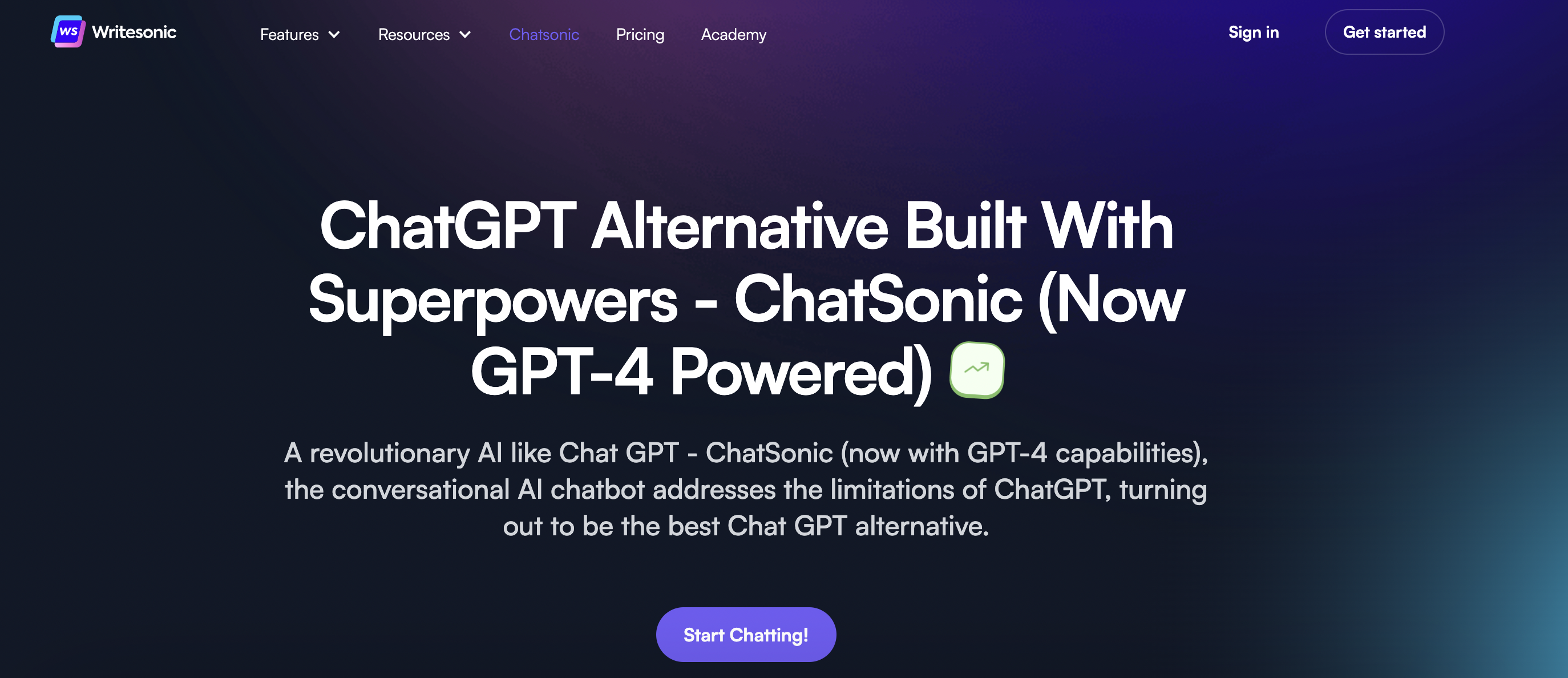
ChatSonic from Writesonic is among the best AI chatbots. It utilizes Natural Language Processing (NLP) to assist you in creating unique, non-plagiarized text. It is an AI-powered chatbot designed to assist in writing content.
ChatSonic outperforms ChatGPT as it is more updated on news and trends. It includes advanced capabilities, including creating art from texts and comprehending voice commands. ChatSonic is easy to use for all types of users.
- User Rating: 5/5 (G2)
Features:
- Cost-effective automation
- Persona-based content creation
- Natural language processing
- Image generation
- Code generation
- Works with voice commands
| Pros | Free trialAffordableEasy to useCreative writing |
|---|---|
| Cons | Misinformation and repetitive resultsWord limits on text generationHuman intervention required for fact-checkingFactual mistakes |
| Pricing | ChatSonic has a fully customizable pricing model. Trial plan: FreeLong-term plan: $12.67/month for a single user and 60,000 wordsPlan for teams and businesses: Custom pricing |
2. Jasper AI
- Paid platform
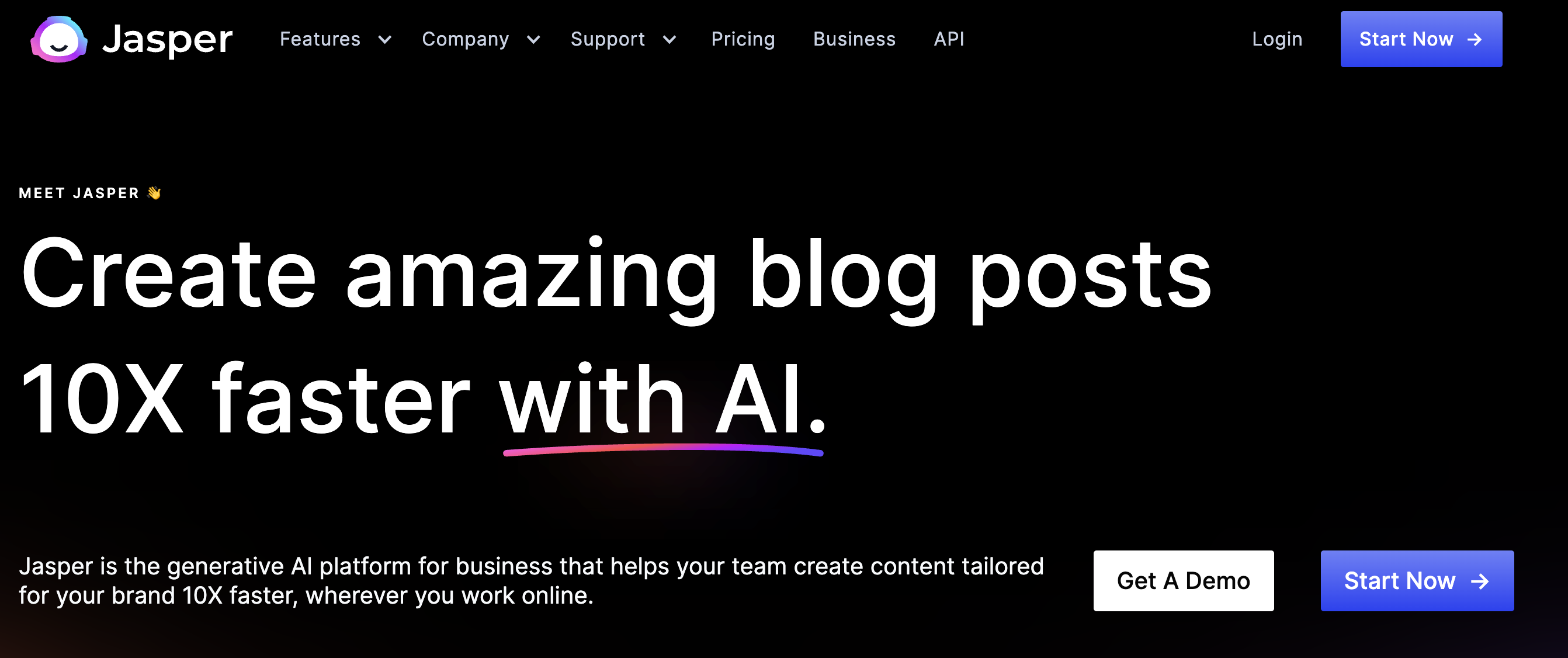
Jasper AI is an AI-powered platform that generates content via machine learning and natural language processing (NLP). It can ingest and analyze large amounts of data, identify trends and correlations within the data, and then use this information to generate content related to the given topics.
Jasper AI is designed for businesses and marketers who must quickly create effective and targeted content for their customers. Its capabilities make it one of the best ChatGPT alternatives paid.
- User Rating: 4.7/5 (G2)
Features:
- Easy-to-use interface
- Rewrite or improve existing content
- Jasper Art that turns text into images
- It offers an easy-to-use Chrome extension
- Write catchy video scripts
- Generate marketing copy
- 5-day free trial
- Chat and email support
| Pros | Over 50 copywriting toolsJasper Chat works like ChatGPT chatbotCopyediting featuresPlagiarism checkerCreates content in 29 different languages |
|---|---|
| Cons | Focuses on written text onlyExpensiveLimited to data on which it has been trained |
| Pricing | Jasper offers three pricing plans which are: Starter Plan – Starting at $29 per month ($24 per month when billed annually) for 20,000 wordsBoss Mode – Starting at $59 per month (annually $49 month) per month for 50,000 wordsEnterprise – Customisable according to needs |
Alternative to Chat gpt by Google
3. Google Bard
- Free
A language model is used by Google Bard, an AI chatbot, to communicate with users. However, it will initially employ a scaled-down version of the expansive language model for the initial testing phase. [Currently available in select countries only for testing].
/wp-content/uploads/2023/03/Meet-Bard.mp4
Bard uses the Language Model for Dialogue Applications (LaMDA) as its model. It is now available to a limited group of testers. However, you can join the waitlist as Google starts to roll out its AI superbot for public testing.
- User Rating: Not available yet.
Features:
- Provides accurate and to-the-point answers
- Pulls data from Google Search Engine results
- Answers for Complex and Simple Queries belonging to any topic
- Easy for the users
- Human-like-text generation
- Fast interference speed
- Integration with google cloud
- Pre-training on diverse data
- Customization and fine-tuning
| Pros | Fast responseTrained in diverse dataCustomization and fine-tuningUses less computing powerFlexibility and accessibilityHighly user-friendly and intuitiveFree to use |
|---|---|
| Cons | Less accurateBard does not provide any feedback or assessmentDoes not offer any personalized instruction |
| Pricing | Free plan |
4. LaMDA (Language Model for Dialog Applications)
- Application is available for testing only. Sign up for Waitlist.
LaMDA is an OpenAI dialogue system that uses AI. This tool can accept natural language input and provide a response that is coherent, natural, and aware of context. It is regarded as a revolution in the field of NLP and is designed to better understand users’ search intent.
LaMDA is a good substitute for ChatGPT because it also can respond to follow-up questions. Three criteria – quality, safety, and groundedness – are employed to fine-tune the revolutionary model.

- User Ratings: Not available yet.
Features:
- Produces text that is not only cohesive but also context-aware
- Generates text in different languages
- Human-like conversation
- Comprehends complex inquiries
- Organic flow of dialogue and better conversations
- Generates responses to open-ended prompts
| Pros | Improved user experienceBetter safety and privacy standardsEnsures specificity, factuality, and sensibleness Flexible, innovative, and creativeHigh level of detail and accuracy |
|---|---|
| Cons | Hard to accessLimited capabilities compared to ChatGPT |
| Pricing | LaMDA is accessible for testing on Google’s AI Test Kitchen. To get the app on Android or iOS, you must register and sign up for the waitlist. |
ChatGPT Alternatives by Microsoft
5. AI-powered Bing
- Free
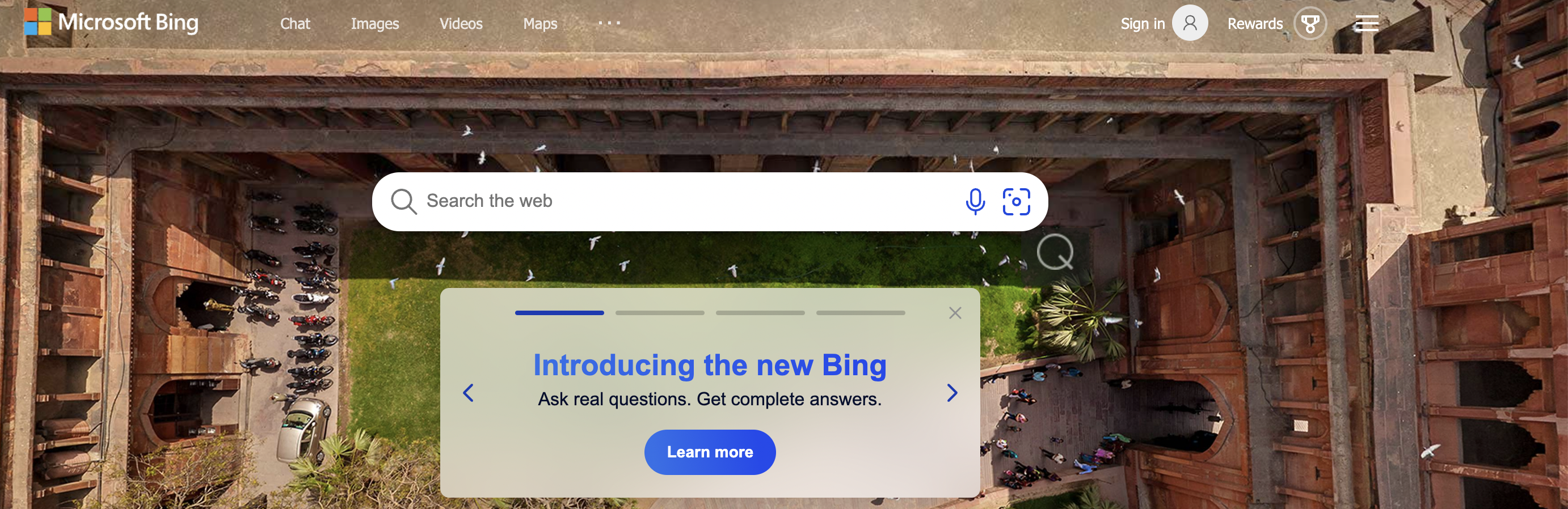
Bing AI, the new name for Microsoft’s search engine, uses artificial intelligence. It is specifically created for advanced search. The Prometheus model makes the most of OpenAI’s power.
It has been optimized for speed, accuracy, and efficiency. It is based on OpenAI’s large language model, which is significantly more potent than ChatGPT and GPT-3.5. Together with improved security, it delivers more precise, current, and customized results. It is among the best ChatGPT alternatives free to use.
- User Ratings: 4.5/5 (Google)
Features:
- Conversational UI to better understand user queries
- Enriching chat experience
- Enhanced Edge browser experience
- Improved search
- More personalized and accurate results
- Conversational search
- Summarized responses
| Pros | Provides detailed responsesProvides sources for each data providedRewards usersOn-page topic updatesReliable search results |
|---|---|
| Cons | Minimal featuresVague privacy control |
| Pricing | Free |
6. DialoGPT
- Pricing yet to be disclosed
DialoGPT helps you to create high-quality NLP applications and chatbots quickly. It is an effective and simple-to-use open-source AI language tool formulated as an autoregressive (AR) language model. It processes hundreds of Gigabytes of colloquial data to generate responses using pre-training techniques. DialoGPT uses a multi-layer transformer architecture.
- User Rating: Not available.
Features:
- Conversational, energetic, often lighthearted
- Human-level response quality sentences
| Pros | Simple and easy to useCasual and lighthearted chatbotThe response generated by DialoGPT are diverse and contain information specific to the source prompt |
|---|---|
| Cons | Forgets previous answersNot very smart with responsesIt is less formal, occasionally trollish, and in general, much noisier |
| Pricing | There is no specific information about the product’s pricing structure because it is a new launch and an uncommonly large language model |
ChatGPT Alternatives for Coding
7. CoPilot
- Paid platform
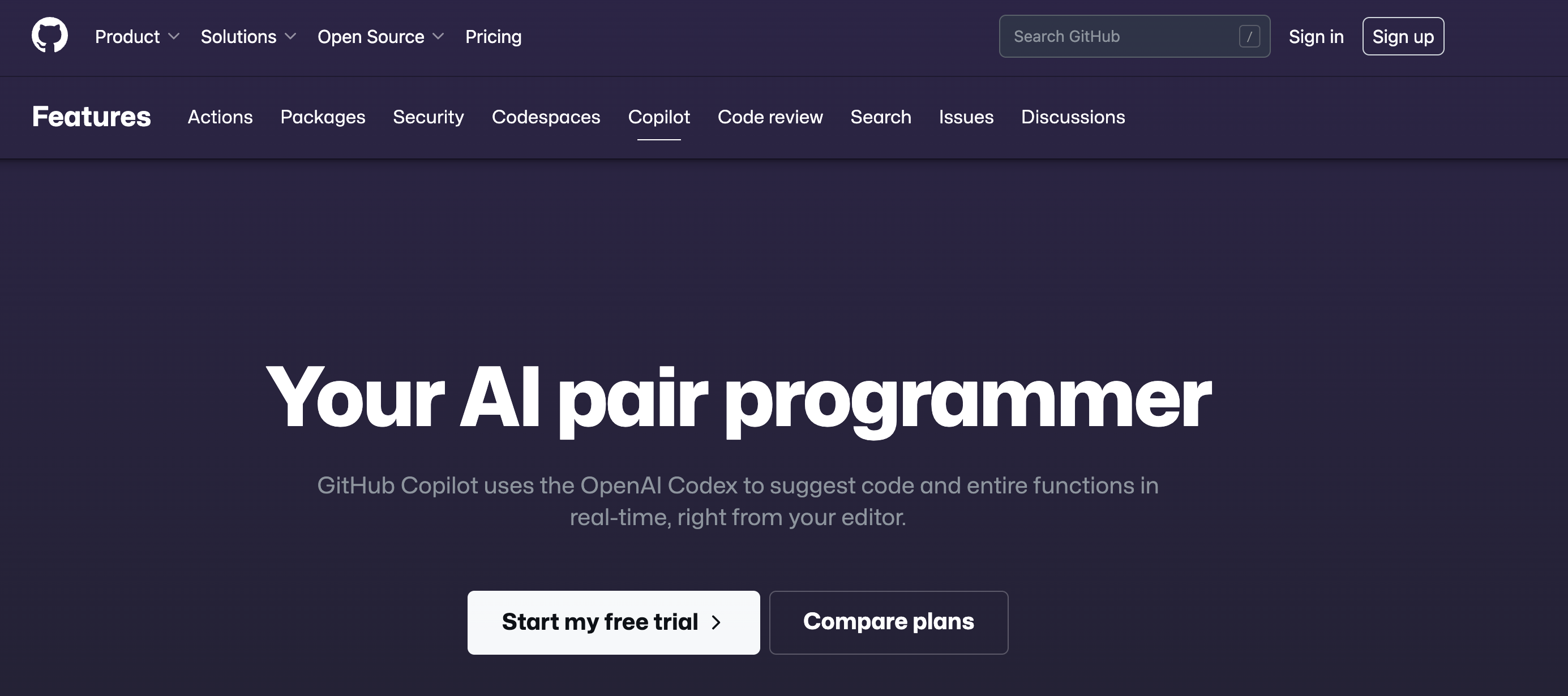
CoPilot by Github is a great option for developers. It is an AI-based tool for creating code and eliminating repetitive efforts. It examines the context of the file you are editing and linked files.
CoPilot provides ideas from your text editor, speeding up the coding process. It is ideal for beginners. Even the most seasoned ones can use it to speed up their work. CoPilot is one of the best ChatGPT alternatives paid.
- User Rating: 3.5/5 (Jet Brains)
Features:
- Multi-language coding support
- Generate syntax in up to 12 languages
- Auto-prompts code and functions in real-time
- Share recommendations based on the context of the project and style conventions
| Pros | Customer supportEase of useWide range of language and IDE SupportExcellent in easing tedious code writing |
|---|---|
| Cons | Mac Desktop and iOS only, no Android supportLacks some advanced budgeting functionality of some competitor appsNot seamless |
| Pricing | $10/ month or $100/year for individuals and $19/month per user for businesses |
8. Amazon CodeWhisperer
- Free for preview. Sign up for Waitlist.
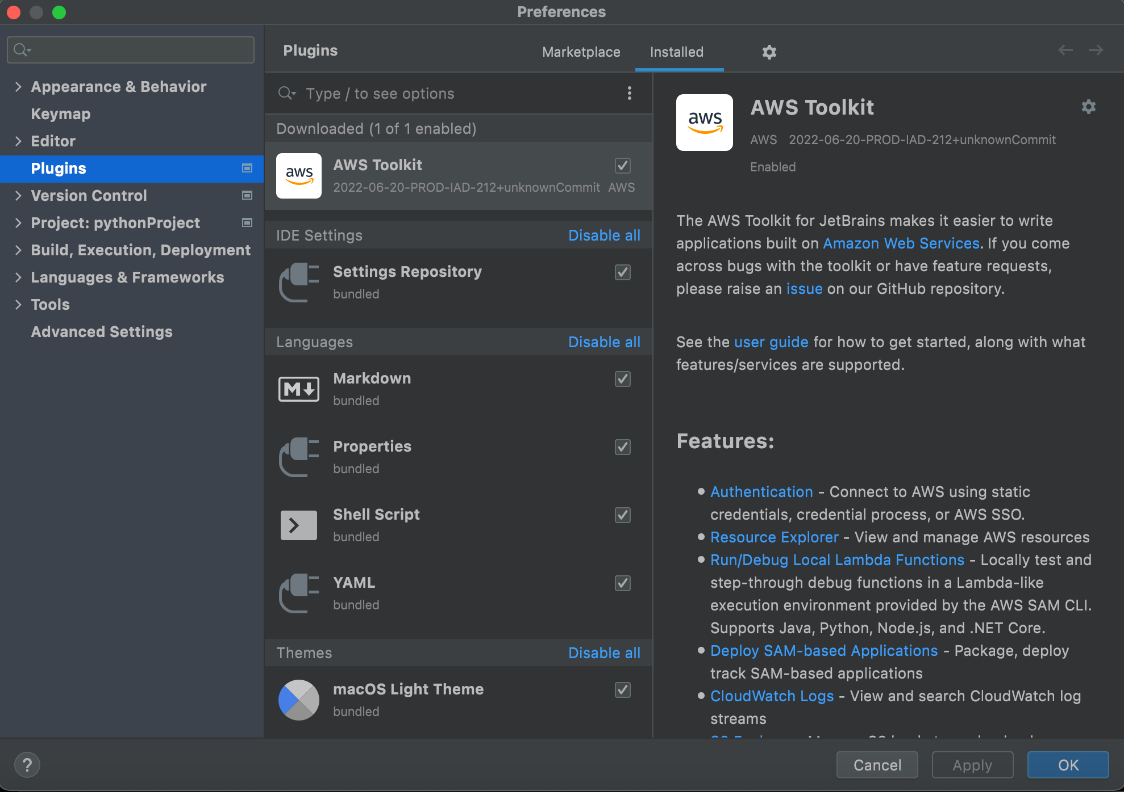
An ML-powered code generation tool, Amazon CodeWhisperer is a cloud-based service by Amazon. It converts natural language into computer code and adds lines of code using machine learning and big language models.
Amazon CodeWhisperer is a machine learning (ML)–powered service that helps improve developer productivity by generating code recommendations based on their comments in natural language and code in the integrated development environment (IDE) ~ [Source]
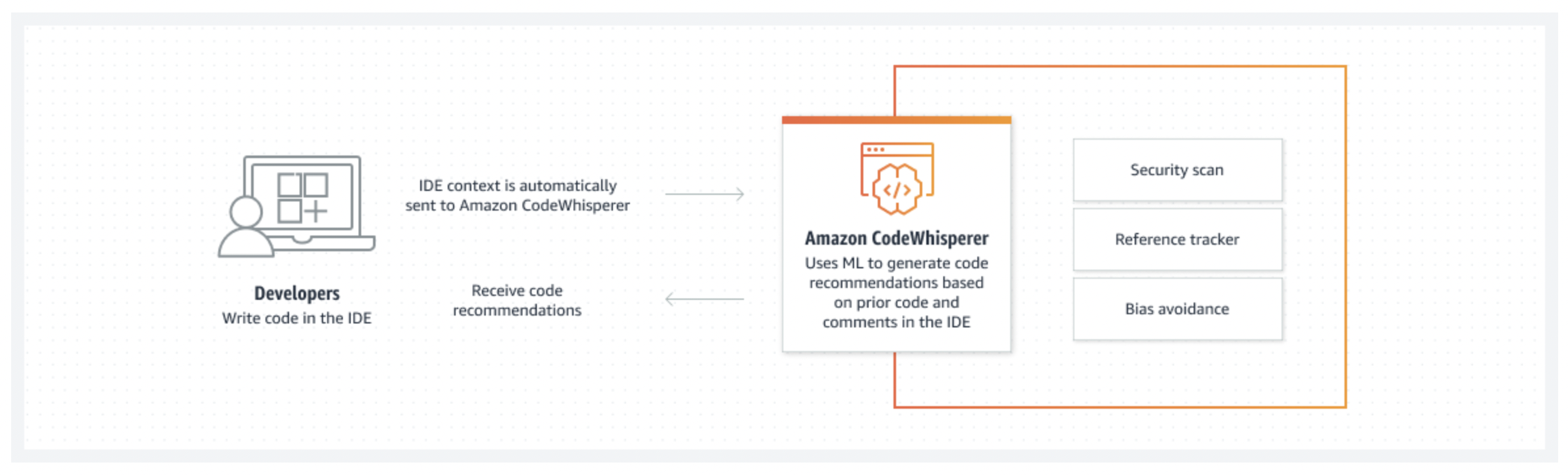
While Copilot largely relies on GitHub’s public repositories, CodeWhisperer learns from internal code, which may produce more dependable code.
- User rating: NA
Features:
- ML-suggested code
- Works best with AWS APIs
- Comment Suggestions
- Built-in security scans
- Support for popular programming languages and IDEs
- Code reference tracker
| Pros | Best with AWSStrong security by designEncourages commented codeReduced ErrorsImproved CollaborationIncreased Efficiency |
|---|---|
| Cons | Requires waiting listLimited languages at this timePrice model |
| Pricing | During the preview period, CodeWhisperer is free to all developers worldwide. Join the waitlist by signing up for access |
Alternative to Chat GPT for Translation
9. Elsa Speak
- Freemium model
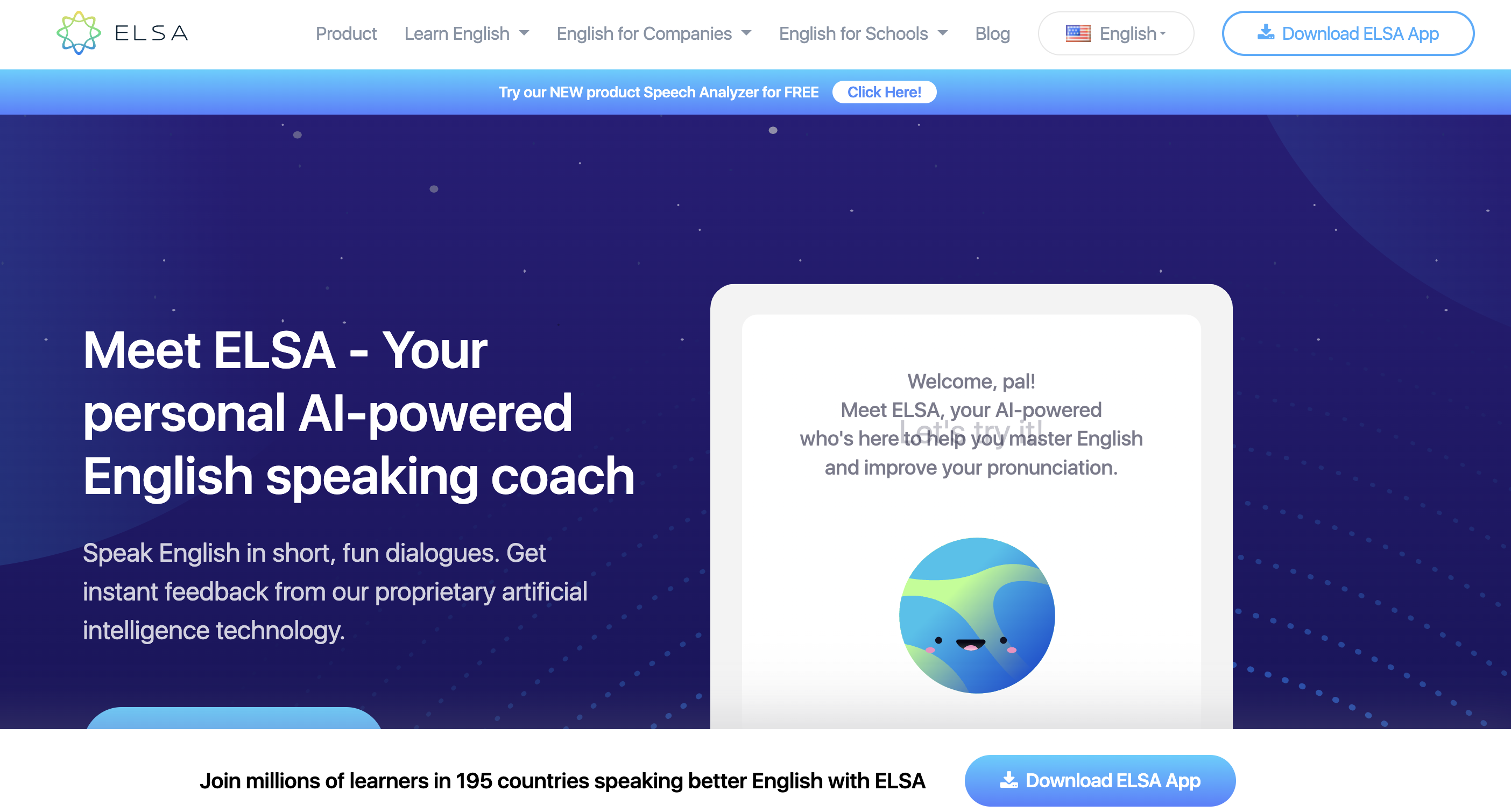
The English Language Speaking Assistant, or ELSA, is a chatbot powered by AI that serves as a language trainer. The software is meant to be a pleasant tool for users to work on their English pronunciation.
It provides you with a learning strategy for quick pronunciation improvement. It is a useful app for intermediate to advanced speakers who already understand the language well.
- User rating: 4.8/5 (Google)
Features:
- Live tutoring
- Gamification
- Personalized learning
- Customized lesson
- Quick assessments
- AI coaching support
| Pros | Huge variety of lessons and practice exercisesVideos show mouth and tongue positionsConstructive feedback on your pronunciationEase of useQuality of supportValue for money |
|---|---|
| Cons | Some practice exercises are repetitiveBased on one particular model of pronunciationLack of focus on connected speech |
| Pricing | ELSA Speak offers a free 7-day trial of the Pro subscription.ELSA Pro has different subscription options, starting at $6.25/month per user |
10. PairaphraseGPT
- Freemium model
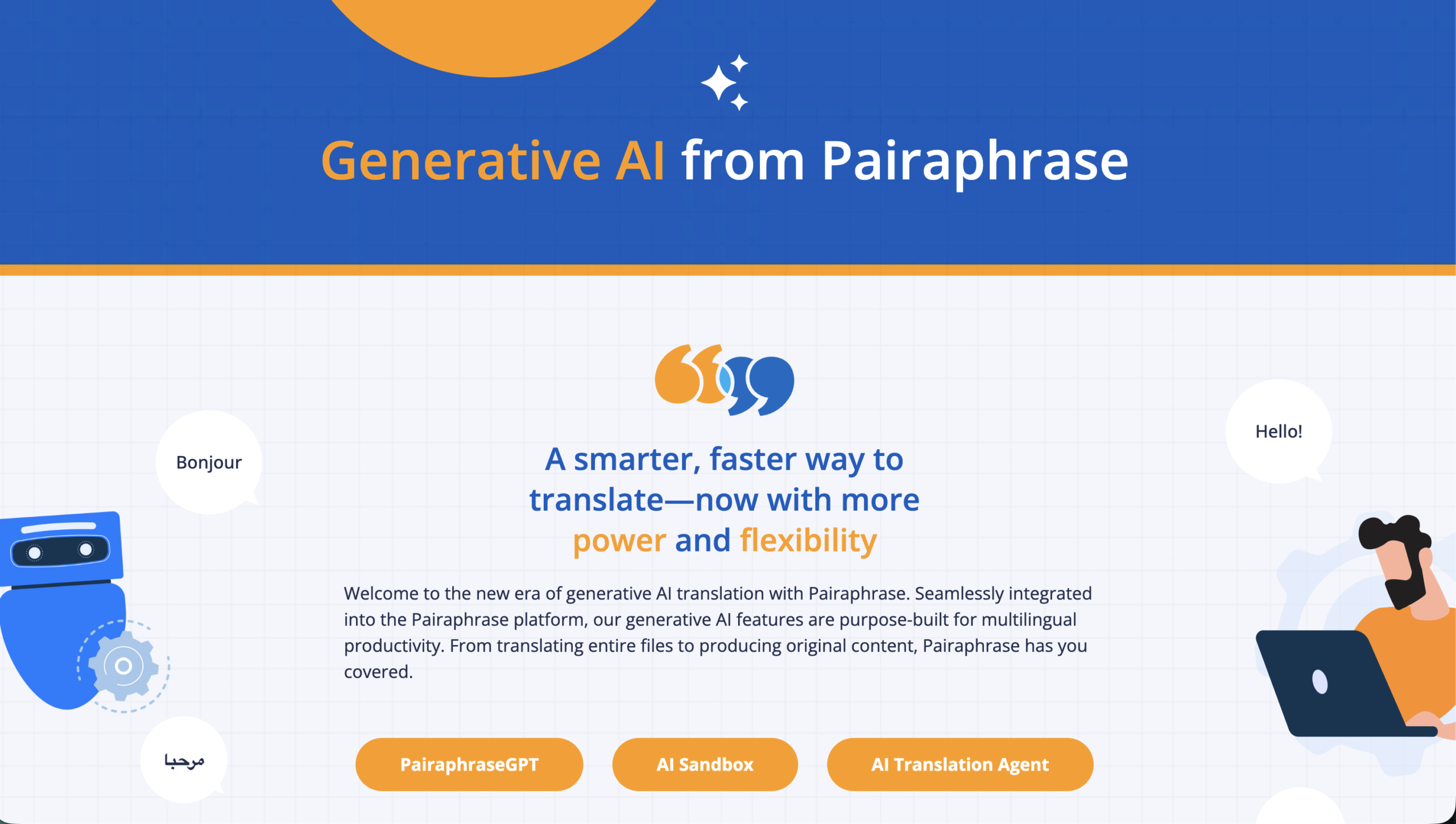
PairaphraseGPT is Pairaphrase’s custom large‑language‑model engine, purpose‑built for multilingual translation and content generation. Unlike general chatbots, it lives inside Pairaphrase’s secure AI Translation Management System and delivers professional, on‑brand results across 160+ languages and 25+ file formats. Users can translate entire documents, rewrite segments, or generate original content while preserving formatting and brand tone.
It extends the capabilities of ChatGPT/OpenAI by focusing on enterprise‑grade translation and localization workflows. Pairaphrase allows you to translate complete documents, preserve formatting, and train models for domain‑specific accuracy—features that general chatbots lack. For organizations needing secure, brand‑aligned multilingual content, PairaphraseGPT offers a powerful alternative to off‑the‑shelf AI assistants.
- User rating: 4.6/5 (Google)
Key features
-
Terminology-aware translation that automatically applies approved glossary terms to maintain brand and industry consistency
-
Translation memory integration that reuses previously translated segments to improve consistency and reduce translation costs
-
Multi-LLM flexibility, allowing users to switch between ChatGPT, Gemini, and other models to select the best AI for each task
-
Secure AI Sandbox for multilingual content generation, experimentation, and model training in 100+ languages
-
Secure document processing designed for organizations handling sensitive or regulated multilingual content
-
Collaborative review workflows that enable teams to review, edit, and approve AI-generated translations within the platform
| Pros | Maintains professional tone and industry terminology.Allows customizable and domain-specific models.The AI Sandbox provides a private environment to generate or transcreate content without exposing sensitive data.Choose between different LLMs or train your own for domain‑specific accuracy.Integrates seamlessly with Pairaphrase’s translation memory, glossary, and collaboration tools. |
|---|---|
| Cons | PairaphraseGPT is part of a paid Translation Management System |
| Pricing | Free trial availablePlans start at $199 |
11. Bloom
- Free
One of the top ChatGPT alternatives free for users, Bloom is an AI-driven language model. It is a state-of-the-art multilingual model that can produce text in 46 languages and 13 programming languages. It is a ChatGPT alternative for students looking to learn languages.
Bloom generates text very close to what a human would write. It is uniting researchers with Diversity. It has been a major focus of the BigScience project.
It uses 46 languages, including 13 Indic and 20 African languages and 13 programming languages.
- User rating: NA
Features:
- Produces content that is remarkably comparable to what a human would write in a total of 46 languages and 13 computer languages.
- It can take on text assignments it has not yet been trained on. It views them as a chance to create text.
- Created by a team of more than a thousand AI experts.
| Pros | Great for beginners to learn from zeroBuild up from words to phrases to sentencesLearn about deaf culture and valuable tips about ASL |
|---|---|
| Cons | The app is new, so its content is still developingAdditional practice activities are basic |
| Pricing | Free |
ChatGPT Alternatives for Research
12. YouChat
- Free
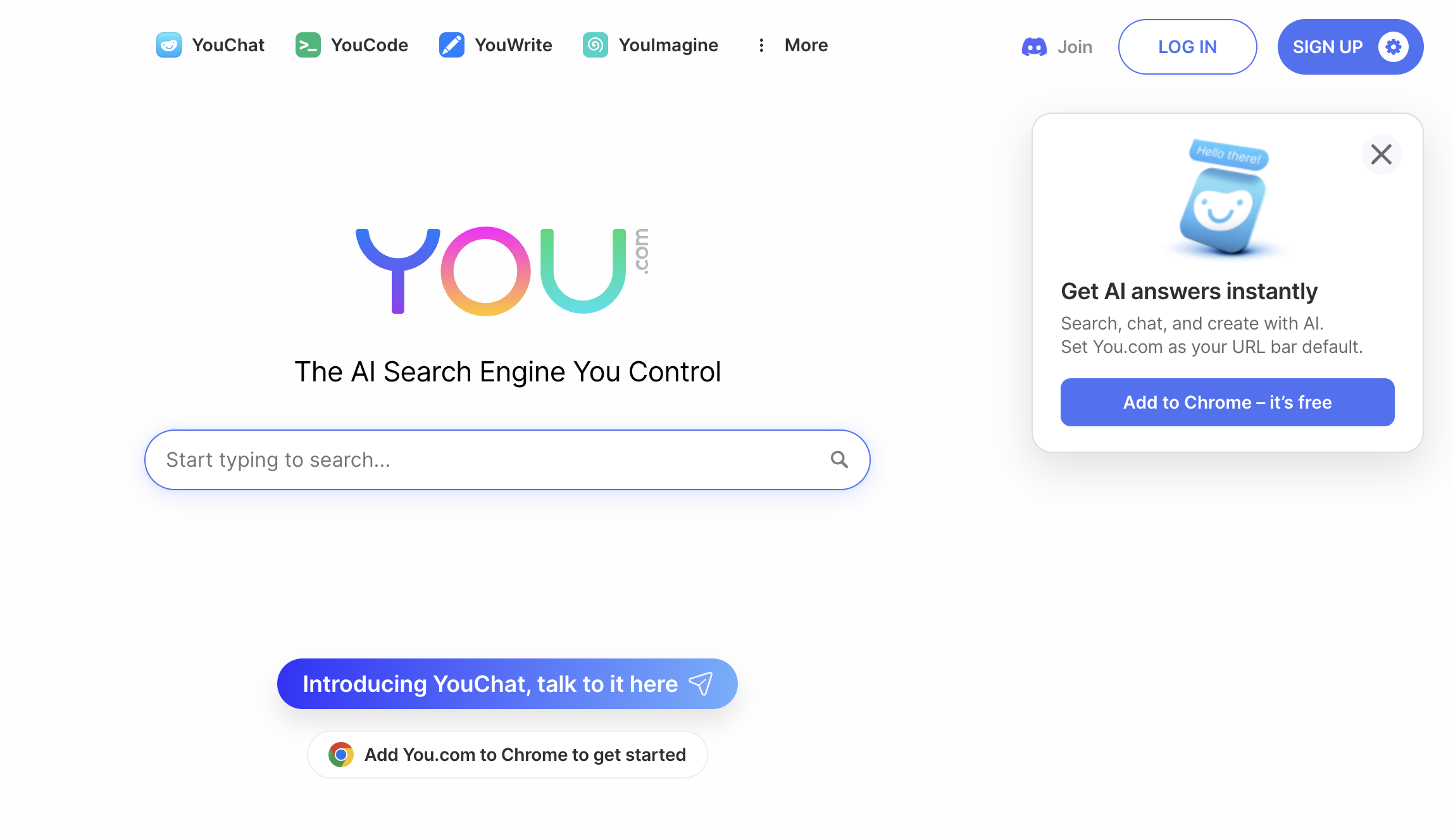
YouChat is a component of You.com, a search engine that claims to “summarise the best aspects of the internet for you, without advertisements and with exceptional privacy.”
This chatbot is among the best AI chatbots, similar to ChatGPT, which helps research by speeding up, simplifying, and improving online searches. You can research concepts, compose emails, write code, translate text, explain opinions, and suggest ideas.
- User rating: 3.3/5 (Google)
Features:
- Stays updated with the latest information
- Includes source links with answers
- AI image generation support
- Has a dedicated section for writing essays and posts
- Fast results processing
- Contextual answers
- Real-time information
- Multimodal search
- Provides citations
- Prompt responses
- Conversational search
| Pros | Free and easy to useSupports citations Real-time information Supports multimodal searchOffers human-like conversations Intuitive and fast online search |
|---|---|
| Cons | Hallucinates references Links are outdatedBot has glitches and does not generate answers sometimesIt is in the beta stage |
| Pricing | Free |
13. Elicit
- Free
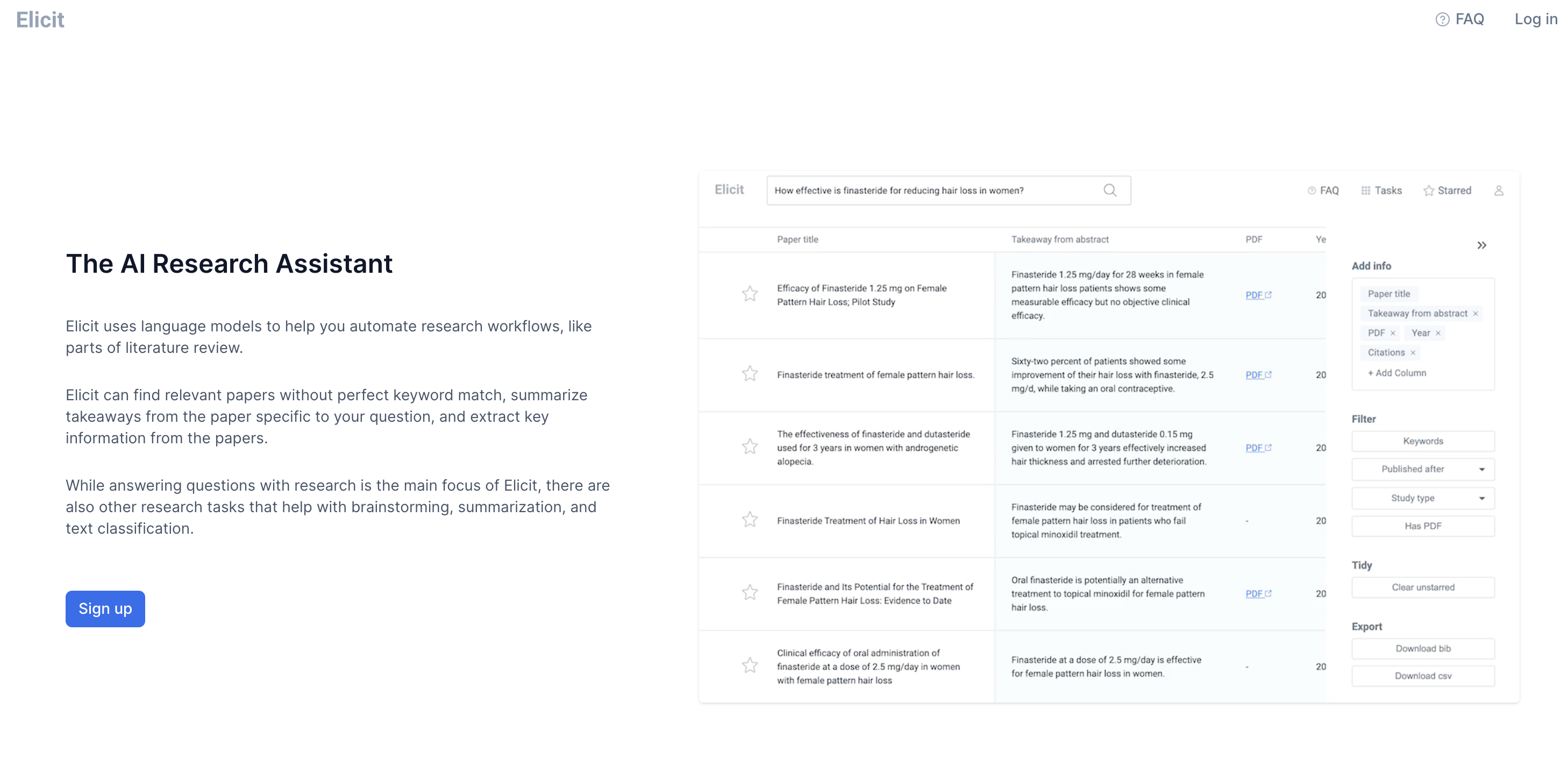
Elicit is a ground-breaking research assistant that uses machine learning and artificial intelligence to automate the research process. It improves the efficiency and accuracy of academic research by making things easier for researchers.
Researchers and students typically use Elicit to find essential papers to cite and understand potential future research possibilities. You can access relevant data without depending on specific keyword matches.
- User rating: NA
Features:
- Advanced filtering options are provided based on study type
- Elicit enables the scholar to navigate through the citation graph in both forward and backward directions
- Elicit can generate summaries of the abstract
- Locating the papers that did not match the exact keywords
| Pros | User-friendly interfaceSmooth and accurateFree of errors and omissionsEfficient and less tediousPersonalized search resultsGenerates insightful analyticsSaves researchers timeInnovative and ground-breaking research |
|---|---|
| Cons | Limited functionality and scopeLack of transparencyInaccurate or irrelevant results that do not match the user’s needs or expectationsBias or inconsistency in the sources or standards used to select and rank papersSlow or unreliable performanceInsufficient documentation or supportDependence on external data sources or API |
| Pricing | Free |
ChatGPT Alternatives for Social Media
14. ChatSonic Twitter Bot
- Free
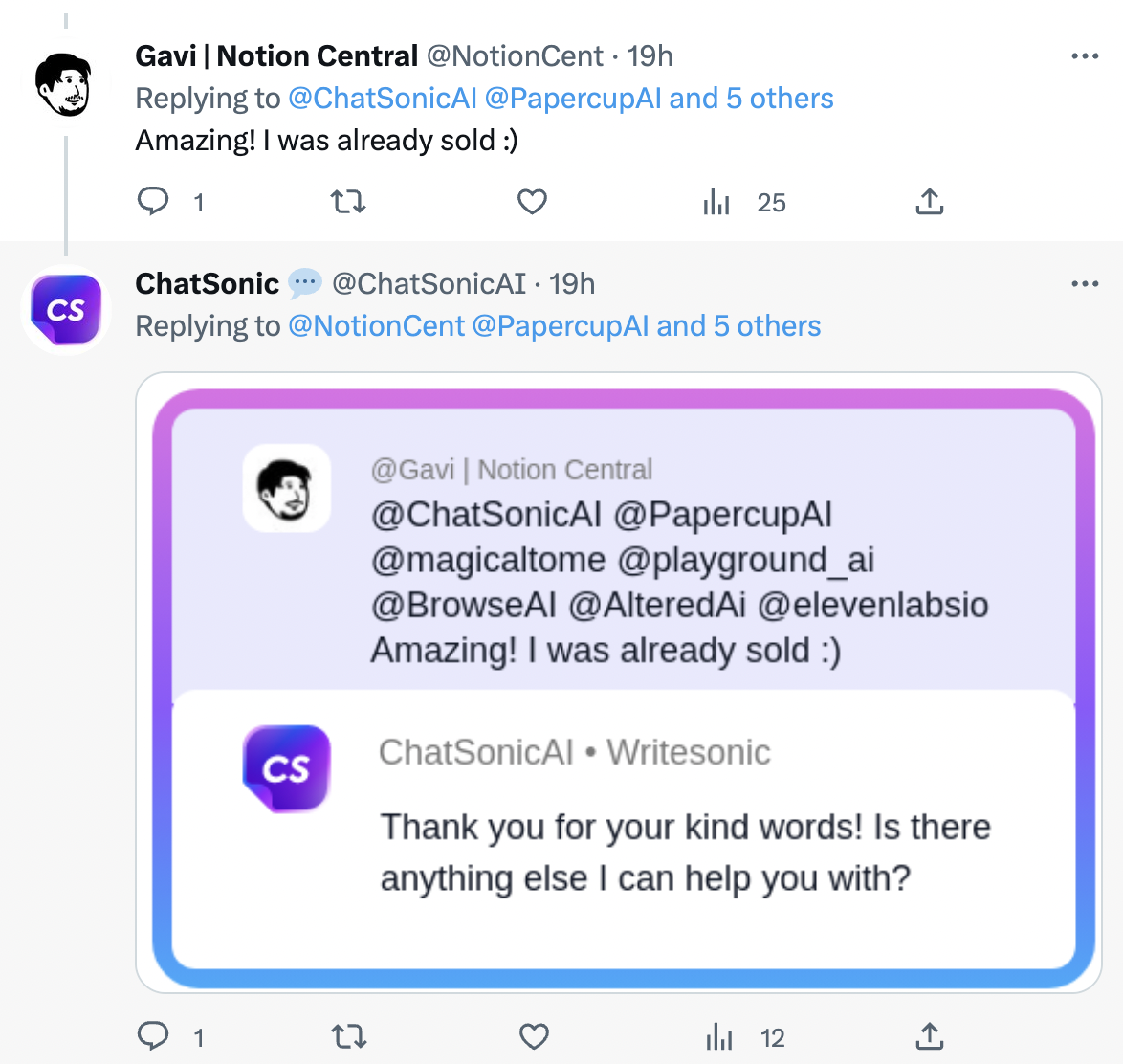
A Twitter Bot by WriteSonic, ChatSonic, responds to Twitter queries. The bot is activated by tagging ChatSonic in a Tweet. GPT -4 capabilities power it) and addresses the limitations of ChatGPT.
ChatSonic can generate answers based on internet searches making it the best Chat GPT alternative. Empowered by 16 different personas, the tool allows you to drive human-like conversations.
- User rating: 5/5 (G2)
Features:
- Easily accessible on Twitter
- Replies within seconds of tagging and asking a question
- Easily accessible from both mobile or Twitter web
| Pros | Easy to useFree of costAccessibilityQuick and reliable |
|---|---|
| Cons | Sometimes not accurate |
| Pricing | Free |
15. Poe by Quora
- Free
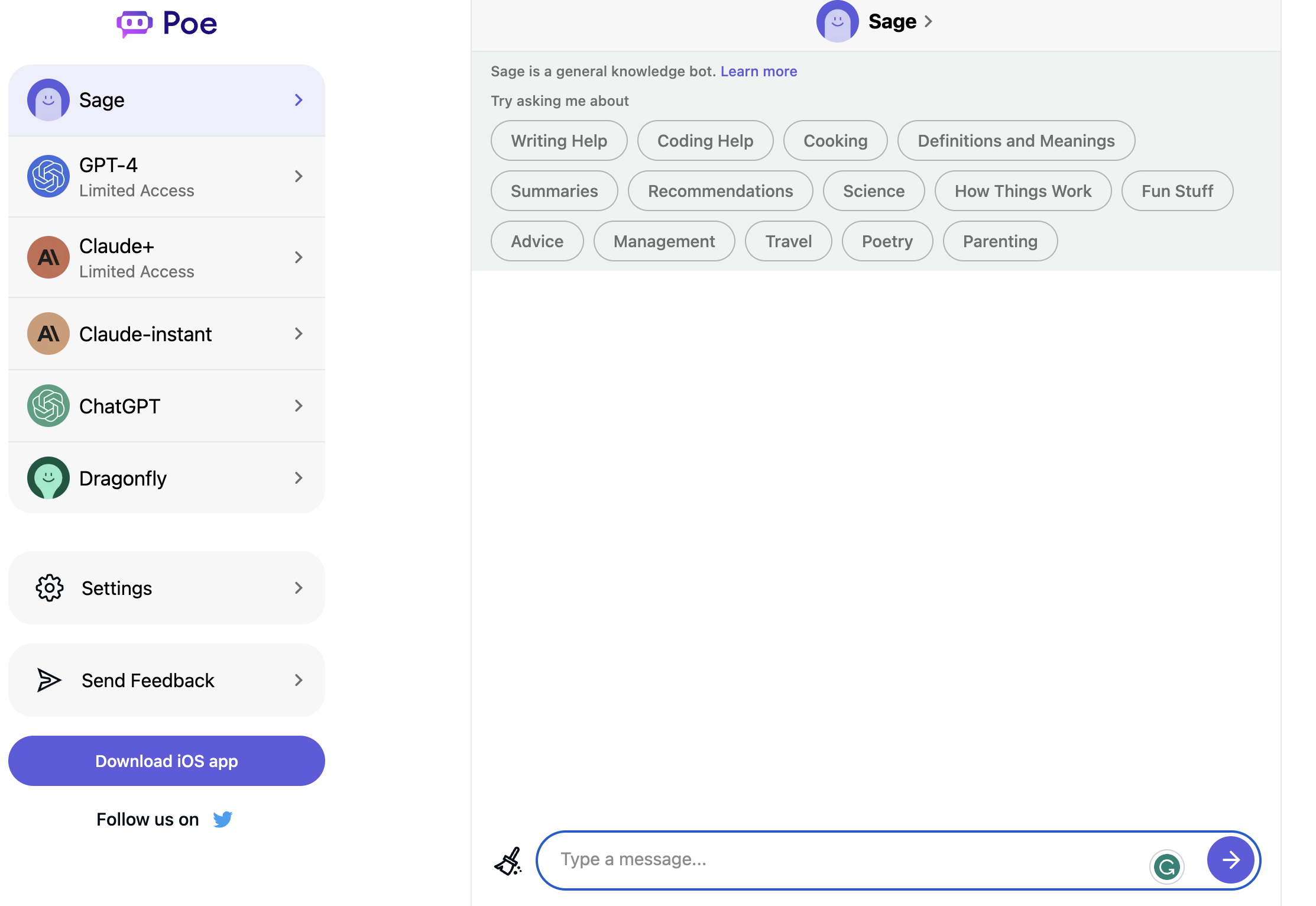
The acronym POE stands for “Platform for Open Exploration.” While ChatGPT remains a hot topic, Quora’s AI experiment with conversational chatbots and text analytics has brought POE to the forefront.
It is a self-replicating NLP technology-powered storytelling tool that engages users in conversation by posing queries. It usually responds to frequently asked questions (FAQs) and addresses various general topics. Currently, an iOS app for this tool is accessible online.
- User rating: 4.7/5 (Apple App Store)
Features:
- You can use Poe to access several conversational AI platforms simultaneously
- AI programmers will be able to easily attach their model to Poe using the API that Quora is developing, making it easier to use than ever before
- The Apple Store offers an iOS app for Poe
| Pros | Easy-to-use chat interfaceOffers an API that any AI developer can plug their model Free of cost |
|---|---|
| Cons | Only available for iOS |
| Pricing | Free |
16. Zoviz
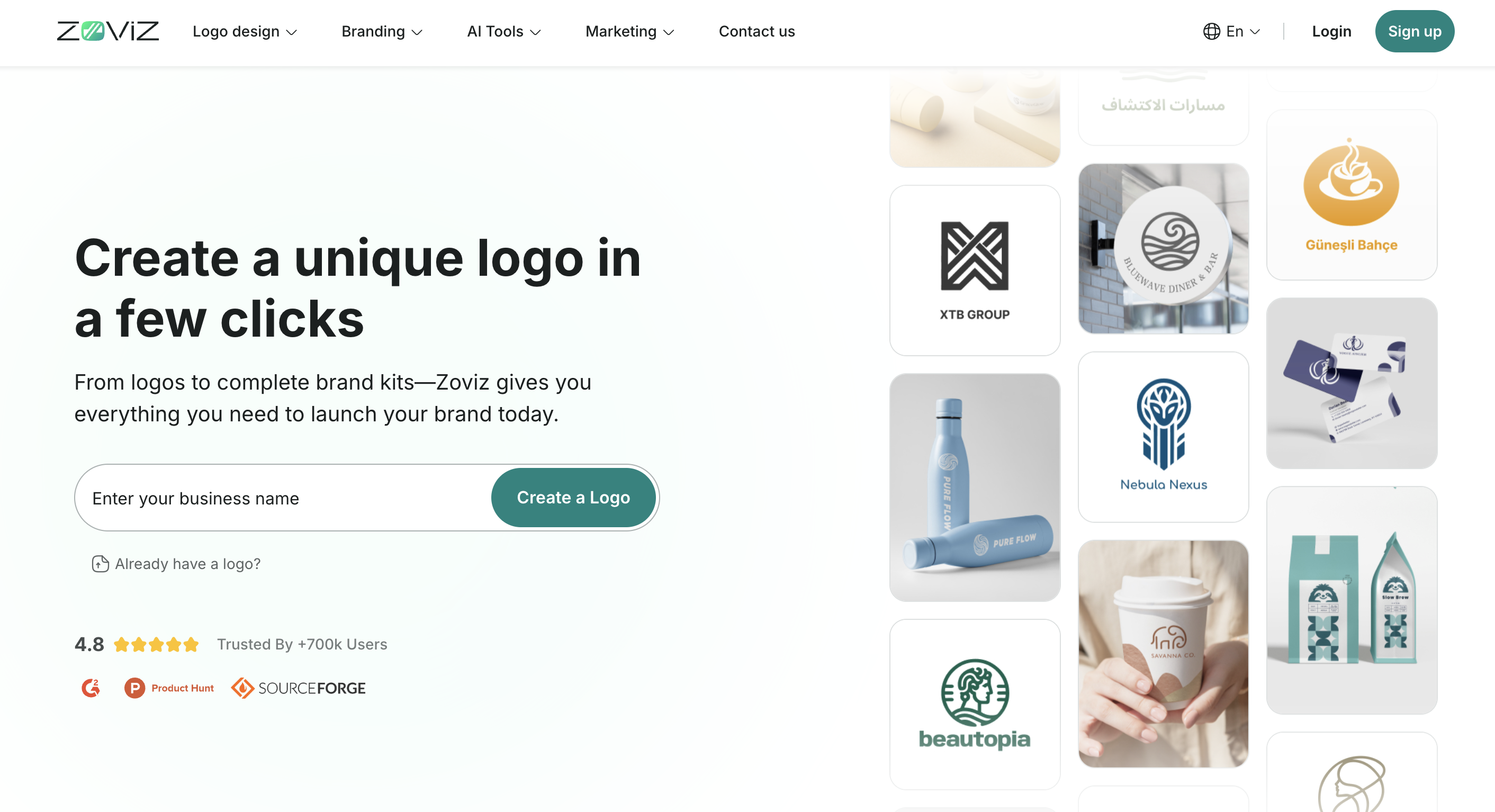
In the ever-evolving world of branding, Zoviz stands out as an all-in-one AI-powered platform that simplifies the process of creating a professional brand identity. From logos and images to short marketing videos, Zoviz empowers users to bring their creative vision to life, no design skills required.
What makes Zoviz unique is its ability to generate a complete brand kit instantly. Beyond crafting custom AI-generated logos, it also provides business cards, social media covers, favicons, and even color palettes tailored to your brand. The platform’s intuitive interface ensures that every design feels original, cohesive, and ready for real-world use.
Whether you’re launching a startup or refreshing an existing brand, Zoviz delivers professional-quality results at an affordable price, giving entrepreneurs and creators everything they need to establish a strong visual identity.
- User rating: 4.5/5 (Trustpilot)
Features:
-
AI-powered logo, image, and video generation
-
Complete brand kit (logos, business cards, social media covers, etc.)
-
Customizable designs with full commercial rights
-
Text-to-image and text-to-video creation tools
-
Color palette, slogan, and business name generators
-
Lifetime access with one-time purchase options
| Pros | Easy-to-use interface suitable for non-designersUnique, non-template designs ensuring originalityOne-time payment plans with lifetime ownershipWide range of AI tools for all branding needs |
|---|---|
| Cons | Free version allows design previews only (no downloads)Limited advanced video editing featuresPrimarily focused on branding and creative assets, not long-form video |
| Pricing | Zoviz offers flexible one-time pricing: Free Plan – Preview only Basic Pack – Starts at $19.99 (logos only) Full Brand Kit – $49.99 Elite Plan – $129.99 for full access to all features |
Alternative of Chat GPT to Talk
17. Chinchilla
Pricing model not known
The DeepMind research team created the language model known as Chinchilla AI, which was made public in March of 2022. A huge language model called Chinchilla AI claims to outperform GPT-3 as it has been trained on four times more data.
Companies can use Chinchilla AI to improve decision-making and streamline processes. It provides the path for businesses to develop and release AI-powered applications, boosting the functionality of digital products. More details on the technology are available in DeepMind’s research paper.
User rating: 3.7/5 (Whitecream)
Features:
- The model processes large amounts of data quickly and accurately
- Consumes very little energy
- Relatively inexpensive to create
- Chinchilla would be extremely valuable in the development of chatbots and virtual assistants
- Creates short-form or long-form essays
| Pros | Learns and improves on its own No need for constant human intervention Accuracy High performance Better user experience |
|---|---|
| Cons | Yet not available to the public The NLP model struggles with toxic speech |
| Pricing | Not known |
18. Character AI
Available for FREE trial
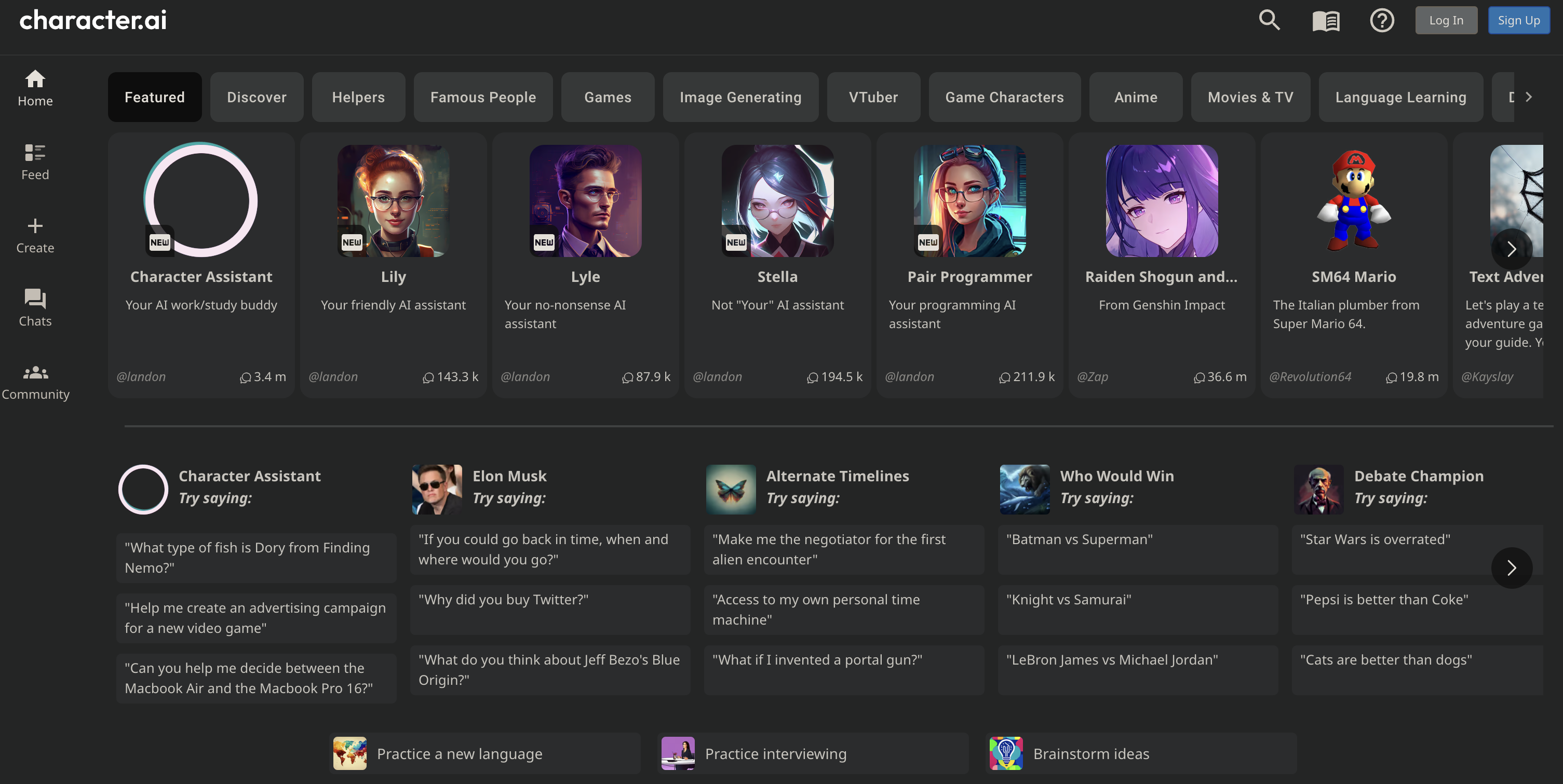
Character.ai is a fascinating new tool for developers who want to give their characters a life of their own through spontaneous conversations. Many applications are possible thanks to the platform’s proprietary technology. It is based on large language models and enables the quick and simple creation of engaging characters.
One of the main characteristics of character.AI is the combination of computer and user interactions. The ability to swiftly develop conversation and explore many scenarios makes this a valuable tool for authors and storytellers.
User rating: 2.8/5 (Trustpilot)
Features:
- Speech-to-text
- Privacy control
- Brainstormer
- Language translation
- Beyond plain text
- Character development
- Numerous themes
- Quick mode
- Built-in image generator for avatar creation
| Pros | Conversational AI Users can create AI characters Vast character selection Creating your character is fun Numerous trained bots Supports text-to-speech Simple and free software |
|---|---|
| Cons | Characters make things up Updates can impact character behavior Slower |
| Pricing | Character.AI is currently in beta and available for a free trial |
Other Alternatives to Try
19. Replika
Freemium model
Replika is an AI platform that works as a customizable and interactive chatbot. It uses a Large Language Model and scripted dialogue content. The tool replicates true human interactions.
Replika is a neural network machine learning model. It generates unique responses as it has been trained on a large dataset of texts. It offers a wholesome dialog experience to people looking for someone to chat with. The tool has commendable memory capabilities, context recognition, and role-play features that enhance the overall conversation quality.
Features:
-
A database of questions and answers to enrich the conversation
-
Fun games to improve the connection between users
-
Tests and surveys to examine the interests and preferences of users
-
Content recommendations to discover new perspectives and conversation topics
-
Self-help resources to learn about topics like mental health and self-awareness
-
Tools to enjoy interactive content such as videos, images, and GIFs
| User rating | 4.5/5 on Apple Store |
|---|---|
| Pro | Engaging conversations Remembers past responses Video calling with AI Easy to use Personalized conversation Emotional support |
| Cons | Features locked behind a paywall Expensive subscription Users can report errors to the support team Increase in risks Repetitive responses Limited capabilities |
| Pricing | Generic version is Free Pro Price: $49.99 per year Lifetime plan available |
20. Socratic by Google
Free
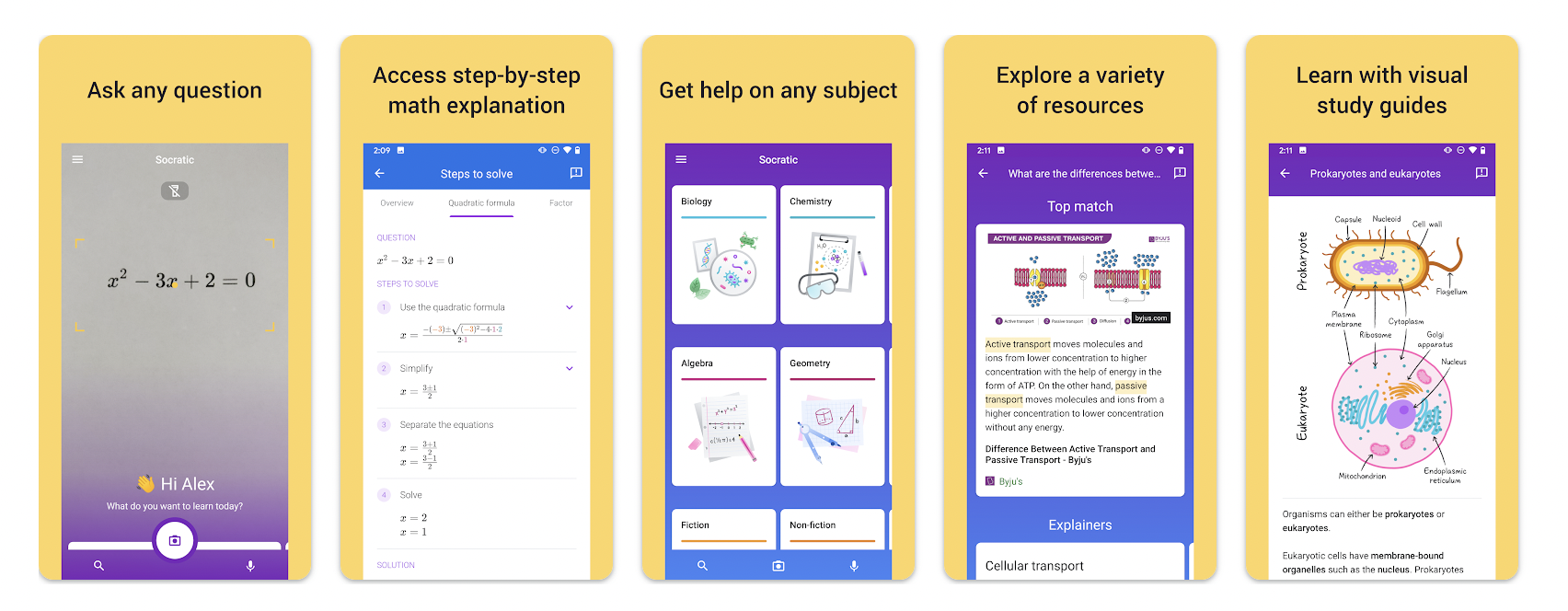
The Google Socratic app is a free ChatGPT alternative for students. It enables users to ask questions about high school or university academics. It offers in-depth visual explanations, video links, and curated search results from reliable websites.
Users can ask questions by uploading a picture of the question on the paper. It also supports voice commands and allows you to input a query or search word by exploring the topics.
Features:
- Works for all the subjects
- Expert-created study guide
- Everything is available in one place
- Helpful results
| User rating | 4.9/5 on Apple Store |
|---|---|
| Pro | Quick and easy to use Provides legitimate, scholarly definitions of subject matter Helps with math problems by providing step-by-step solutions Searches other sites for answers Allows users to check their answers |
| Cons | Update removed step-by-step solutions Does not provide as much help as before |
| Pricing | Free |
This brings us to (almost) the end of the list. ChatGPT will continue to evolve and so will its alternatives. It is important to understand the technology behind these AI-powered tools and some basic differences like AI chatbot vs. AI Writer. Let’s look at the foundation blocks of using tools like ChatGPT.
Chatbots vs. AI Writer
Chatbots
Chatbots are different from AI writing tools. A chatbot is designed to mimic human-user conversations through text or voice exchanges. It works to resolve user inquiries quickly. However, a chatbot will not be able to handle complicated queries because a chatbot will not have the capability to ‘formulate an answer’ on its own. This is because a chatbot is trained with data pertaining to a particular brand and general user queries.
For instance, the chat help we see on every website can capture first-level user data, help with help docs about the brand, and even show you relevant pages for your query. But when it comes to handling complex queries about the product, it will either falter and repeat the same answer or prompt back with ‘raising a ticket to connect you with one of our representatives’. Here’s how –
The Amazon Chatbot will continue showing the same options. This chatbot is trained to answer queries about orders, delivery, product info, account details, etc. Anything more complicated than this is beyond its capabilities.
/wp-content/uploads/2023/03/chatbot-conversation.mp4
To escalate or resolve your issue, you must manually type in that you need more support. The chatbot will catch your phrase and automatically show you options to connect with an agent. It will then connect you to one of the representatives who can help resolve the issue; like this:
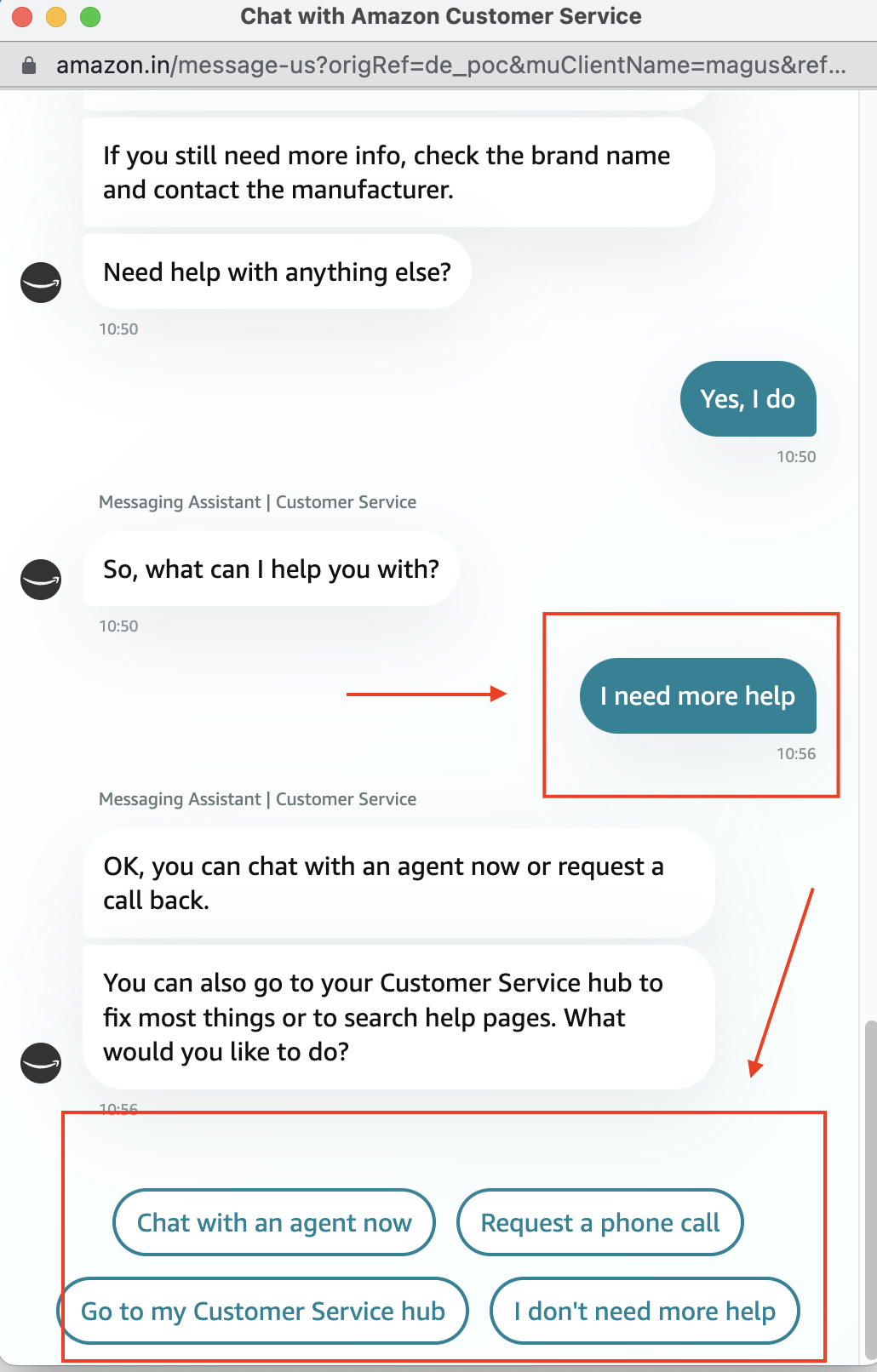
Chatbots do not make up content. They are built to handle user queries and resolve them quickly. A chatbot is trained to escalate the issue if it has no answer.
AI Writers
AI Writing tools are different. They are more intelligent and are capable of writing long-form articles. AI Writers are trained in a vast volume of text data. This makes them capable of producing human-like content on a given subject or keyword.
For instance, look at Writesonic, an AI-powered writing assistant that can easily generate short-form and long-form content.
/wp-content/uploads/2023/03/AI-writer-chatsonic.mp4
Tools like Writesonic are trained on advanced machine learning algorithms to generate or produce human-friendly content. Tools like these are highly intelligent and capable of learning independently and creating content on any subject matter. It gets smarter by the day, analyzing your writing patterns and suggestions and improving its content based on the learning.
How do AI Chatbots Work?
AI chatbots combine machine learning techniques and NLP to replicate human-like conversations with consumers. The chatbot uses NLP to decipher the user’s purpose and interpret the input. After then, based on the input it received and its prior contacts with the user, it applies machine learning algorithms to choose the best response.
Chatbots can be pre-programmed with predefined answers for frequent user requests or trained on massive datasets of human talks. They can be connected with websites or chat services to offer real-time support and boost user engagement. Chatbots are growing more complex as technology develops, with the capacity to recognize context, mood, and emotional states.
How to Choose the Right Chatbot?
ChatGPT is the most robust open-source conversational AI platform available, providing powerful features and capabilities for natural language understanding and text generation. However, it ultimately depends on your needs and the complexity of the conversations you plan to have.
For instance, if you want to create basic chatbots with predefined responses, you can use platforms like Dialogflow, which feature graphical user interfaces that make it easy to create simple bots without any coding knowledge required. The platforms provide more advanced features like microservices integration and NLP capabilities for more sophisticated conversations.
Jasper AI might be a better fit if you need more advanced NLP and text generation capabilities. It is a powerful tool to generate text in response to given prompts and has been used to create realistic content. However, its open-source nature requires some technical knowledge to use correctly.
Future of AI Chatbots
Businesses and organizations rapidly use them to boost consumer interaction and optimize operations. Research shows that the conversations handled by conversational AI have increased by 250% across multiple industries post-pandemic.
The AI market continues to grow at an impressive rate, with a CAGR of 38.1% predicted between 2022 and 2030.
Because of developments in natural language processing, machine learning, and other AI technologies, AI chatbots are anticipated to grow more sophisticated and human-like in their interactions.
Chatbots can be coupled with smart speakers or other devices to offer users personalized and context-aware support. The use of AI chatbots is to provide prompt and effective answers to simple questions. It can also help automate conversation and content-generation tasks. Thus, another growth area is freeing human agents from handling more complicated problems.
AI chatbots will likely combine with other cutting-edge technologies like augmented and virtual reality to create more immersive and engaging user interfaces. The general trend for AI chatbots is anticipated to be increased sophistication, personalization, and technology integration.
Conclusion
AI chat tools will become popular as companies and organizations try to improve consumer interaction and streamline processes. And it is expected to reshape digital communication and transform how we interact with technology.
FAQs
1. Are there any other websites like Chat GPT?
Although several ChatGPT alternatives are available in the market, Jasper, Chatsonic, and Microsoft Bing are the leading ones. These AI tools are powered by upgraded technology and are backed by extended features with internet accessibility.
2. Which AI is better than ChatGPT?
According to OpenAI, GPT-4 is more capable and better than ChatGPT. Based on an upgraded GPT version, GPT-4 is a multimodal large language model. It can effectively respond to both texts and messages.
GPT-4 is also claimed to be 60% less likely to make stuff up. And in comparison to GPT – 3.5, it is 82% less likely to respond to requests for content that OpenAI does not allow.
3. Is there a free version of ChatGPT?
Yes, the basic version of ChatGPT can be accessed for free. Since it is available via a webpage, there is no need to download it. The web page is quite simple and includes an area for the results. It also offers a text box at the bottom of the page to ensure seamless user interrogation.
4. What is Google’s equivalent to ChatGPT?
Google BARD is the newly released Google equivalent to ChatGPT. This experimental conversational AI service is powered by Google’s lightweight model version of LaMDA. It brings in information directly from the web and provides the latest responses. However, it is currently available to a few trusted testers, as the company plans to add more advanced AI features to Google search.
5. Which AI is better than ChatGPT?
Chinchilla AI is considerably better than ChatGPT and is called the “GPT Killer.” It is an AI language model created by DeepMind, a subdivision of Google. However, it is nothing similar to Google BARD.
The company claims Chinchilla outperforms its competing LLMs and even predominant models like GPT-3.
However, it is not yet available for public use, so users looking forward to accessing this alternative will have to wait until the release.
6. Who is the competitor of GPT?
Although GPT is the internet’s favorite, numerous similar platforms are determined to replace GPT with its exceptional features. Some are OPT, BLOOM, Google LAMDA, PALM, and Character AI.
7. Is Google Meena available?
Google Meena is not yet available to access for the end users. The company says the software is still under evaluation for associated risks and benefits of externalizing the model checkpoints. However, it is expected to be released soon to enhance the productivity of advanced research in the field.