The impact of agentic AI on data science jobs in India (and globally) is evident. Our Agentic AI and Data Science Jobs Report 2025 analyzes this transition of job roles and responsibilities. It outlines the top skills to learn and career pathways that will dominate the future.
Report Methodology
This is a futuristic analysis of how data roles will evolve to meet dynamic AI demands. Initiated and conducted by the research team at AnalytixLabs, this report analyzes industry trends and insights from leading experts.
This report is not focused on AI vs. Data roles. It offers a clear insight into shifting job expectations, industry trends, and salary dynamics.
Chapter 01: Agentic AI and Data Roles: The Bigger Picture
Agentic AI and no-code/low-code platforms will transform data workflows in 2025. They automate processes and improve decision-making. Businesses now prioritize domain knowledge over technical coding, and data scientists focus more on AI strategy than just model development.
Hybrid roles combining AI and industry expertise are rising. No-code tools speed up AI adoption, making data tools accessible to more users. Salaries for coding-heavy roles are stabilizing. AI-focused jobs like AI Product Managers see higher pay. Demand grows for ethics and oversight specialists. Companies want professionals who connect AI with business goals. This shift changes hiring trends and required skills.

This report helps data professionals adapt to the AI-driven job market. It highlights key skills for staying competitive.
Chapter 02: State of AI and Automation in The Present Date
The evolution of how we use AI is happening at lightning speed. Before understanding where agentic AI fits in this whole picture, it is essential to understand the current state of AI and what technologies are currently being deployed.
Data shows that AI is most used in IT process automation (90%), followed by the implementation of generative AI and large language models (79%), and traditional machine learning or predictive analytics (75%). Adopting a technology within an organization has various impacts. According to the data, IT leaders are turning to AI adoption to improve efficiency (72%), reduce costs (52%), and drive business innovation and transformation (58%).

Concerns with Current AI
The challenges are not just about security or lack of skills. With generative AI and LLMs gaining momentum, there are new concerns with data quality (47%), lack of explainability of results (31%), and uncertainty about how AI aligns with the current business goals (20%).

Chapter 03: Rise of Agentic AI
To address these major concerns, companies are now exploring the possibilities of agentic AI – an autonomous, self-learning AI system that can analyze and make informed decisions for businesses.
The top reasons why companies are interested in exploring the possibilities with agentic AI include improving business workflows(58%) and automating complex business workflows(52%).

The Agentic AI market is on a steep upward trajectory, driven by technological innovation, increasing adoption, and significant investments.
The consistent CAGR of ~43.5% highlights the market’s robust growth potential, with no signs of slowing down in the near future. By 2034, Agentic AI is expected to be a dominant force, transforming industries and creating new opportunities for businesses and consumers alike.
Key observations:
- Exponential Growth:
- The market valuation has grown by 37.3x over the past 10 years, from 1.58 billion to 58.91 billion.
- This exponential growth suggests that Agentic AI is transitioning from a niche technology to a mainstream, transformative force.
- Increasing Year-on-Year Growth:
- The absolute year-on-year growth increases significantly over time. For example:
- From 2024 to 2025: $0.69 billion increase.
- From 2033 to 2034: $17.89 billion increase.
- This indicates that the market is not only growing rapidly but also scaling in magnitude.
- The absolute year-on-year growth increases significantly over time. For example:
- Market Maturity:
- While the market is growing exponentially, the CAGR remains relatively stable (~43.5%), suggesting consistent demand and innovation.
- The lack of a declining CAGR indicates that the market is still far from saturation, with significant room for further expansion.
However, organizations are still uncertain about various aspects related to adopting agentic AI full-fledgedly.
Security, cost, and integration with the current system are the three top concerns that organizations are dealing with. The plausible solution to this can be –
- Ensure the safety and privacy of using this technology
- Ensure ethical and regulatory compliance with this technology
- Seamless integration with existing systems
- Training to upskill employees
- Capability to demonstrate ROI
- Buy-in from the executive suite
03.01. Agentic AI in India: Market Penetrations 2025
India is at the forefront of the AI revolution as the Indian government is actively shaping an AI ecosystem that is not limited to a privileged few. The Indian government is consistently empowering students, startups, and innovators with top AI infrastructure, offering unprecedented opportunities at an affordable cost. The efforts in the AI realm perfectly align with the Viksit Bharat program by 2047 – fostering a wholesome social, economic, governance, and environmental development.
While 2024 witnessed the most extensive global adoption of agentic AI, the momentum is strong as we approach the second quarter of 2025. Indian startups are taking the lead in building AI agents and setting the trends.
Read more about how India is leading the AI revolution in our report. Download your Free Copy Now.
03.02. No-Code and Low-Code Platforms – The Next Big Thing
Agentic AI is a key enabler of the no-code/low-code movement in India, driving its adoption across industries and demographics. It simplifies complex processes, reduces costs, and empowers non-technical users. Agentic AI is helping India harness the power of no-code/low-code platforms to accelerate digital transformation, foster innovation, and bridge the skill gap.
The rise of no-code and low-code platforms in India is closely tied to the advancements and integration of Agentic AI. Here’s how Agentic AI is driving this transformation:
Chapter 04: AI and Data Roles in India
The notion that agentic AI is replacing jobs is doing the rounds because data professionals are misreading the importance of this new advancement. The shift is not about how roles are evolving but the whole approach for data professionals.
Data professionals need to position themselves as agents of businesses—agents who can frame problems that align with their current challenges. Rather than spending time finding a solution, data professionals can rely on AI agents to do the hard work while they focus on aligning business goals with analytical findings.
This means a paradigm shift in how data professionals acquire skills. The core skills remain the same. However, data professionals must also step up their understanding of the nuances of business intelligence, market evaluation, and technical environments.
Foundational knowledge in machine learning and deep learning is crucial. The focus has shifted to reinforcement learning, deep AI frameworks, and unsupervised learning.
Agentic AI cannot function without Data Experts.
Agentic AI alone cannot function without data scientists holding the reins. Data experts are needed to design the solutions, train these models, integrate AI systems, and regularly monitor AI performance so that they align with business goals.
Data professionals are slowly evolving into coordinators, bridging AI specialists, agentic AI frameworks, and business stakeholders.
04.01. The Evolution of Data Roles
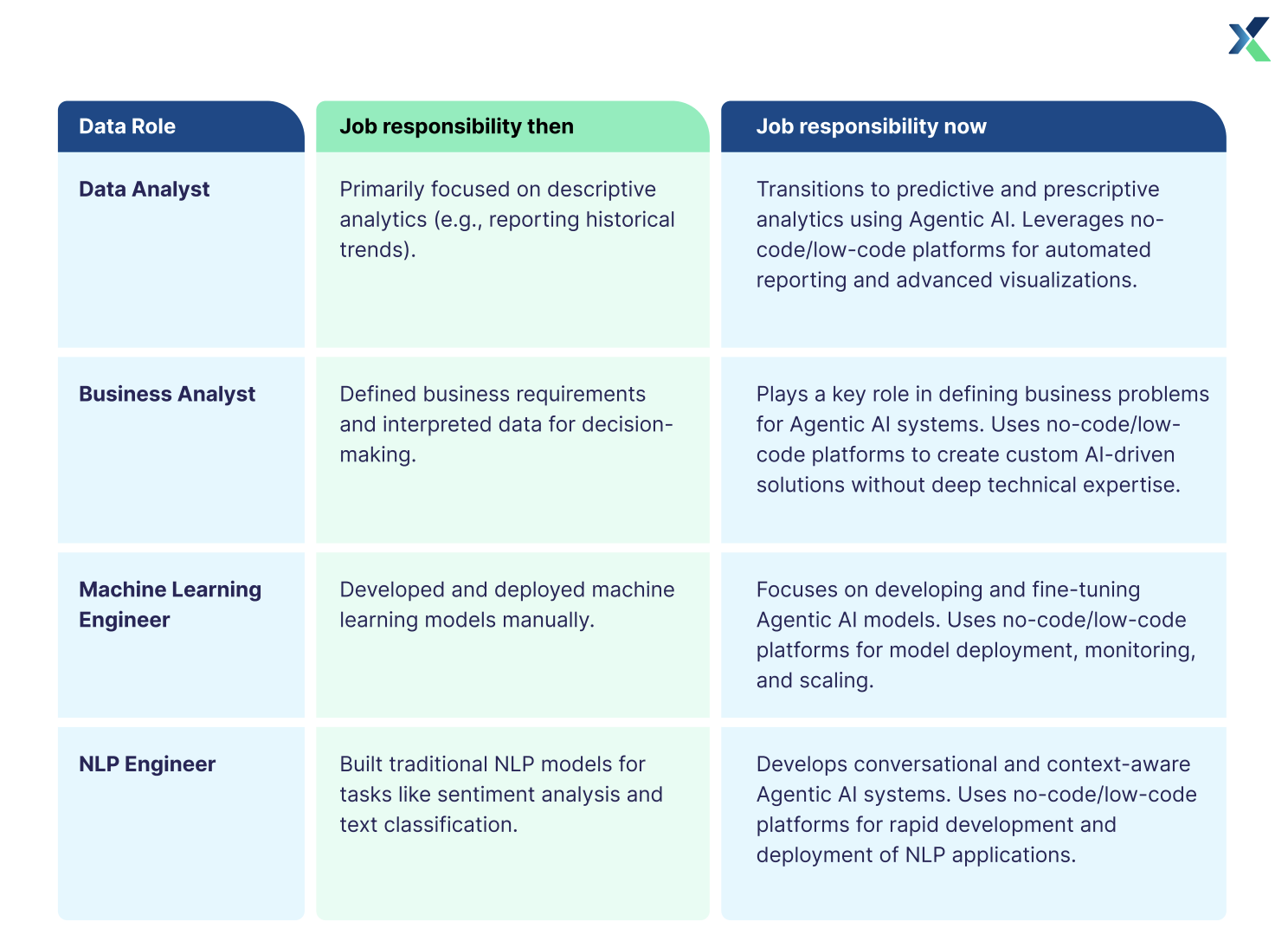
04.02. Emerging Data Roles
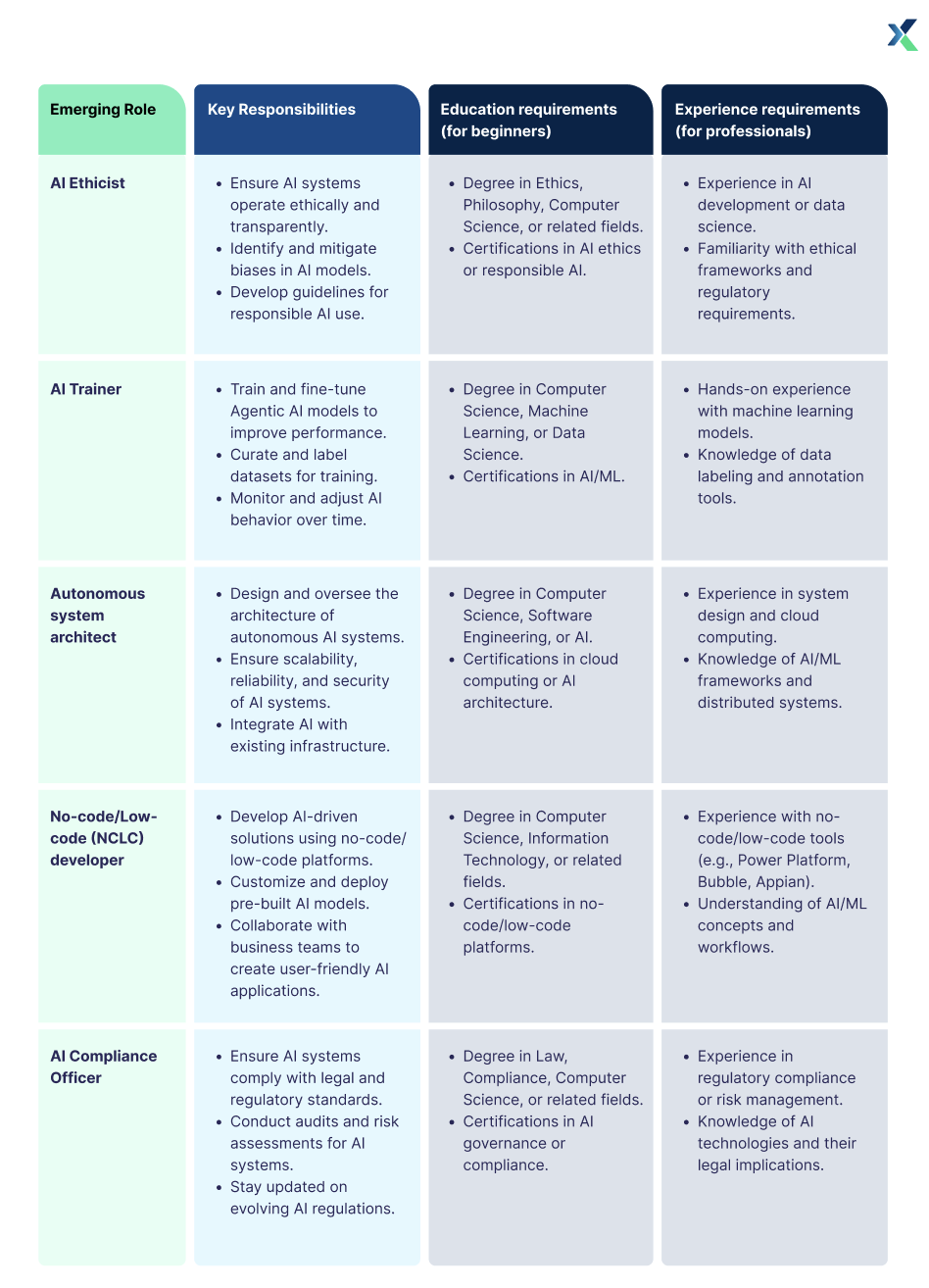
These emerging roles highlight the multidisciplinary nature of Agentic AI, requiring professionals to combine technical expertise with ethical, legal, and business acumen. As Agentic AI continues to evolve, these roles will play a critical part in shaping its responsible and effective adoption.
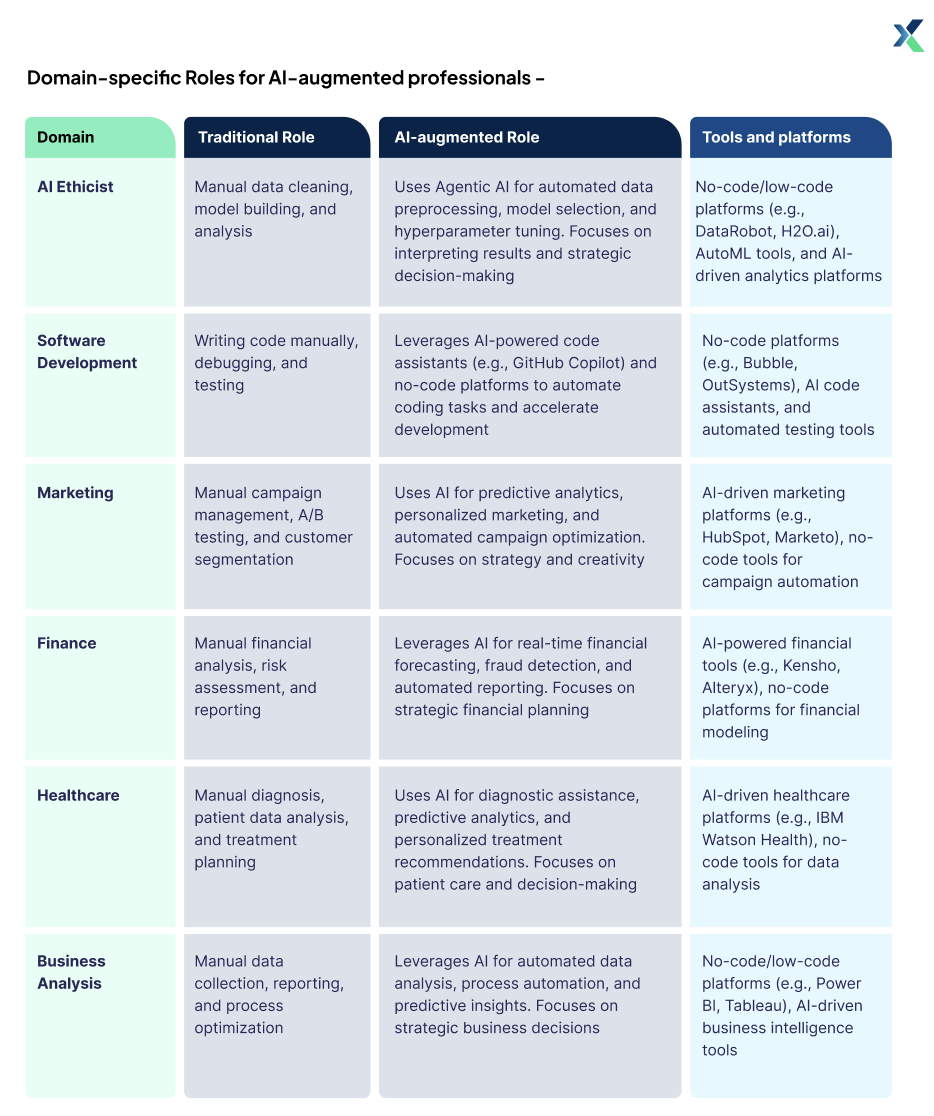
The integration of Agentic AI systems and no-code/low-code platforms is creating a new breed of professionals: AI-augmented professionals.
These professionals leverage AI tools to enhance their productivity, decision-making, and creativity, enabling them to achieve more with less effort. This shift is transforming traditional workflows and creating a collaborative dynamic between humans and AI systems.
AI-augmented professionals implement agentic AI and NCLC platforms to –
- Automate repetitive tasks.
- Enhance decision-making with AI-driven insights.
- Rapidly prototype and deploy solutions.
- Focus on higher-value, strategic, and creative work.
Chapter 05: Agentic AI Hiring Trends and Salary Insights – India Chapter
The adoption of Agentic AI and no-code/low-code platforms is reshaping the hiring trends and salary structures for data professionals in India.
The surge in demand for AI-skilled professionals in India was evident in the hiring trends in December 2024. According to the JobSeeker Report from Naukri, India’s hiring trends in December 2024 reflected resilience and adaptability, with high skills and strategic roles taking center stage in the growth graph.
According to the same report, this growth in India was mainly powered by AI/ML roles (+36%), Oil & Gas (+13%), FMCG (+12%), and healthcare (+12%). There is a surge in hiring freshers and evolving C-suite roles, making India’s job market dynamic.
Despite the surge, India’s job market is at a crossroads. The real struggle is at the lower end, where graduates are struggling to keep up with the evolving trends. India’s Graduate Skill Index 2025 by Mercer-Mettl has revealed that only 42.6% of graduates are currently employable, which is a steep decline from 44.3% in 2023.
The widening skill gap between what employers want and the skills that graduates have is one of the pressing issues in the present day. While technical skills like AI and data analytics are still catching up, graduates are lagging in soft skills like communication, problem-solving, creativity, and mindset to work as co-pilots with AI.
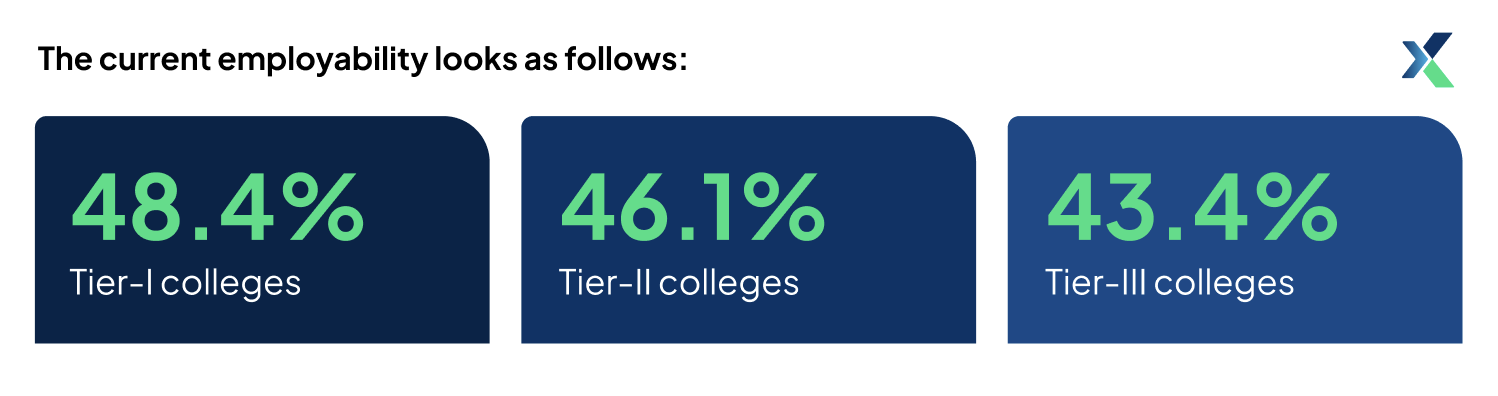
Companies are now looking for graduates who can learn, unlearn, and quickly adapt to new-age work environments. Core reasons why graduates are unable to pick up pace include –
- Education system focused on more theory than practical skills, leaving students unprepared for jobs
- Automation requiring continuous upgrading, which is left unattended
- Lack of training in soft skills
According to the Global Trends report by LinkedIn, 8 out of 10 companies see GenAI as a solution to
- Reducing time spent on mundane tasks
- Increasing productivity
- Freeing up employee’s time for strategic and creative thinking
When talking about adoption, the numbers are pretty much evolving. Most companies have only started understanding the potential of AI giving job seekers.
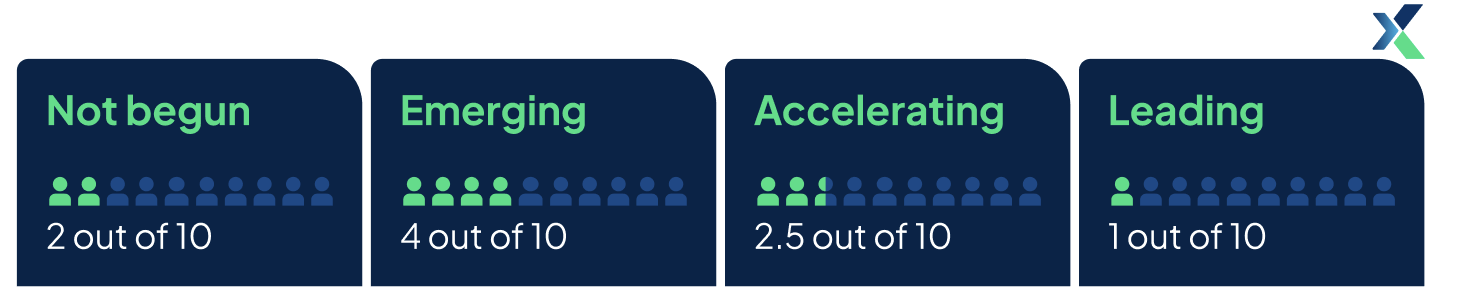
According to the same report, at least 69% of executives will prioritize hiring candidates with soft skills, preferably transferrable skills that allow candidates to move nimbly across roles. Infact, research shows that employees skilled in AI are 5x more likely to develop into a leadership role.
05.01. Top Skills Hiring in 2025
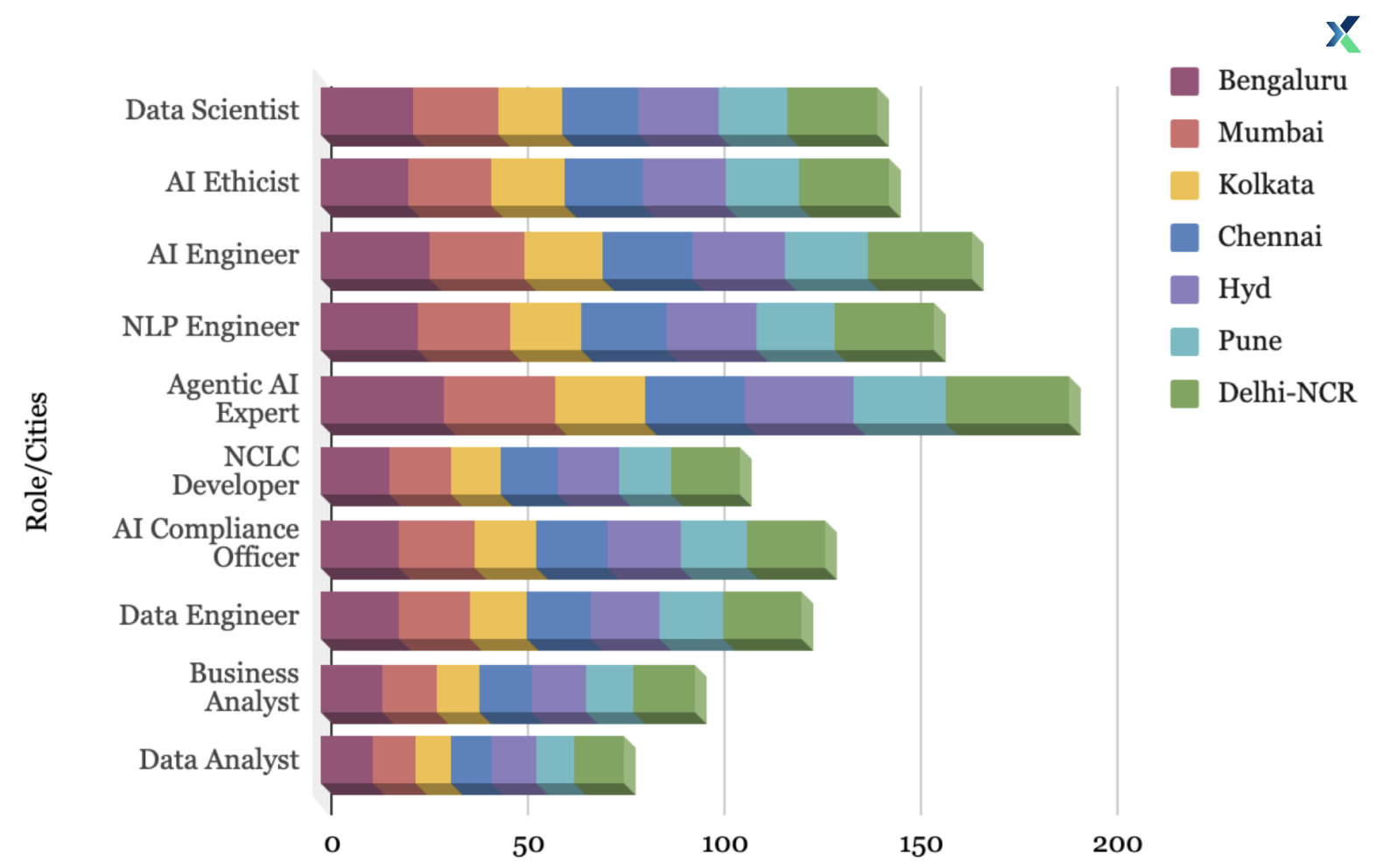
The job market demand vs. available skill graph for the top 20 required skills looks as follows:
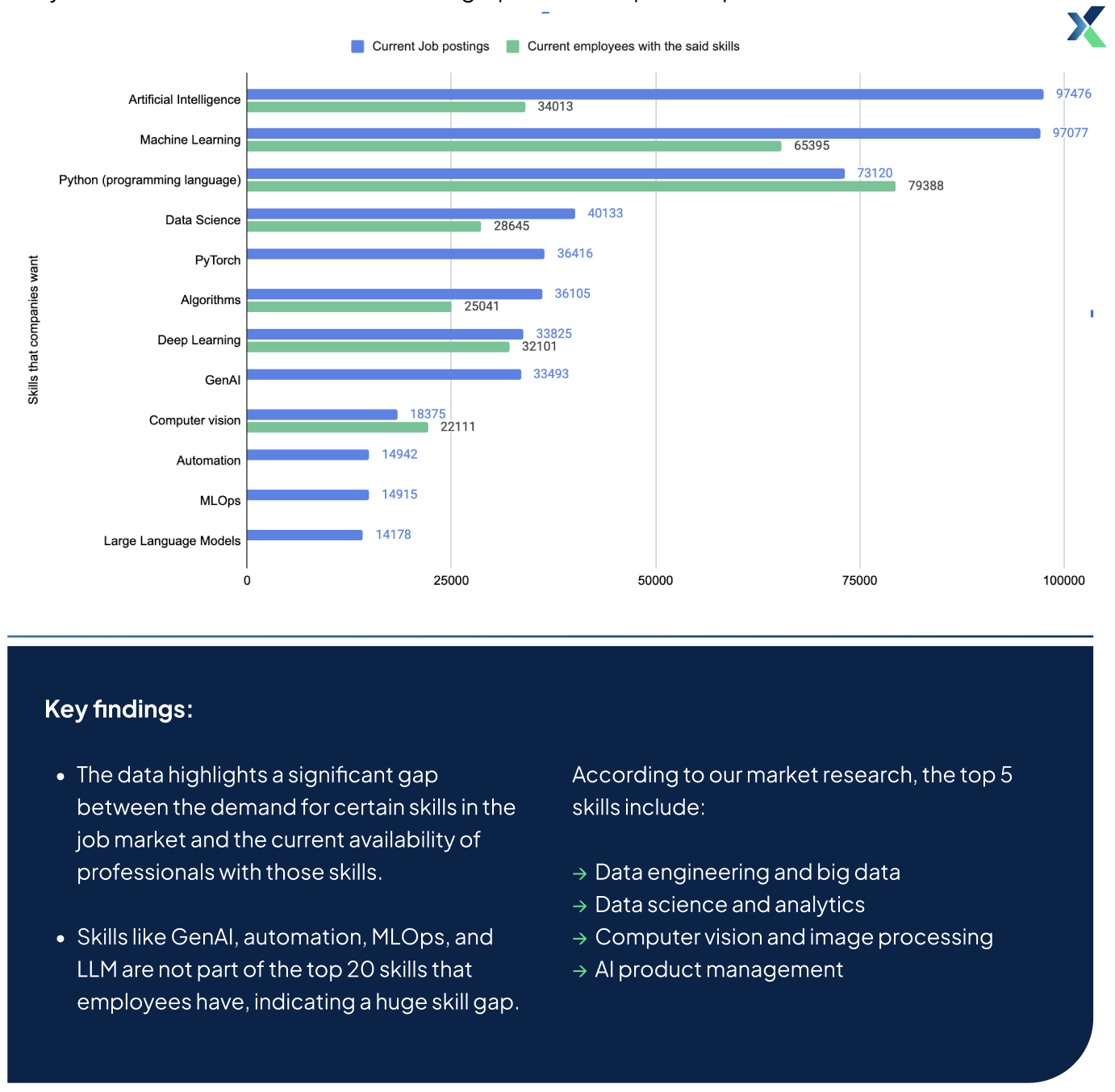
According to our market research, the top 5 skills include:
- Data engineering and big data
- Data science and analytics
- Computer vision and image processing
- AI product management
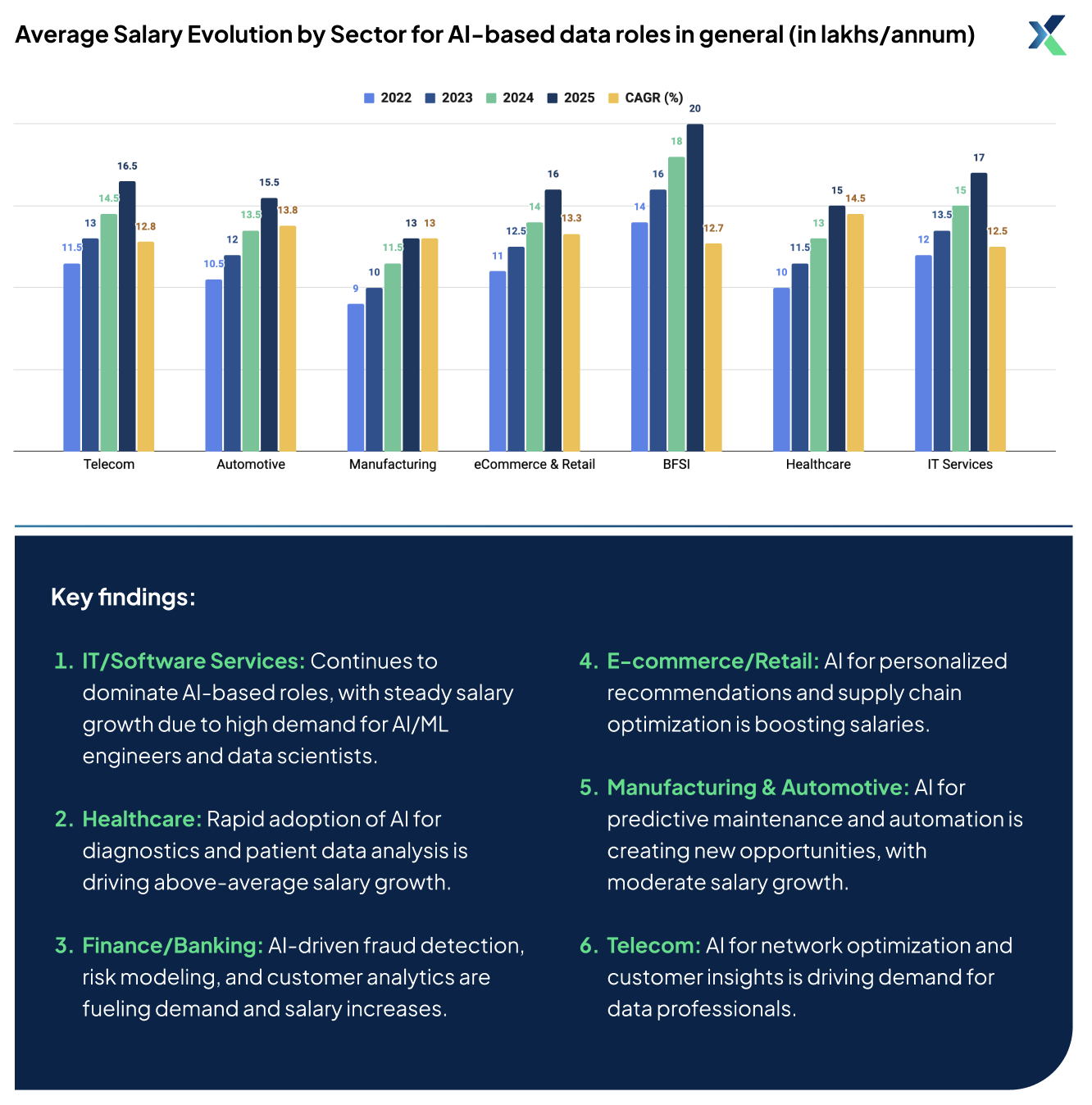
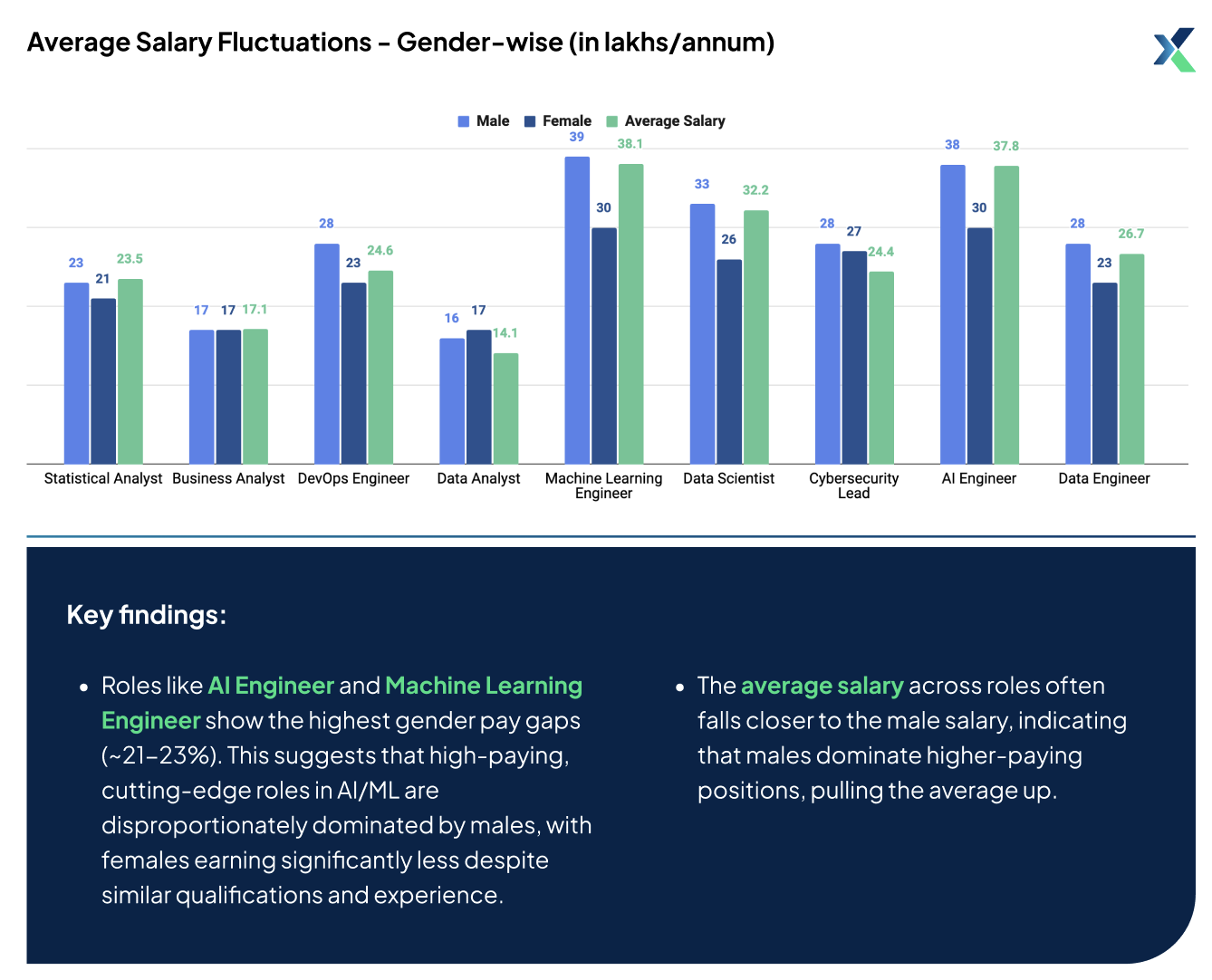
This is an overview of how the salary ranges are fluctuating, with different causes like less women opting for STEM education, sector-based requirements for AI-driven approach, new business goals, and such, playing a crucial role in determining these numbers.
05.02. How is AI Reshaping Salaries in India (Market Study)
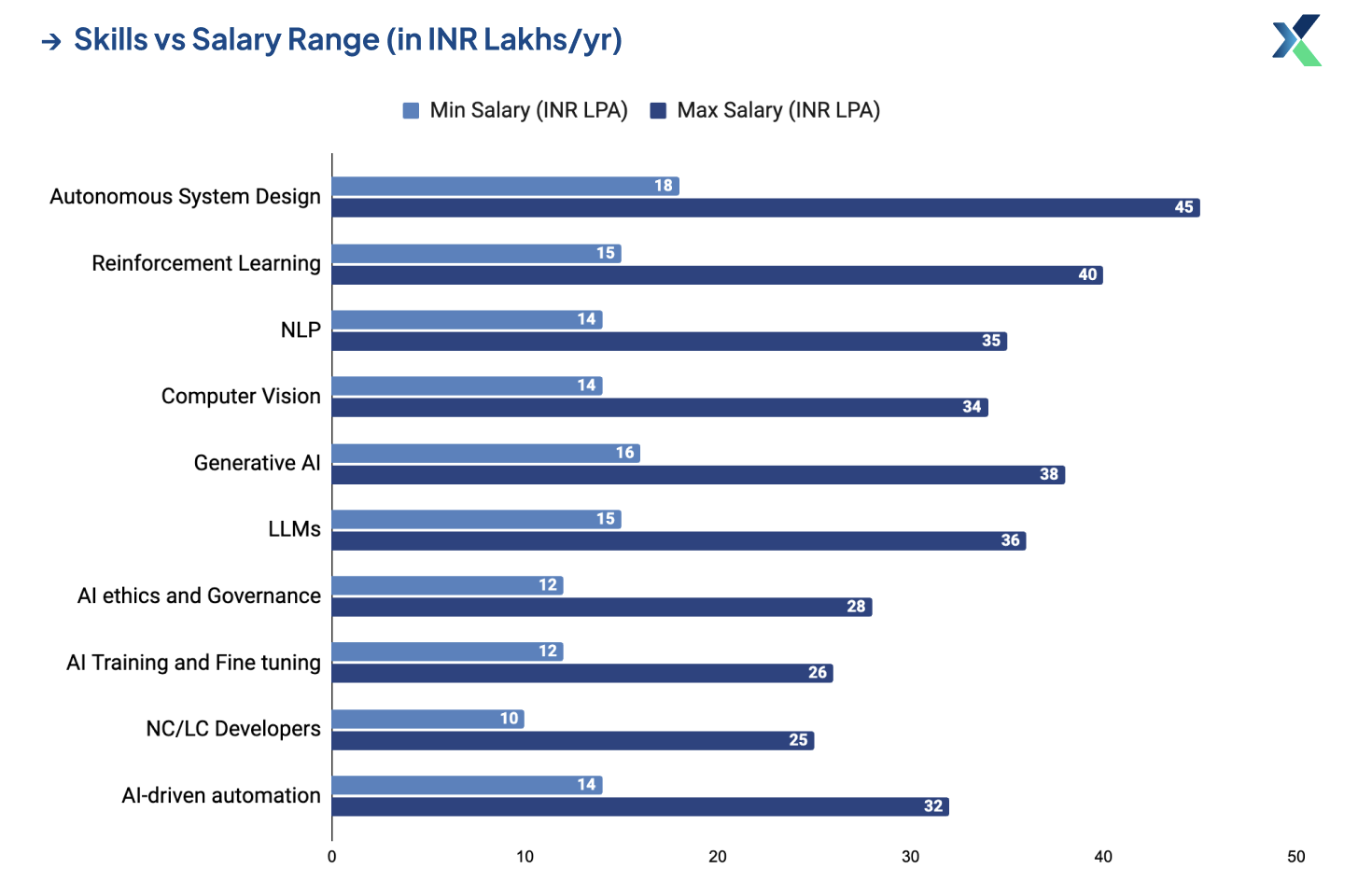
Recent trends and market analysis indicate that with skills like GenAI, senior tech professionals can earn almost INR 1 crore per annum, while beginners can start at INR 18L/annum.
Tech professionals in India are steadily ramping up their AI skills, learning AI, genAI, agentic AI, and adjacent skills to command salary hikes of 30-50%.
In our last report, we analyzed the impact of generative AI on data science roles in the last quarter of 2024 as follows:
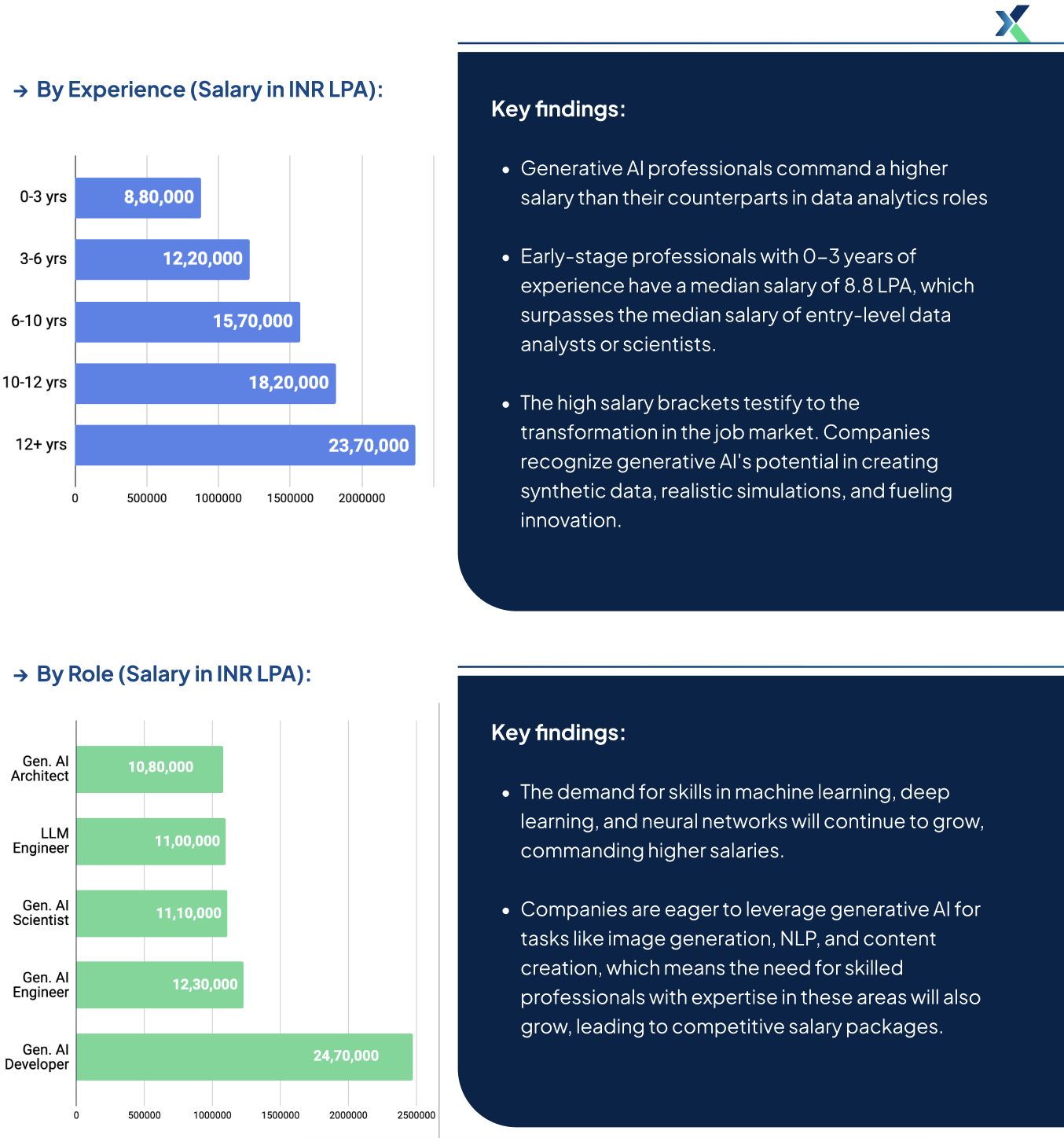
Generative AI has already created a new market, and now agentic AI is taking over. With AI becoming more user-friendly and smart, companies and VCs are steadily working to build and capitalize on this.
This is one of the core reasons why AI-driven tech roles are getting paid above-average salaries. For instance, an engineer expert in deep learning can quickly move to genAI development or build an AI agent with only 2-3 months of studying.
This not just retains talent but also helps companies maneuver in the evolving market faster.
As Global Capability Centers (GCCs) mark their foothold in India, young talents can start looking for opportunities to leverage their AI skills and have lucrative career choices.
Infact, 90% of GCCs in India are ready to harness the potential of AI, ML, and cognitive computing in the next 2-3 years.
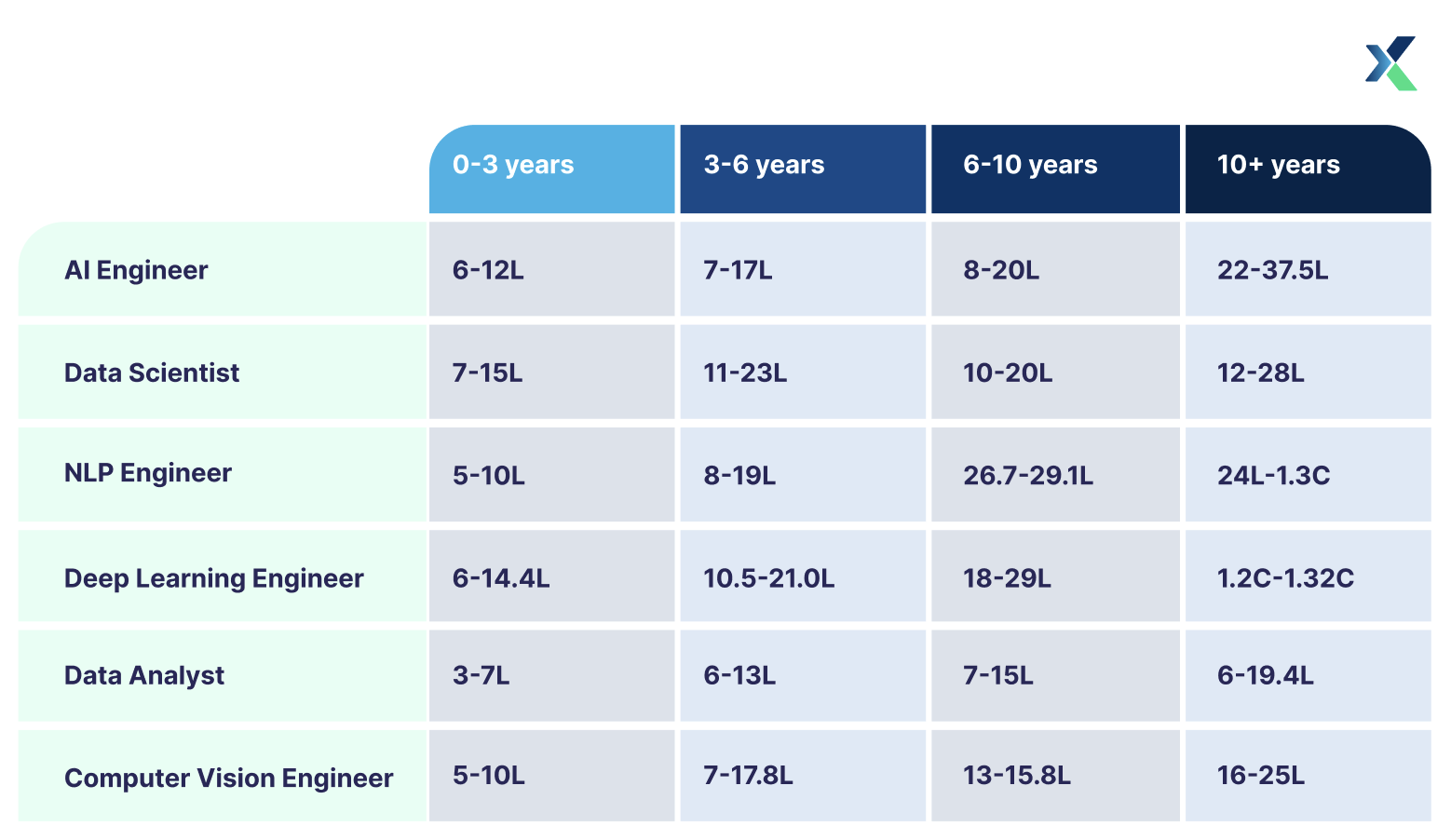
In a time when AI engineers with skills in deep learning, NLP, and data analysis are becoming core to companies, the salary range for these roles look as follows:
Building expertise in-house is relatively challenging because companies need help hiring and retaining talent over a considerable period of time.
- The three most common challenges in building the right AI skills are hiring, retention, and developing reskilling programs. Almost 50% of companies face at least two of these three challenges.
These challenges have steered the focus on reskilling non-AI tech professionals for AI roles while upskilling existing AI employees on advanced AI skills.
Other notable initiatives to combat the talent crunch include investing in research talent from academia, hiring STEM graduates, hiring generative AI experts in contractual roles, and acquiring AI startup talent.
While this works for entry-to-mid-senior roles, the major challenges occur when looking for leadership positions in AI.
Due to the field’s novelty, hiring dedicated AI leadership teams is extremely difficult. Only some professionals have more than five years of experience in AI alone to take over leadership roles. As a result, companies are relying on IT heads to own AI initiatives with ad hoc execution teams.
- Research shows that only 8% of companies in the mature stage of AI adoption have designated AI leaders. These professionals are responsible for envisioning and leading enterprise-scale AI initiatives in an effective and agile way.
- Only 13% of enterprises have dedicated AI teams in India, pinpointing the glaring talent crunch in AI.
Yes, companies are investing heavily in AI, but when it comes to compliance and AI ethics, Indian enterprises’ numbers have yet to improve.
- Around 56% of all enterprises have documented, formalized, or fully integrated ethical AI guidelines into their enterprise risk frameworks.
Businesses are anxious and conscious of brand reputation and growth risks due to AI failures. This is why 59% of all enterprises have enabled AI risk mitigation efforts at the BU or enterprise level.
All these will continue to play a pivotal role in shifting hiring trends. With agentic AI in the picture, hiring is slowly becoming personalized.
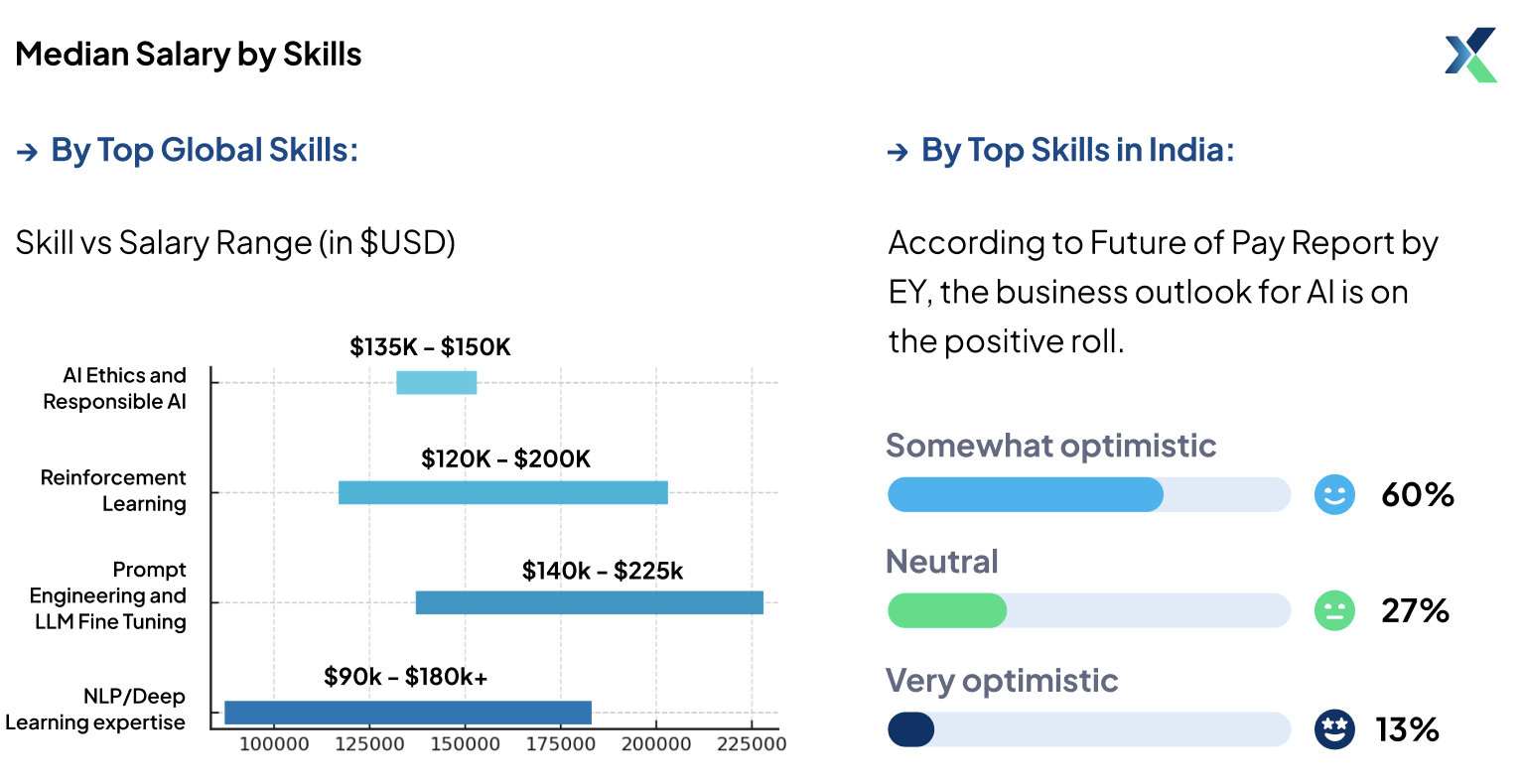
According to Future of Pay Report by EY, the business outlook for AI is on the positive roll.
- Somewhat optimistic – 60%
- Neutral – 27%
- Very optimistic – 13%
This positive impact is primarily driven by consumer’s behavioral shifts owing to economic uncertainties, advancements in digital transformation and technology adoption, and financial results.
As India’s talent market become more dynamic and evolve with current needs, professionals need to embrace emerging skills that is/will dominate the paycheck.
Going by the trends in 2025, upskills and reskilling will be at the top this year and ahead.
According to the India Skill Report 2025, India is one of the emerging countries with the highest number of skilled professionals in IT, GenAI, cybersecurity, and renewable energy. Over 55% of graduates are projected to be employed in 2025 alone.
The challenge is the lack of inclusivity and low diversity in Indian workspaces. The gender pay gap is another reason why India’s growth in the AI realm is progressing slowly despite the aggression.
Another important trend catching up in the Indian workspace is the flexibility in work arrangements. The option for hybrid work models and remote options is offering professionals the scope to upskill comfortably. Due to this flexibility, employees are able to strike a balance between work and learning, putting the Indian job force on the frontline.
Chapter 06. Top Skills for Thriving in the Agentic AI and No-Code/Low-Code Era
In a recent survey by Salesforce, almost 67% of senior IT leaders pinned GenAI as a priority for the next 18 months, with atleast one-third of them naming it as the top priority.
The eagerness to invest in, implement, and explore AI automation is high, but concerns about ethical implications and technical know-how are blocking the way.
The positive takeaways are that almost 96% of developers believe AI agents will reshape the development experience. AI agents are changing how developers function, taking over tasks like code debugging and data cleaning. This will allow developers to focus on manual coding for high-end problem-solving, strategic decision-making, and architecture.
This shift has also led around 92% of developers to expect employers to assess their performance based on the impact of their work rather than the sheer output.
However, coding still remains to be an important skill. According to the discussions on Quora, coding still counts as an important skill despite the rise of nocode/low code tools. Experts voice their opinions stating that:
- No-code tools are great for simple applications, but complex business logic, advanced algorithms, or performance optimization still require custom coding.
- Developers can customize functionalities beyond the limitations of no-code platforms.
- AI tools themselves need to be built, trained, and maintained by skilled coders
- Custom AI models, machine learning algorithms, and deep learning frameworks require advanced programming knowledge in languages like Python, R, and Java.
This is only about developers.
AI agents are making an impressive impact in non-tech roles as well.
Deloitte notes that in 2025, 25% of enterprises using GenAI will deploy AI agents. This figure will rise to 50% by 2027 only.
This indicates a rapid adoption of AI agents owing to the increased affordability and availability of AI tech. McKinsey also predicts that by 2030, almost 30% of global work will be automated. This comes parallel to PwC’s findings that nearly 75% of executives will integrate GenAI solutions in their businesses in 2025 alone.
With so much happening in the AI world, it is crucial to upskill and reskill in the top AI skills required to compete in the agentic AI market. To thrive in this world, professionals need a combination of technical expertise, analytical thinking, and creative problem-solving.
Download our Agentic AI and Data Science Job Roles 2025 Report to learn the technical skills to learn right away.
Chapter 07: Industry-wise Adoption of Agentic AI and What to Expect
AI agents have the potential to disrupt the job market in the near future. Organizations are steadily adopting AI agents to automate tasks and increase overall efficiencies. However, integrating AI agents doesn’t necessarily mean cutting down on the workforce. It is more about using these AI agents to reduce manual labor and distribute the workload between humans and machines. This also means professionals have to adapt and develop new skills to complement AI agents quickly.
What started as the automation of simple tasks has now put AI agents at the center of complex real-world problems. These autonomous self-learning machines are being deeply integrated into various industries so that they can optimize processes and improve outcomes. Industries expect improved and fast decision-making, quick streamlining of operations, cost reductions, and improved service delivery.
However, this progress also raises concerns about job displacement and the need for workforce reskilling. According to a report by SEO.ai, 14% of workers have already experienced job displacement, raising significant concerns.
This calls to understand how AI agents are enabling various industries so that professionals and job seekers can evaluate the roles that will emerge and the ones that will cease to exist or evolve.
Read more about industry-wise use cases of agentic AI in the report. Download the full copy here.
Chapter 08: Building an Agentic AI Data Career – The Roadmap
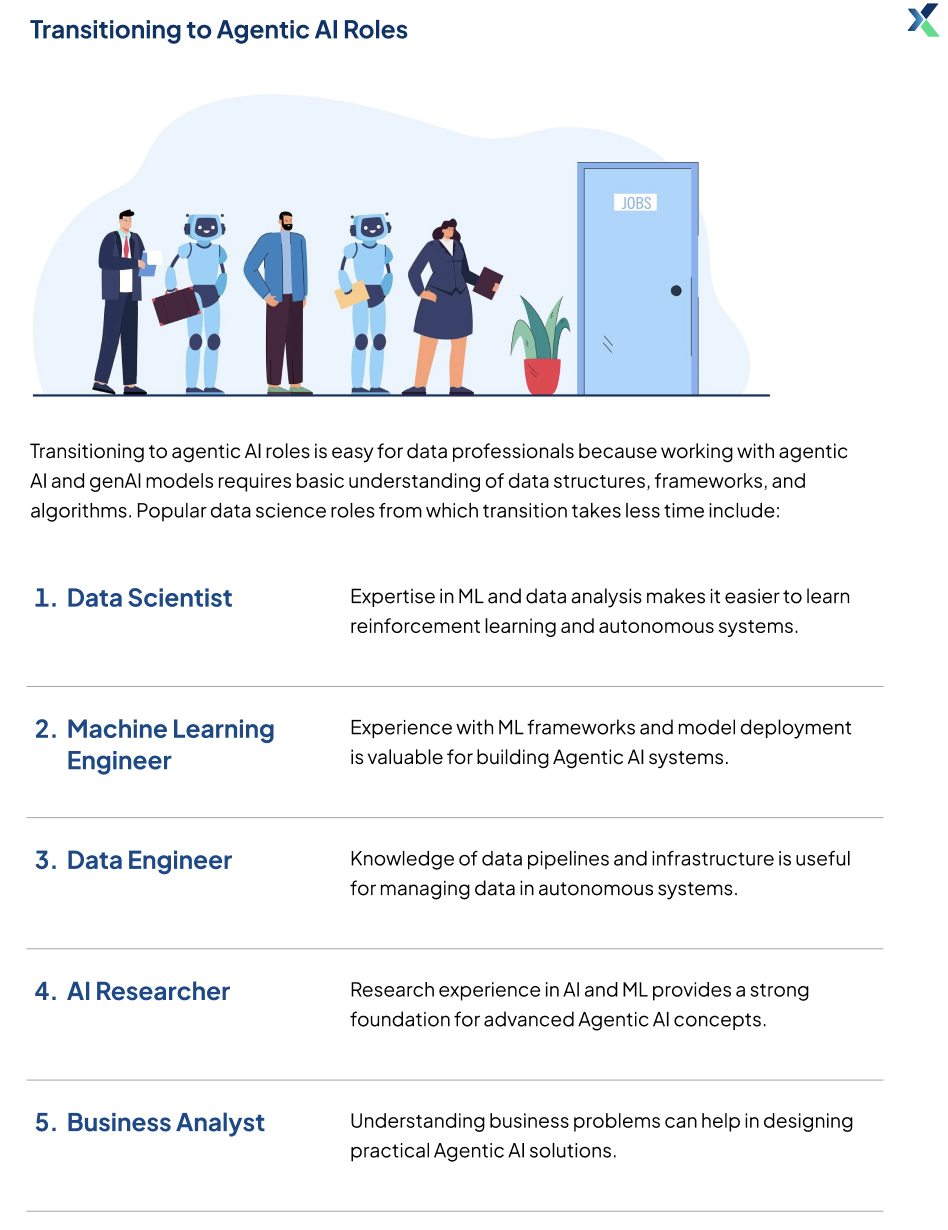
Becoming an Agentic AI expert in India requires a combination of technical skills, hands-on experience, and continuous learning. Whether you’re a beginner, intermediate professional, or experienced data professional, follow the step-by-step guide to build your expertise. With the growing demand for Agentic AI in India, upskilling in this field can open up exciting career opportunities in industries like e-commerce, healthcare, finance, and manufacturing.
Our report includes a step-by-step guide for beginners, intermediate, and advanced learners and professionals, as well as a list of free learning resources. Get your free copy now.
Start your agentic AI career with AnalytixLabs:
AnalytixLabs is at the forefront, enabling graduates and working professionals to embrace AI evolutions head-on. With industry-ready courses and curricula that matter, we offer a learning experience that is focused on core technical skills, soft skills, and overall development.
Currently, AnalytixLabs is offering three AI programs, catering to specific business needs –
- AI for Managers and Leaders – A strategically focused program designed for decision-makers who need to understand AI’s business value, implementation considerations, and leadership challenges without requiring technical expertise. The course emphasizes organizational transformation, strategic decision-making, and ethical governance.
- Generative AI Program – A practical, tools-focused program designed for professionals who need to implement GenAI solutions in their daily work. The course provides hands-on experience with GenAI applications and focuses on immediate workplace applications.
- Agentic AI Course – A new-age course focusing on the fundamentals of agentic AI workflow using open-source no-code, low-code platforms such as n8n, including trigger-action pairs, data transformation, error handling, and workflow management. The course provides hands-on practical training and is ideal for tech and non-tech learners.
AnalytixLabs offers courses in data science, analytics, business intelligence, machine learning, and AI, as well as AI programs. Explore course combinations that suit your academic background and professional interests.
A tentative roadmap to explore will be – Start with the Data Science and Business Analytics course, then enroll in the Python for Machine Learning course, leverage technical knowledge with the FullStack AI program, and Amp it up with the Deep Learning with Python and Data Visualization course. Finally, enroll in short-paced AI programs.
| Level | Focus Area |
|---|---|
| Beginner | Programming Basics |
| Mathematics for AI | |
| Introduction to AI and ML | |
| Hands-On ML | |
| Beginner Projects | |
| Mid-Senior | Advanced ML and DL |
| Reinforcement Learning | |
| Generative AI | |
| Intermediate Projects | |
| Advanced | Advanced Reinforcement Learning |
| Ethical AI and Governance | |
| Advanced Projects | |
| Research and Publications |
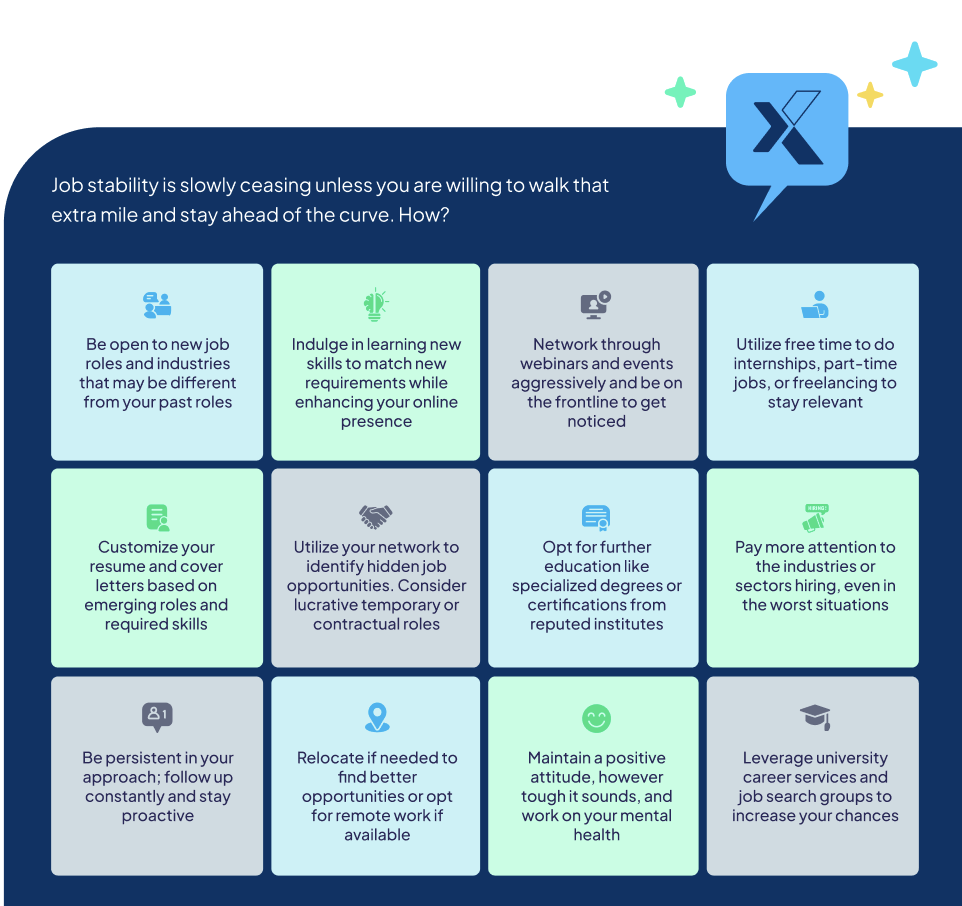
Job stability is slowly ceasing unless you are willing to walk that extra mile and stay ahead of the curve. How?
-
How Can AnalytixLabs Help?
AnalytixLabs is a leading data science, analytics, and AI institute in India. It has been on the frontline, transforming careers since 2011. Since its inception, we have witnessed several tech downturns and maneuvered our students through long hiring slowdowns. Our relevant course curriculum and practical on-field knowledge have helped us keep our students ahead in the competition, even in the most challenging times.
All our course modules reflect the years of practical experience of our in-house data experts and engineering mastery from IITG, giving our students a coveted, globally accredited certification.
We offer a six-month job guarantee program as an institute committed to shaping the best kinds of data scientists. We guarantee placement within six months of course completion or a 100% refund of the tuition fees.
Start learning with AnalytixLabs today and elevate your data and AI careers.
Download Agentic AI and Data Science Jobs 2025 Report for free now.